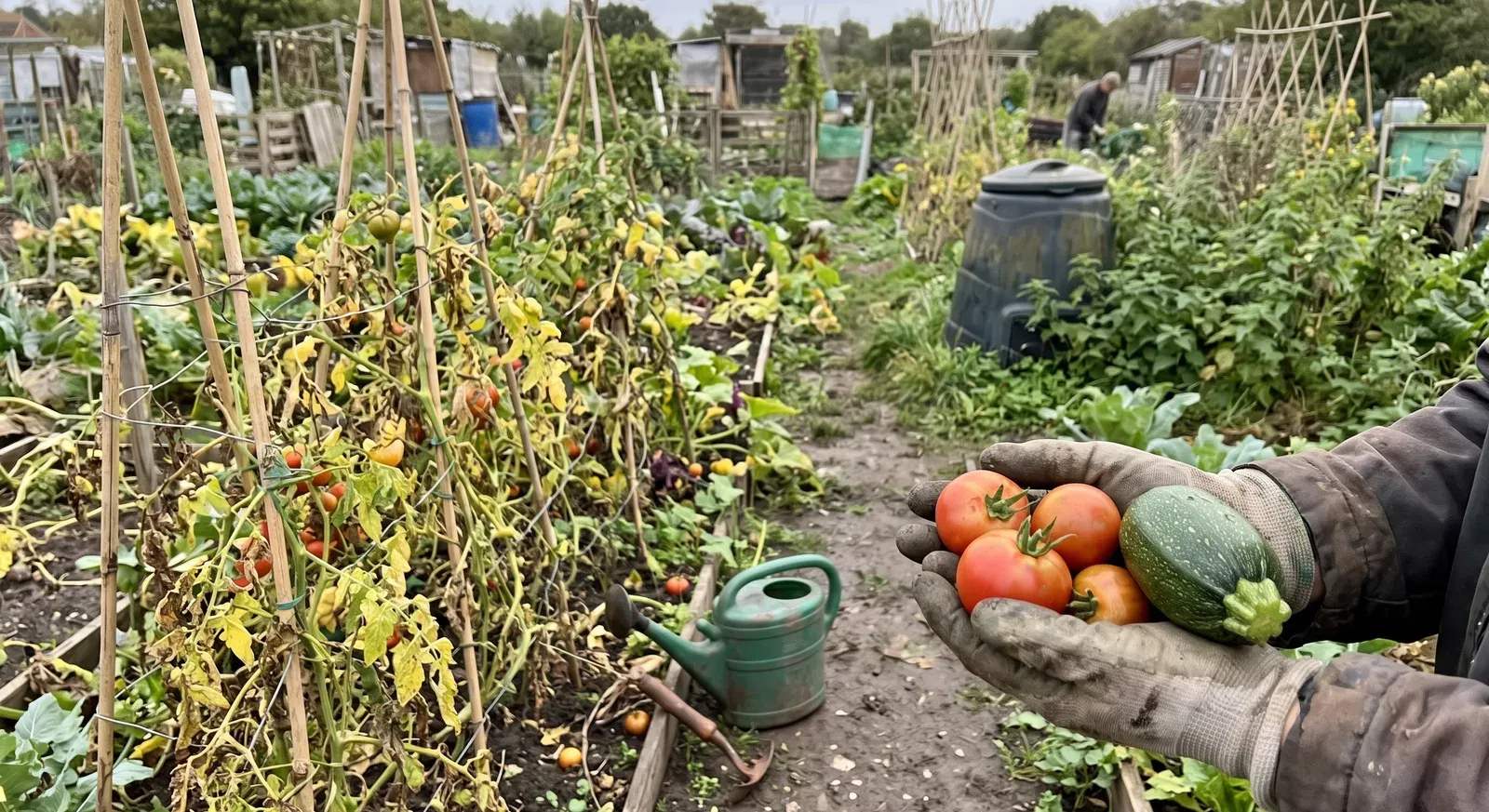
In the United States, 79.2% of households took part in lawn and garden activities in 2025, down from 84.1% in 2024, according to the National Gardening Association’s National Gardening Survey 2026. About a third to two fifths of US households grow some of their own food: 35% (42 million) in 2013 in the last full public National Gardening Association report, and 41.3% in 2021 in National Gardening Association figures reported by FOX. In a 2025 Purdue University survey, 44% of households said they produce or plan to produce some of their own food, which also counts eggs, livestock and honey. In the UK, 32% of adults use their garden or outdoor space to grow fruit or vegetables (Horticultural Trades Association, 2026), and in Germany 60% of households have a garden (KfW Research, 2026). Several of the most quoted gardening statistics online are older or narrower than they look: the “55% of households garden” figure measured adults gardening or mowing during the April 2020 lockdown, and the “$70 garden grows $600 of food” figure is a 2009 calculation, not a measured harvest.
Last updated: 21 October 2026.
Most gardening articles open with a statistic. Most of those statistics were copied from another gardening article, which copied them from a third. I wanted to know which numbers still hold, so I went back to the survey, report or official table behind each one and read it.
This page has three parts. The first gives participation, crops and spending, country by country, starting with the United States and then the United Kingdom, Germany, France, Italy, Spain and the Netherlands. The second covers allotments and community gardens. The third takes 16 of the most repeated gardening statistics online and traces each back to where it started.
Some things to keep in mind when reading the numbers:
- Households, adults and people are different bases, so “80% of households garden” and “55% of adults garden” can both be true. I give the base for every figure.
- A survey’s edition year is usually not its data year. The National Gardening Survey 2026 edition reports 2025 data, and many websites quote the edition year as the data year.
- “Gardening” often includes lawn care. The National Gardening Survey and the American Time Use Survey both count lawn and garden activities together.
- Trade associations, seed companies and garden retailers run many of these polls. I say who paid for each one when the source says so.
- The full National Gardening Survey is a paid report. Where I could only read the publisher’s public summary, I say so.
How many Americans garden?
- According to the National Gardening Survey 2026 edition (National Gardening Association, published May 2026), 79.2% of US households took part in lawn and garden activities in 2025, down from 84.1% in 2024.
- According to the National Gardening Survey 2026, about 4.5 million US households stopped gardening in 2025, the first fall in the number of gardening households since 2019.
- According to the National Gardening Survey 2023 edition, 80% of US households took part in lawn and gardening activities in 2022, which the National Gardening Association called a five-year high.
- According to Garden Center magazine’s report on the National Gardening Survey 2024 (September 2024), 81% of US households took part in gardening activities in 2023.
- According to a Garden Research press release on the National Gardening Survey (April 2018), 77% of US households gardened in 2017.
- According to the American Time Use Survey (Bureau of Labor Statistics, 2025 annual averages), 10.0% of Americans aged 15 and over do lawn and garden care on an average day.
- According to the American Time Use Survey 2025, men are more likely than women to do lawn and garden care on an average day (11.2% against 8.9%).
- According to the American Time Use Survey 2025, Americans who do lawn and garden care on a given day spend an average of 1.90 hours on it. BLS notes that 2025 estimates may be affected because no data were collected from 30 September to 11 November 2025, during the federal government shutdown.
- According to the American Time Use Survey, the share of Americans doing lawn and garden care on an average day rose from 8.7% in 2019 to 10.1% in 2021 (the survey produced no annual figures for 2020).
- According to a YouGov poll of 1,874 US adults (April 2021), 50% of Americans garden at home, 3% keep a community garden plot and 2% garden somewhere else.
The National Gardening Survey and the American Time Use Survey measure different things. The first asks whether a household did any lawn or garden activity during the year. The second records what a person did on one diary day. Neither headline figure separates mowing from growing food. The National Gardening Survey does report lawn care and vegetable gardening separately, mostly in its paid report, while the American Time Use Survey has a single “lawn and garden care” category.
How many Americans grow their own food?
- According to the National Gardening Association’s Garden to Table report (2014), 35% of US households, or 42 million, grew food in 2013, at home, at a friend’s or relative’s home, or in a community garden.
- According to the same report, the number of US food-gardening households rose from 36 million in 2008 to 42 million in 2013, an increase of 17%.
- According to the National Gardening Association’s 2009 report The Impact of Home and Community Gardening in America, 31% of US households, or 36 million, grew food in 2008.
- According to National Gardening Association data reported by FOX (April 2022), 41.3% of US households grew food in 2021, or roughly 53.7 million households, after 33.1% in 2019 and 41.7% in 2020. I could not find these figures on a National Gardening Association page.
- According to Purdue University’s Consumer Food Insights survey of 1,200 US consumers (March 2025), 44% of households currently produce or plan to produce some of their own food.
- According to the same Purdue survey, vegetable and fruit gardening is the most common form of home food production (82% of households that produce or plan to produce food).
- According to Garden to Table (2014), 32 million US households grew vegetables in 2013, 20 million grew herbs, 14 million grew fruit trees and 12 million grew berries.
- According to the 2009 National Gardening Association report, food-gardening households spent an average of 4.9 hours a week in the garden in 2008.
- According to the 2009 report, 91% of US food gardeners grew food at home, 5% at the home of a friend, neighbour or relative and 3% in a community garden (2008 data).
Who gardens in America: age and demographics
- According to a Garden Research press release on the National Gardening Survey (April 2018), 18 to 34-year-olds made up 29% of all US gardening households in 2017.
- According to Garden to Table (2014), the number of food-gardening households aged 18 to 34 rose from 8 million in 2008 to 13 million in 2013, an increase of 63%.
- According to Garden to Table (2014), urban food-gardening households rose from 7 million in 2008 to 9 million in 2013.
- According to the 2009 National Gardening Association report, 54% of US food gardeners were women and 68% were aged 45 or over (2008 data).
- According to the National Gardening Survey 2026, US households under 35 converted lawns into natural or wildflower landscapes at nearly four times the rate of households aged 65 and over in 2025 (19% against 5%).
- According to the National Gardening Survey 2026, renters who garden were more likely than homeowners who garden to buy vegetable seed in 2025 (43.5% against 36.6%).
- According to a YouGov poll (April 2021), 40% of US adults under 30 have a garden they look after at home, compared with 55% of those aged 45 to 64 and 54% of those aged 65 and over.
- According to the National Gardening Association (April 2021), gardening grew disproportionately in 2020 among younger families, renters, apartment dwellers and Black gardeners and gardeners of colour, while participation among Baby Boomers stayed flat or fell.
Community gardens in the United States
There is no current national count of community gardens in the US. The figures below are the best available partial counts.
- According to the Trust for Public Land (2018), there were more than 29,000 community garden plots in city parks in the 100 largest US cities, 44% more than in 2012.
- According to the Trust for Public Land’s City Park Facts 2026, New York has the most community garden sites of the 100 largest US cities (527), and Washington, DC has the most per resident (146 sites, about one for every 4,900 residents). The counts cover gardens in city park systems.
- According to the American Community Gardening Association, its network links 2,100 gardens across the US and Canada. That is a membership figure, not a national count.
- According to Garden to Table (2014), 3 million US households grew food in a community garden in 2013, up from 1 million in 2008.
- According to the 2009 National Gardening Association report, an estimated 5 million US households that did not grow food were extremely or very interested in having a community garden plot near their home.
- According to the City of Seattle (P-Patch fact sheet, archived 2025), 1,685 people were on the interest list for its P-Patch community gardens in December 2023, with waits ranging from under six months to three to five years. Two years earlier, in December 2021, the list held 4,014 people.
- According to the City of Cambridge, Massachusetts, the wait for one of its community garden plots may be more than two to three years.
The figure of “18,000 community gardens in the US and Canada” comes from an old FAQ page on the American Community Gardening Association’s website, which said: “There are an estimated 18,000 Community Gardens throughout the United States and Canada.” The page gave no date or method, and it has since been removed. The association’s current site gives only its own network of 2,100 gardens.
Gardening statistics by country
The only survey I found that asked the same gardening question in all seven countries covered here is GfK’s 2017 online survey of more than 23,000 people aged 15 and over in 17 countries. It asked how often people do “gardening or yard work”. The table gives GfK’s rounded country totals.
| Country (GfK 2017) | Every day or most days | At least once a week | At least once a month | Less often | Never |
|---|---|---|---|---|---|
| United States | 8% | 26% | 22% | 22% | 23% |
| Germany | 7% | 27% | 20% | 18% | 29% |
| Italy | 7% | 25% | 19% | 21% | 28% |
| United Kingdom | 4% | 25% | 27% | 25% | 20% |
| France | 6% | 22% | 22% | 22% | 27% |
| Netherlands | 4% | 19% | 23% | 27% | 27% |
| Spain | 4% | 17% | 15% | 20% | 44% |
| Average of 17 countries | 7% | 24% | 21% | 24% | 24% |
Source: GfK, “Frequency of gardening or yard work: Global GfK survey”, August 2017, country pages 22 to 71. Online samples of 1,026 (Netherlands) to 2,175 (UK) people in the seven countries shown (1,009 to 2,175 across all 17), weighted to each country’s online population aged 15 and over.
- According to GfK (2017), Australia had the highest share of people gardening or doing yard work daily or weekly (45%) of the 17 countries surveyed.
- According to GfK (2017), 44% of people in Spain never garden or do yard work, the third highest share after South Korea (53%) and Japan (46%).
- According to GfK (2017), people who own their home are twice as likely as renters to garden daily or weekly (36% against 18%, average of 17 countries).
The national surveys below are more recent, but they use different questions, so they cannot be ranked against each other.
United Kingdom
- According to the Office for National Statistics (May 2020), 12% of households in Great Britain have no access to a private or shared garden.
- According to the ONS (2020), 21% of households in London have no access to a garden.
- According to the ONS (2020), the median garden of a house in Great Britain is 188 square metres.
- According to Davies and colleagues (Biological Conservation, 2009), 87% of UK homes, or 22.7 million households, had access to a garden, based on surveys carried out between 2001 and 2005. Some websites credit the 87% to the 2021 Census, which did not ask about gardens.
- According to Natural England’s People and Nature Survey (April 2023 to March 2024), 8% of adults in England have no access to a garden or allotment.
- According to the RHS State of Gardening Report 2025, around 41 million people in the UK, or 60% of the population including children aged 4 to 17, gardened at least once a month in 2024.
- According to the RHS State of Gardening Report 2025, 22% of UK adults did not garden in 2024, and 38% of those non-gardeners had no space to garden.
- According to the Horticultural Trades Association (HTA) statistics booklet 2026, 32% of UK adults use their garden or outdoor space to grow fruit or vegetables.
- According to the HTA (February 2025, YouGov data from December 2024), 33% of UK adults grow their own food (fruit, herbs or vegetables) in their garden or outdoor space.
- According to the HTA (February 2025), 47% of people in the UK aged over 55 garden regularly as a hobby.
- According to the HTA (2024), 7% of UK adults have no outdoor space at all, equivalent to about 4 million people.
- According to the RHS (2025), at least 2.5 million UK adults took part in community gardening in the previous three years.
Germany
- According to KfW Research (June 2026), 60% of the 41 million households in Germany have a garden, including allotments.
- According to KfW Research (2026), 77% of households in municipalities of up to 5,000 people have a garden, compared with 41% in cities of more than 500,000.
- According to KfW Research (2026), Germany has about 17.2 million gardens: 16.3 million at homes and 0.9 million allotment gardens.
- According to the Federal Statistical Office, Destatis (time-use survey 2022), adults in Germany spend an average of 12 minutes a day on gardening.
- According to Destatis (2022), Germans aged 65 and over spend 21 minutes a day on gardening, and those aged 18 to 29 spend 3 minutes.
- According to Hochschule Geisenheim University (survey of 510 people, May 2021), 48.2% of respondents in Germany grow some of their own fruit, vegetables or herbs at home.
- According to the Stiftung für Zukunftsfragen (GfK survey of 3,000 adults, 2024), 34% of Germans gardened at least once a week in 2023, up from 25% in 2019.
France
- According to INSEE (Budget de famille survey 2017, published 2021), 19% of households in France have a garden with a vegetable plot or orchard, and 34% have an ornamental garden only.
- According to INSEE (2017 data), 42% of households in rural communes have a vegetable plot or orchard, against 4% in the Paris area.
- According to INSEE (2017 data), 20% of French households ate at least one food they or another household had produced during a given week, down from 34% in 1985.
- According to INSEE (2017 data), vegetables that households grew themselves or received from another household made up 23% of the value of French households’ vegetable consumption at home, valued at shop prices.
- According to INSEE’s time-use survey (2009 to 2010), 11% of people in France aged 11 and over garden on an average day.
- According to an Ifop poll of 1,000 adults for Unep, the landscaping trade body (March 2025), 64% of French adults have a garden, 59% private and 5% shared.
- According to Promojardin-Promanimal’s consumer barometer (December 2025), 85% of French people with an outdoor space gardened in 2025.
Italy
- According to ISTAT (urban environment data, published July 2025), municipal vegetable gardens (orti urbani) covered 2,421,098 square metres in Italy’s provincial capitals in 2023.
- According to ISTAT (2023 data), 86 of Italy’s provincial capitals had municipal vegetable gardens.
- According to a Coldiretti and Ixè survey (March 2024), 61% of Italians spend some free time in spring tending vegetable gardens, gardens, balconies or terraces. Coldiretti, the farmers’ association, did not publish the survey method.
- According to a Coldiretti and Censis analysis (February 2023), 41% of Italians grow fruit, vegetables or herbs at home, on a balcony, in an urban garden or on a small plot.
- According to GfK Sinottica data released by Bricoday (July 2025), 64% of Italians consider themselves passionate about plants and gardening.
- According to ISTAT’s time-use survey (2013 to 2014), gardening, looking after the vegetable garden and caring for animals is the main household task of Italian men aged 65 and over, taking 25.9% of their household work time.
Spain
- According to the Ministry of Agriculture’s ESYRCE crop survey (provisional results, 2025), family gardens grown for home consumption cover 123,212 hectares in Spain.
- According to ESYRCE (2025, provisional), Galicia has the largest area of family gardens of any Spanish region, at 31,253 hectares.
- According to INE’s time-use survey (2009 to 2010), 13.2% of people in Spain aged 10 and over do gardening or animal care on an average day.
- According to INE (2009 to 2010), the share is 21.3% in municipalities with fewer than 10,000 people and 9.1% in provincial capitals and cities of more than 100,000.
- According to a YouGov poll for Stiga (March 2024), 36% of people in Spain have a private garden, the lowest of the six European countries surveyed (UK 76%, Poland 64%, France 61%, Italy 57%, Germany 54%).
I found no national survey of how many Spaniards grow food at home.
Netherlands
- According to Statistics Netherlands, CBS (water-use survey 2021), just over 87% of people in the Netherlands have an outdoor space such as a garden, terrace or balcony.
- According to the Netherlands Institute for Social Research, SCP, as cited by Wageningen Environmental Research (2023), just over 70% of Dutch households had their own garden in 2012.
- According to Motivaction research reported by Daily Data Bytes (October 2023), 26% of Dutch people grow part of their daily food in a garden or on a balcony, up from 21% in 2016.
- According to the same Motivaction research, tomatoes are the vegetable Dutch home growers grow most.
CBS publishes no figure for the share of Dutch households with a garden or the share who grow food.
Global gardening and urban agriculture statistics
There is no global count of home gardeners. The figures below are the global and European estimates that do exist, with their age and scope.
- According to the FAO’s urban and peri-urban agriculture portal, “800 million people worldwide are involved in UPA (1996)”. The FAO’s 2022 sourcebook on urban agriculture says this 1996 estimate counts people in “income-earning and/or food-producing activities” and that “since then there has been no update”.
- According to an FAO occasional paper (2007), 200 million urban residents produce food for the urban market, providing 15 to 20% of the world’s food. The paper cites a 2000 book chapter by Armar-Klemesu for the percentage.
- According to the FAO (2010), 130 million urban residents in Africa and 230 million in Latin America “engage in agriculture, mainly horticulture, to provide food for their families or to earn income from sales”.
- According to a global modelling study (Clinton and colleagues, Earth’s Future, 2018), urban agriculture could produce 100 to 180 million tonnes of food a year if adopted intensively. This is a potential, not current production.
- According to a meta-analysis of 200 studies (Payen and colleagues, Earth’s Future, 2022), “urban agricultural yields [are] on par with or greater than conventional agricultural yields”. The studies include indoor and hydroponic growing as well as gardens.
- According to a YouGov survey of almost 2,600 people for the retailer Galaxus (2024), 12% of people in Germany and Austria rent a garden plot, compared with 3% in France and Italy.
The most recent harmonised European data on time spent gardening is Eurostat’s 2010 round of national time-use surveys (HETUS). Its category is labelled “Gardening; other pet care”, so it includes some pet care as well as gardening. The United States is not part of HETUS.
| Country (Eurostat HETUS, 2010 wave) | Share doing it on an average day | Average time per person per day | Time per person who does it |
|---|---|---|---|
| Germany | 15.0% | 12 min | 1 h 18 min |
| France | 11.2% | 11 min | 1 h 39 min |
| United Kingdom | 9.6% | 8 min | 1 h 21 min |
| Netherlands | 9.1% | 7 min | 1 h 18 min |
| Italy | 7.7% | 10 min | 2 h 9 min |
| Spain | 4.9% | 6 min | 2 h 6 min |
Source: Eurostat, dataset tus_00age, activity “Gardening; other pet care”, people aged 15 and over, 2010 wave (national surveys carried out between 2008 and 2015).
Allotments and community garden plots
- According to the National Allotment Society (media information, 2025), there are about 330,000 allotments in the UK.
- According to the National Allotment Society (2025), there were 1.4 million allotments in the UK after the Second World War.
- According to a House of Commons committee report (1998), “Dig for Victory” allotments produced 1,300,000 tonnes of food a year “from around 1,400,000 plots” during the Second World War, and allotment numbers rose from 600,000 to 1,500,000 during the First World War.
- According to a Greenpeace UK investigation using freedom of information requests (October 2023), there were at least 174,183 applications on council allotment waiting lists in England, Scotland and Wales, rising to 178,552 as more councils replied. The count is of applications, not people, so one person may appear on more than one list.
- According to the same Greenpeace investigation, English waiting lists held 157,820 applications in 2023, against 86,787 found by a survey in 2011.
- According to a freedom of information survey by the decking retailer Dino Decking (published July 2025), 108,958 people were waiting for allotments at the 175 councils that replied, and the average wait was four years as of May 2025. Greenpeace’s 2023 count covered more councils, so the two totals cannot be compared.
- According to APSE’s State of the Market survey of UK councils (2025), 63% of responding councils report an average allotment wait of more than 18 months, up from 49% in 2019.
- According to a study of 876 Birmingham plot-holders (Bloomfield and Draycott, The Political Quarterly, 2024), 50% of allotment holders in Birmingham are aged 65 or over and 2% are under 30.
- According to the Bundesverband der Kleingartenvereine Deutschlands (2025), Germany has 867,092 allotment gardens (Kleingärten) on 44,000 hectares.
- According to the same federation, about 5 million people in Germany use an allotment garden, counting family and friends.
- According to the same federation, the average wait for an allotment in a large German city is three years.
- According to a federal study (BBSR, 2019), the average age of German allotment club members is 56.
- According to the Fédération Nationale des Jardins Familiaux et Collectifs (2026), its network in France counts 13,092 gardeners, and about a third of the member organisations that answered its 2026 survey have waiting lists of three years or more.
- According to a national count by Gregorio Ballesteros of GEA21 (2018), Spain had 28,865 urban garden plots on 682 sites at the end of 2017, up from 1,280 plots in 2000.
- According to ANCeSCAO, the Bologna province has 57 garden areas with 5,444 plots, each farmed by an older person.
- According to the Bond van Volkstuinders, its 29 allotment parks in and around Amsterdam have 6,000 members and 7,000 people waiting for a plot.
Most popular vegetables to grow
| Crop | US, NGA (Jan 2009), food-gardening households | US, YouGov (Apr 2021), all gardeners | France, SEMAE/UFS (2025), amateur gardeners |
|---|---|---|---|
| Tomatoes | 86% | 67% | 81% |
| Cucumbers | 47% | 35% | 29% (with gherkins) |
| Sweet or bell peppers | 46% | 34% | 27% (with chillies) |
| Beans | 39% | 25% (green beans) | 32% |
| Carrots | 34% | n/a | 30% |
| Summer squash or courgette | 32% | 23% (zucchini) | 50% |
| Onions | 32% | n/a | 25% (with shallots and garlic) |
| Lettuce or salads | 28% | 27% | 49% |
| Strawberries | n/a | n/a | 62% |
| Herbs | n/a | 41% (basil) | 58% |
Sources: National Gardening Association, The Impact of Home and Community Gardening in America (2009), p. 13; YouGov, “What home gardeners are planting this spring” (28 April 2021), 1,062 US gardeners; SEMAE and UFS, “Mieux connaître les jardiniers amateurs” (Ipsos BVA, 2025) and the full survey report (July 2025, question A0), 1,000 French amateur gardeners, asked what they grow in their vegetable plot. “n/a” means the source did not report that crop.
- According to the National Gardening Association (survey of January 2009), the 10 vegetables US food gardeners most often planned to grow were tomatoes, cucumbers, sweet peppers, beans, carrots, summer squash, onions, hot peppers, lettuce and peas.
- According to YouGov (April 2021), basil is the herb US gardeners most often plan to grow (41%), followed by rosemary (29%) and mint (28%).
- According to SEMAE and UFS (2025), French amateur vegetable gardeners grow an average of seven species.
- According to the Birmingham allotment study (2024), 88% of Birmingham plot-holders grow potatoes.
- According to Hochschule Geisenheim (2021), herbs are the crops most often grown by German home food growers (more than 80% of them).
How much people spend on gardening
- According to the National Gardening Survey 2026, US households spent a record $79.0 billion on lawn and garden activities in 2025, 13.5% more than in 2024.
- According to the National Gardening Survey 2026, spending per household on lawn and garden activities reached a record $740 in 2025, up 18.3%.
- According to the National Gardening Survey 2026, US spending per vegetable-gardening participant rose from $87 in 2024 to a record $108 in 2025.
- According to the National Gardening Survey 2023 edition, the average US household spent $616 on lawn and gardening activities in 2022.
- According to Garden to Table (2014), US food-gardening households spent a total of $3.5 billion on food gardening in 2013, an average of $85 per household.
- According to the HTA statistics booklet 2026, UK households spend around £9 billion a year on garden retail, about £320 per household.
- According to the Industrieverband Garten (IVG, 2026), the German garden market was worth about €19.7 billion in 2025 (a preliminary estimate).
- According to Destatis (household budget survey 2022), households in Germany spent an average of €20 a month on garden articles, plants and flowers.
- According to Promojardin-Promanimal and Les Echos Études (March 2026), the French garden market fell by nearly 2% in 2025 to €7.6 billion, its fourth year of decline in a row.
- According to Tuinbranche Nederland (April 2024), Dutch consumers spent €2.15 billion on plants, decorations, pots and bulbs in 2023. The trade body’s figures may cover garden-centre sales only.
These market figures use different definitions. The German figure counts garden products at consumer prices, including those sold through landscape contractors, while the UK figure covers garden retail only, so they should not be compared with each other.
Does growing your own food save money?
Most claims about garden savings trace back to two marketing-era estimates from 2008 and 2009, both covered in the traced claims below. Measured harvests are a different matter, and I work through them in a separate article: does growing your own vegetables save money?
The pandemic gardening boom, and what came after
- According to the National Gardening Association (April 2021), 18.3 million new gardeners started gardening in the US in 2020.
- According to the National Gardening Association (April 2021), 42% of US gardeners said they gardened more because of the COVID-19 pandemic, and 9% gardened less.
- According to W. Atlee Burpee’s chairman, George Ball (Wall Street Journal op-ed, January 2022, as quoted by GrowerTalks), Burpee’s seed and plant sales rose more than 60% in 2020, “a first in our company’s 145-year history”.
- According to the Scotts Miracle-Gro Company (November 2020), its US Consumer sales rose 24% in the 2020 financial year.
- According to Garden Center magazine’s report on the National Gardening Survey 2024, the share of US gardeners who said the pandemic inspired them to garden fell from 30% in 2022 to 7% in 2023.
- According to the National Gardening Survey 2026, about 4.5 million US households stopped gardening in 2025.
- According to the HTA (September 2020), almost 3 million people in the UK took up gardening in 2020 because of lockdown.
- According to the HTA (October 2020), 38% of British adults grew their own food in June 2020, up from 31% in June 2019.
- According to the HTA (November 2021, as reported by Hort News), around two thirds of the UK’s 2020 lockdown gardeners were still gardening in 2021.
- According to the IVG’s revised figures (annual report 2026), the German garden market grew by about 10% in 2020 to about €20.9 billion, and peaked at about €21.5 billion in 2021.
- According to Tuinbranche Nederland, Dutch garden-centre sales of garden articles grew almost 20% in 2020, to almost €2 billion.
Famous gardening statistics, traced to their source
To choose these, I read 26 gardening statistics pages published or updated between 2023 and 2026, including the top results for “gardening statistics 2026” and several pages that were clearly written by AI, and counted which figures they repeat. The table lists the claims that appeared most often, plus a few that are old favourites in health and history articles.
| Claim as it circulates | Where it actually comes from | Does it hold? | Best current figure |
|---|---|---|---|
| “55% of American households garden” (71.5 million households, 185 million people) | Scotts Miracle-Gro survey by Wakefield Research, 1,000 US adults, April 2020: 55% of adults were gardening or caring for their lawn during the COVID-19 outbreak | No. It measured adults, not households, included lawn care, and covered one week of lockdown. The household and people counts were added later | 79.2% of US households did lawn and garden activities in 2025 (National Gardening Survey 2026) |
| “A $70 garden grows $600 of food” ($530 return) | National Gardening Association white paper, 2009: a calculation using an assumed half a pound per square foot at $2 per pound over the mean garden size of 600 square feet | As a model, not a measurement. The median garden in the same report was 96 square feet | See our savings article for measured figures |
| “$1 of seeds grows $25 of food” | Burpee press release, January 2009, launching its “Money Garden” seed packet, based on unpublished company test gardens | Marketing claim with no published data | None |
| “86% of gardeners grow tomatoes” | National Gardening Association survey, January 2009: 86% of food-gardening households planned to grow tomatoes that year | Dated. The 2014 report reprinted the same 2009 percentages | 67% of US gardeners planned to grow tomatoes (YouGov, April 2021) |
| “1 in 3 US households grows food” (35%, 42 million) | National Gardening Association, Garden to Table, 2014: 2013 data, Harris Interactive survey of 2,054 households | Accurate for 2013 | 41.3% in 2021 (NGA data via FOX, 2022); 44% produce or plan to produce food (Purdue, March 2025) |
| “18.3 million new gardeners during the pandemic” | National Gardening Association press release, April 2021 (2020 data) | Accurate as published, but the release does not say whether it counts people or households | 4.5 million households stopped gardening in 2025 (National Gardening Survey 2026) |
| “Millennials are 29% of gardeners” | Garden Research press release on the National Gardening Survey, April 2018: 18 to 34-year-olds were 29% of gardening households in 2017 | Dated. It is 2017 data and an age band, not a generation | No newer public age share found |
| “The average household spends $616 on gardening” and “Americans spend $47.8 billion a year” | National Gardening Association: $616 is 2022 data (2023 edition); $47.8 billion and $503 per household are 2017 data (Garden Research press release, April 2018) | Out of date. The $47.8 billion is often presented as a pandemic figure | $79.0 billion in total and $740 per household in 2025 (National Gardening Survey 2026) |
| “The average US garden is 600 square feet” | National Gardening Association, 2009: the mean food garden in 2008 | Misleading. The median was 96 square feet, and 57% of food gardens were 100 square feet or less | Median 75 square feet in 2013 (Garden to Table, 2014) |
| “The US is one of the top 3 gardening countries” | GfK online survey of 17 countries, 2017: the US tied with China for second place on the share gardening or doing yard work “every day or most days” (8%) | Narrow. One measure, 17 countries, online populations, 2017 | See the GfK table above |
| “Victory gardens grew 40% of America’s food in WWII” | USDA Extension director M. L. Wilson, letter of July 1945, as cited by Laura Lawson (City Bountiful, 2005): 40% of the total American vegetable supply in 1944 | A wartime official estimate about vegetables. Versions saying “all food” or “fruits and vegetables” go further than the source | No modern equivalent |
| “3 million Britons took up gardening in lockdown” | HTA press release, September 2020 | Accurate as published; HTA did not publish its method | About two thirds still gardening in 2021 (HTA, November 2021) |
| “800 million urban farmers grow 15 to 20% of the world’s food” | Two separate estimates: 800 million people involved in urban agriculture, including for income (UNDP book by Smit, Ratta and Nasr, 1996), and 15 to 20% of the world’s food from 200 million urban producers selling to urban markets (FAO paper, 2007, citing a 2000 book chapter) | No. Neither source joins the two numbers, the 800 million was an expert estimate the FAO says has not been updated since 1996, and the 15 to 20% has no cited source | A 2018 global model estimated that urban agriculture could produce about 5% of global production of the same crops with intensive use of space, and 1% or less on conservative assumptions |
| “Daily gardening cuts dementia risk by 36%” (often paired with 47%) | Dubbo Study, Australia (Simons and colleagues, Medical Journal of Australia, 2006): 2,805 people aged 60 and over, followed for 16 years; daily gardeners had a 36% lower risk than people who gardened weekly or less (HR 0.64). The 47% matches a 1995 French study (Fabrigoule and colleagues) of 2,040 people aged 65 and over, followed for 3 years | Observational associations, not proof that gardening prevents dementia. The French comparison group was people who could not garden because of health problems | 28% lower risk for regular or almost daily garden work (HR 0.72) in a 2024 Chinese cohort of 8,676 older people (Wang and colleagues, Public Health) |
| “Gardening burns 330 calories an hour” | CDC table adapted from the Dietary Guidelines for Americans 2005: “light gardening/yard work” for a 154 lb (70 kg) person, calculated from a value of 4.5 METs | A calculation for one body weight, including the calories burned at rest. The 2024 Compendium of Physical Activities rates “gardening, general, moderate effort” lower, at 3.8 METs | 279 calories an hour for a 70 kg person at 3.8 METs (my arithmetic, using the same formula) |
“55% of American households garden”
This was the most repeated statistic in my sample, on 11 of the 26 pages. Garden Pals, a gardening statistics page that many later listicles copy, cites “2020 gardening research by Scotts Miracle-Gro and Wakefield Research” for “over half of the country (55% of American households)”.
The original survey was reported by Garden Center magazine on 8 June 2020. Wakefield Research asked 1,000 US adults between 17 and 23 April 2020, during the first COVID-19 lockdowns. The finding was that “more than half (55%) of American adults are currently gardening or caring for their lawn during the COVID-19 outbreak”. So the 55% counted adults rather than households, it included mowing the lawn, and it described one week in April 2020.
By 2023, Bigger Garden’s statistics page turned this into “Approximately 55% of American households garden, totaling around 71.5 million households and over 185 million people”, and a press release spread it further. Neither the household count nor the number of people appears in the Wakefield results. The same survey is also the source of “67% of adults grow or plan to grow edible plants”, which again described intentions in April 2020.
“A $70 garden grows $600 worth of food”
The source is a 2009 white paper by the National Gardening Association, The Impact of Home and Community Gardening in America, sponsored by Scotts Miracle-Gro and based on a Harris Interactive survey of 2,559 households in January 2009. Page 12 reads: “A well-maintained food garden can yield an estimated ½ pound of produce per square foot of garden area over the course of the growing season. At in-season market prices, this produce is worth $2.00 per pound. The average 600-square-foot food garden can produce an estimated 300 pounds of fresh produce worth $600 and a return of $530 based on an average investment of $70.”
Three things got lost as the figure travelled. First, the $600 is a calculation from an assumed yield and an assumed price. No harvests were weighed. Second, 600 square feet is the mean garden size, pulled up by a few large plots. The same report gives a median of 96 square feet, and 57% of food gardens were 100 square feet or smaller. At the report’s own assumptions, a 96 square foot garden would produce 48 pounds worth $96 (my arithmetic). The two sizes have since been blended: Bigger Garden’s 2023 statistics page says “The average garden size per household is about 12 feet by 8 feet or 600 square feet”, although 12 feet by 8 feet is 96 square feet. Third, the $70 was the average annual spend across all food-gardening households, not what a 600 square foot garden costs to run.
The “757% return on food gardening in 2021” on some current pages appears to be $530 divided by $70 from this 2009 report, given a new year. I did not find it in any National Gardening Association publication.
“Every $1 spent on seeds grows $25 of food”
This one came from a seed company. On 8 December 2008, Burpee’s chairman George Ball wrote on his Fordhook Voice blog that a garden is “the only place where your investment yields, at least, a 25-to-1 return”. A Burpee press release on 12 January 2009 repeated the “1 to 25 cost-savings ratio”, said it came from test gardens planted in 2008 at Burpee’s Fordhook Farm, and used it to launch a $10 “Money Garden” seed collection “capable of producing $650 worth of vegetables”. Burpee did not publish the test-garden data. The ratio counts seeds and fertiliser only.
“86% of vegetable gardeners grow tomatoes”
This comes from the same 2009 National Gardening Association report, page 13, which asked food-gardening households in January 2009 which vegetables they would grow that year. Tomatoes came first at 86%, followed by cucumbers (47%) and sweet peppers (46%).
The 2014 Garden to Table report includes a chart titled “Top 10 Home Grown Vegetables” with exactly the same ten percentages (86, 47, 46, 39, 34, 32, 32, 31, 28, 24), so the figure was reprinted rather than measured again. Pages citing “86%” with a date after 2009 are citing the 2009 survey. The most recent US figure I found is from YouGov in April 2021: 67% of all gardeners, including people who grow only flowers, planned to grow tomatoes.
“1 in 3 US households grows food”
This one holds up for the year it describes. Garden to Table (National Gardening Association, April 2014) says “35% of all US households (42 million) participated in food gardening in 2013”, based on a Harris Interactive online survey of 2,054 households in January 2014. Food gardening includes vegetables, fruit, berries and herbs.
The problems are age and labelling. Some pages describe it as current, and one page in my sample called it “35% of US households, or 67% of American adults”, merging it with the 2020 Wakefield survey. Newer figures exist: 41.3% of households in 2021 (National Gardening Association data reported by FOX in 2022) and 44% of households that produce or plan to produce food (Purdue University, March 2025).
“18.3 million new gardeners during the pandemic”
The National Gardening Association announced on 22 April 2021 that its surveys found “18.3 million new gardeners documented from this national sample” in 2020. The release does not say whether that means people or households, or how “new” was defined, and the full report is paid. Later pages rewrite it as “18.3 million people”, “18.3 million households” or “households that started gardening in 2021”, and some add “most of whom are millennials”, which the release does not say.
Newer figures show what happened next. US household participation stayed high through 2024 (84.1%), then fell to 79.2% in 2025, when about 4.5 million households stopped gardening (National Gardening Survey 2026).
“Millennials make up 29% of gardeners”
The source is a Garden Research press release on the National Gardening Survey, dated 18 April 2018: “18 to 34-year-olds now occupy 29% of all gardening households.” That is 2017 data, and it describes an age band rather than a generation. People who were 18 to 34 in 2017 are 27 to 43 in 2026 (my arithmetic). Pages that present the 29% as the current millennial share of gardeners are using a nine-year-old figure for an age band that the same people have since left.
“The average household spends $616 on gardening” and “$47.8 billion a year”
Both are real National Gardening Survey figures, but from different years. The $616 average was for 2022 (National Gardening Survey 2023 edition). The $47.8 billion total and $503 average were for 2017 (Garden Research press release, April 2018), although several pages present them as pandemic-era figures. The National Gardening Association’s later series is not directly comparable: Garden Center magazine reported in 2024 that the survey put 2020 spending at $40.3 billion ($458 per household), lower than the 2017 “record”. The published reports do not say why the series changed. The current figures are $79.0 billion and $740 per household for 2025.
“The US is one of the top 3 gardening countries”
Some pages say the US ranks “among the top 3 gardening countries worldwide, preceded by Australia and China”. This traces to GfK’s 2017 online survey of 17 countries. On the share of people who garden or do yard work “every day or most days”, Australia was first (12%), with China and the US both at 8%. On the broader measure of daily or weekly gardening, Mexico was also ahead of the US. It is one question, in 17 countries, among online populations, in 2017.
“Victory gardens produced 40% of America’s food in World War II”
The best documented version is in Laura Lawson’s history of American community gardening, City Bountiful (University of California Press, 2005), pages 170 to 171. In a letter of 16 July 1945, M. L. Wilson, director of extension programmes at the US Department of Agriculture, reported that by 1944 “between eighteen and twenty million families had victory gardens that collectively provided 40 percent of the total American vegetable supply”. The letter was addressed to the Secretary of Agriculture and attached to a USDA Extension progress report.
So the 40% is a wartime government estimate, and it is about vegetables. Later versions widen it: the Smithsonian Gardens blog (2023) says “more than 40 percent of all the fresh fruits and vegetables consumed”, a Smithsonian Libraries exhibit says “By May 1943, victory gardens supplied 40 percent of the produce in America”, and a 2011 Library of Congress blog post says the gardens “produced up to 40% of all food products consumed in America during World War II”.
“3 million people in the UK took up gardening during lockdown”
The HTA said in a press release of 10 September 2020 that “almost three million gardeners sprung up this year as a result of lockdown”, and that 49% of them were under 45. HTA did not publish how it estimated the number. A separate HTA figure is better defined: 38% of British adults said they grew their own food in June 2020, against 31% in June 2019. In November 2021, HTA said around two thirds of the 2020 newcomers were still gardening.
“800 million urban farmers produce 15 to 20% of the world’s food”
This sentence joins two different estimates. The 800 million comes from Smit, Ratta and Nasr’s 1996 book for the UN Development Programme, Urban Agriculture: Food, Jobs and Sustainable Cities. The FAO still shows it on its urban agriculture portal, dated “(1996)”, and its 2022 sourcebook explains that it counted “urban residents worldwide in income-earning and/or food-producing activities”, adding that “since then there has been no update”.
The 15 to 20% is tied to a narrower group: the 200 million urban residents who farm for the market, a figure that also appears in the 1996 book’s table. A 2007 FAO paper says: “It is estimated that 200 million urban residents (FAO, 1999) produce food for the urban market providing 15 to 20 percent of the world’s food (Armar-Klemesu, 2000).” That 2000 chapter, by Armar-Klemesu, says: “Conservative estimates suggest that, in 1993, between 15 and 20% of the world’s food was produced in urban areas.” It gives no source for that sentence. When the UNDP launched the 1996 book, it put urban agriculture at 10% of the world’s food supply, according to Inter Press Service coverage of the launch, and the book’s own table of global estimates describes itself as “a thumbnail sketch” based on “the authors’ experiences and observations” and on extrapolations from censuses and surveys.
The best test so far is a 2018 global model (Clinton and colleagues, Earth’s Future), which concluded: “Even our most optimistic estimates of area and yield cast doubt on the claimed 15% of global production”. With maximum use of space and intensive growing, the authors estimated urban agriculture could produce about 5% of world production of pulses, roots and tubers, and vegetables (cereals, fruit and livestock are not included), and 1% or less with more conservative assumptions. The authors add that the 15 to 20% may rest on a broader definition that includes peri-urban farms and livestock. None of these numbers describes home gardeners in Europe or North America.
“Daily gardening lowers dementia risk by 36%” (and “47%”)
The 36% comes from the Dubbo Study of the Elderly in New South Wales (Simons and colleagues, Medical Journal of Australia, January 2006). It followed 2,805 people aged 60 and over, who had no cognitive impairment at the start, from 1988 to 2004. The abstract says “daily gardening a 36% lower risk” of dementia (hazard ratio 0.64, 95% CI 0.50 to 0.83). Gardening was asked about once, at the start, and the 36% compares daily gardeners with people who gardened weekly or less often. Against people who did not garden at all, the same paper gives a hazard ratio of 0.60. Dementia cases came from hospital and nursing-home records.
The “36% and 47%” pairing first appears, as far as I could find, in a 2011 Health.com article republished by CNN, which names neither study. The 47% matches a French study from the PAQUID cohort (Fabrigoule and colleagues, Journal of the American Geriatrics Society, 1995): 2,040 people aged 65 and over, followed for three years, with a relative risk of 0.53 (95% CI 0.28 to 0.99) for gardening. That figure compared people who gardened without difficulty with people who did not garden because of difficulties. Against people who did not garden for other reasons, the relative risk was 0.88 and not statistically significant. The authors note that giving up such activities may itself be an early sign of dementia. After adjusting for occupation, the result was no longer statistically significant (P = .058).
Both studies are observational. A newer cohort of 8,676 older people in China (Wang and colleagues, Public Health, 2024) found that “regularly or almost daily” garden work was linked to a 28% lower risk of dementia (hazard ratio 0.72) over a median of 4.31 years.
“Gardening burns 330 calories an hour”
The figure is on the CDC page “Physical Activity and Your Weight and Health”, in a table for “a 154 lb person”: “Light gardening/yard work”, 165 calories in 30 minutes, 330 in an hour. The CDC says the table is adapted from the Dietary Guidelines for Americans 2005, which took it from the 2005 Dietary Guidelines Advisory Committee report. That report lists light gardening and yard work at 4.5 METs and 331 calories an hour, calculated with a standard formula from body weight.
So nobody measured gardeners burning 330 calories. It is a standard intensity value multiplied out for one body weight, and it includes the calories a person burns at rest. The current 2024 Adult Compendium of Physical Activities gives “Gardening, general, moderate effort” 3.8 METs and moderate weeding 4.5 METs. With the committee’s formula, 3.8 METs for a 70 kg person is 279 calories an hour (my arithmetic). Heavier people burn more and lighter people less.
Frequently asked questions
How many Americans garden?
According to the National Gardening Association's National Gardening Survey 2026 edition, 79.2% of US households took part in lawn and garden activities in 2025, down from 84.1% in 2024, and about 4.5 million households stopped gardening. That figure includes lawn care. On an average day in 2025, 10.0% of Americans aged 15 and over did lawn and garden care, according to the Bureau of Labor Statistics American Time Use Survey.
How many Americans grow their own food?
The last full public report from the National Gardening Association, Garden to Table (2014), found that 35% of US households, or 42 million, grew food in 2013. National Gardening Association figures reported by FOX in April 2022 put food gardening at 41.3% of households in 2021. In a Purdue University survey from March 2025, 44% of households said they produce or plan to produce some of their own food.
Does a $70 garden really grow $600 of food?
The figure comes from a 2009 National Gardening Association white paper. It assumed a yield of half a pound of produce per square foot, valued at $2 per pound, applied to the average food garden of 600 square feet. Nobody weighed those harvests. The same report gives a median garden size of 96 square feet, and the $70 was the average spend of all food-gardening households, not the cost of a 600 square foot garden.
What is the most popular vegetable to grow at home?
Tomatoes, in every survey checked for this page. In the National Gardening Association's January 2009 survey, 86% of food-gardening households planned to grow tomatoes. In a YouGov poll of US gardeners in April 2021, 67% planned to grow them. In a 2025 Ipsos BVA survey of French amateur gardeners for SEMAE and UFS, 81% grew tomatoes.
Did the pandemic gardening boom last?
Partly. The National Gardening Association reported 18.3 million new gardeners in 2020. US household participation then stayed above pre-pandemic levels, reaching 84.1% in 2024, before falling to 79.2% in 2025 when about 4.5 million households stopped gardening. In the UK, the Horticultural Trades Association said in November 2021 that around two thirds of the 3 million people who took up gardening in 2020 had been retained.
Is it true that 55% of American households garden?
Not as stated. The 55% comes from a Scotts Miracle-Gro survey by Wakefield Research of 1,000 US adults in April 2020, which found that 55% of adults were gardening or caring for their lawn during the COVID-19 outbreak. Later websites turned that into 55% of households, then 71.5 million households and 185 million people. The current household figure from the National Gardening Survey is 79.2% for 2025, and it includes lawn care.
Which country gardens the most?
No single survey measures gardening the same way in every country. The closest is a 2017 GfK online survey of more than 23,000 people in 17 countries. Australia had the highest share gardening or doing yard work daily or weekly at 45%. The figure was 34% in both the US and Germany, 32% in Italy, 29% in the UK, 28% in France, 23% in the Netherlands and 21% in Spain, where 44% said they never garden.
Methodology
How the claims were chosen. On 21 October 2026, I searched for terms such as “gardening statistics 2026”, “how many people garden”, “home vegetable gardening statistics” and “UK gardening statistics”, and read 26 statistics pages published or updated between 2023 and 2026 (two were undated and probably from 2023). In my judgement, six were written by AI and twelve more probably were, at least in part. I listed every statistic on each page with the source it named, then counted how many pages repeated each claim. The search tools did not include Google, so the sample reflects other search engines’ rankings.
How each claim was traced. For each claim I followed the citations back until I reached the organisation that produced the number, then read that organisation’s own report, press release or table. Where the original was a paid report, I used the publisher’s public summary and say so. Where I could not reach the original, I say how far back I got.
My own calculations. A few figures on this page are my arithmetic rather than a source’s: the yield and value of a 96 square foot garden at the 2009 report’s assumptions, the 757% ratio, the ages of the 2017 18 to 34 age band in 2026, the daily-or-weekly totals in the FAQ answer about countries (GfK’s “every day or most days” plus “at least once a week”), and the 279 calories an hour at 3.8 METs.
What is missing. There is no current national count of community gardens in the US, of allotments in the Netherlands, or of home food growers in Spain. The most recent public US figures for which crops people grow are from 2021. Several European figures come from trade associations or polls commissioned by companies.
Sources
-
National Gardening Association (2009). The Impact of Home and Community Gardening in America, by Bruce Butterfield; Harris Interactive survey of 2,559 households, January 2009. gardenresearch.com PDF
-
National Gardening Association (2014). Garden to Table: A 5-Year Look at Food Gardening in America; Harris Interactive survey of 2,054 households, January 2014. Mirror PDF
-
National Gardening Association / Garden Research. National Gardening Survey 2026 edition product page and homepage figures; 2023 edition product page; 2021 press release; 2018 press release.
-
Garden Center magazine (2024). Report on the National Gardening Survey 2024. gardencentermag.com
-
Garden Center magazine (2020). Scotts Miracle-Gro and Wakefield Research survey, 1,000 US adults, April 2020. gardencentermag.com
-
FOX TV Digital (2022). “Over 2 in 5 US households now growing food following pandemic boom”. fox10phoenix.com
-
U.S. Bureau of Labor Statistics. American Time Use Survey, Table A-1, 2025, 2021 and 2019; notice on the 2025 shutdown.
-
YouGov (2021). “What home gardeners are planting this spring”, 1,874 US adults. today.yougov.com
-
Purdue University (2025). Consumer Food Insights, March 2025. ag.purdue.edu
-
Trust for Public Land. City Park Facts data and the 2018 blog post on community garden plots.
-
American Community Gardening Association. About page and the archived FAQ page (2012).
-
City of Seattle. P-Patch fact sheet, December 2023 version and December 2021 version (Wayback Machine copies). City of Cambridge, MA. Community gardens.
-
Scotts Miracle-Gro (2020). Fourth-quarter and full-year 2020 results. GrowerTalks (2022). Report of George Ball’s WSJ op-ed.
-
Burpee. George Ball, “The Grow Grow Years”, Fordhook Voice, 8 December 2008; Burpee press release of 12 January 2009, as reproduced.
-
GfK (2017). Frequency of gardening or yard work, 17 countries. PDF and press release.
-
Lawson, L. J. (2005). City Bountiful: A Century of Community Gardening in America. University of California Press, pp. 170 to 171. Also USDA ARS (2020) Smithsonian Gardens (2023), Smithsonian Libraries, Cultivating America’s Gardens and Library of Congress, Inside Adams (2011).
-
Office for National Statistics (2020). One in eight British households has no garden.
-
Natural England. People and Nature Survey, Adults Year 4.
-
Royal Horticultural Society (2025). RHS State of Gardening Report 2025.
-
Horticultural Trades Association. Statistics booklet 2026, statistics booklet 2024, Gardening as a hobby (February 2025), Consumer trends post-COVID (October 2020), lockdown press release (September 2020), November 2021 market update via Hort News.
-
National Allotment Society. Media information 2025. Greenpeace UK (2023), as reported by The Independent. APSE (2025). State of the Market: Allotment Services. Bloomfield, J. and Draycott, D. (2024). The Changing Face of Allotments, The Political Quarterly.
-
KfW Research (2026). Volkswirtschaft Kompakt Nr. 263. Destatis (2025). Zahl der Woche, 18 March 2025. Hochschule Geisenheim (2021). Die eigene Ernte. Stiftung für Zukunftsfragen (2024). Warum Gärtnern so beliebt ist. IVG. Market figures, annual report 2021 and annual report 2026 (chart “Entwicklung des Gartenmarktes in Deutschland 2019-2025”). Bundesverband der Kleingartenvereine Deutschlands. Zahlen und Fakten. BBSR (2019). Kleingärten im Wandel.
-
INSEE. Insee Focus No 236 (2021) and L’emploi du temps en 2010. Unep and Ifop (2025). Les Français et leur jardin. Promojardin-Promanimal. Press release, December 2025 and Le bilan 2025 du marché du jardin (synthesis, March 2026). SEMAE and UFS (2025). Mieux connaître les jardiniers amateurs and the full survey report. FNJFC. Home page and Enquête fédérale (2026).
-
ISTAT. Ambiente urbano, anno 2023 and I tempi della vita quotidiana, 2014. Coldiretti. 61% of Italians (2024) and 41% (2023). Bricoday (2025). Press release. ANCeSCAO Bologna. Storia e numeri.
-
Ministerio de Agricultura, Pesca y Alimentación. ESYRCE provisional results 2025. INE. Encuesta de Empleo del Tiempo 2009 to 2010, table 1.34. Ballesteros, G. (2018). Situación actual de los huertos urbanos en el Estado Español. YouGov for Stiga (2024), as reported by DiyandGarden.
-
CBS (2022). Watergebruik thuis 2021, Buitengebruik. Wageningen Environmental Research (2023). Een groene tuin, een gezonde tuin? Motivaction, as reported by Daily Data Bytes (2023). Bond van Volkstuinders. Inschrijven. Tuinbranche Nederland. Consumenten Tuinmonitor and NU.nl report (2024).
-
FAO. Urban and peri-urban agriculture portal; FAO, Rikolto and RUAF (2022), Urban and peri-urban agriculture sourcebook; Profitability and sustainability of urban and peri-urban agriculture (2007); Growing food in greener cities (2010).
-
Clinton, N. and colleagues (2018). A Global Geospatial Ecosystem Services Estimate of Urban Agriculture, Earth’s Future 6(1). Payen, F. T. and colleagues (2022). How Much Food Can We Grow in Urban Areas?, Earth’s Future 10(8).
-
Eurostat. Time use survey, dataset tus_00age. Galaxus (2024). Gardening in Europe.
-
Simons, L. A. and colleagues (2006). Lifestyle factors and risk of dementia: Dubbo Study of the elderly, Medical Journal of Australia 184(2). Fabrigoule, C. and colleagues (1995). Social and leisure activities and risk of dementia, Journal of the American Geriatrics Society 43(5). Wang, J. and colleagues (2024). Association between garden work and risk of incident dementia, Public Health. CNN / Health.com (2011). Why gardening is good for you (archived copy).
-
CDC. Physical Activity and Your Weight and Health. Dietary Guidelines Advisory Committee (2005). Report, Table D2-2. Adult Compendium of Physical Activities (2024). Lawn and garden.
-
Armar-Klemesu, M. (2000). Urban agriculture and food security, nutrition and health, in Growing Cities, Growing Food, DSE, Feldafing, pp. 99 to 118. CGSpace. Inter Press Service (1996). Report on the UNDP launch. Smit, J. Tables from the 1996 UNDP monograph.
-
Greenpeace UK (2023). Allotment waiting lists release. Dino Decking (2025). The UK’s growing allotment waiting lists. House of Commons Environment, Transport and Regional Affairs Committee (1998). The Future for Allotments. Davies, Z. G. and colleagues (2009). A national scale inventory of resource provision for biodiversity within domestic gardens, Biological Conservation 142(4).
Cite this data
The compilation, the traced-claim analysis and the article text are published by Leaftide under Creative Commons Attribution 4.0 (CC BY 4.0). The underlying figures belong to the organisations named next to each one, and should be cited to them.
How to cite: Leaftide (2026). “Home Gardening Statistics 2026, Traced to the Source.” Retrieved from https://leaftide.com/learn/home-gardening-statistics/
Last updated: 21 October 2026.
For related data, see vegetable garden yields per plant and per square metre and days to maturity for vegetables.