How to Grow Tuberous Chervil
Chaerophyllum bulbosum
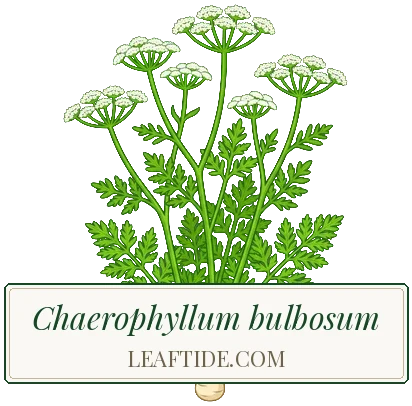
Tuberous chervil is an old-fashioned root vegetable grown for its chestnut-flavoured, anise-scented parsnip-like roots. Sow seeds fresh in autumn; they need cold to break dormancy. Plants grow leafy tops in spring, then die back in summer (they only flower in their second year). Lift roots in mid to late summer after dieback and store for 2–4 weeks before eating to develop their best flavour. Tolerates partial shade and grows well in deep, well-drained soil. A patient crop well worth rediscovering.
 In your Leaftide garden


- Hardiness
- Hardy
- Season
- Cool Season
- Harvest
- Single Harvest
- Spacing
- 10 cm (4 in)
- Height
- 80 cm (31 in)
- Sow depth
- 1 cm (½ in)
- Min. soil temperature
- 3 °C+ (37 °F+)
- Start from
- Seed
- Light
- Full sun to part shade
- Water
- Moderate
When to Start
Direct sow outdoors as soon as soil reaches 3 °C (37 °F) — typically early to mid spring. Hardy enough to tolerate light frosts.
Don't know your frost date? Find it here →
Growth Stages
Approximate days from start
Care Essentials
- Apply a balanced general fertiliser at sowing time. Tuberous chervil is not a heavy feeder; avoid high-nitrogen feeds which promote foliage at the expense of root development.
- Tuberous chervil (Chaerophyllum bulbosum) is a different plant from common chervil (Anthriscus cerefolium); it is grown for its carrot-like root, not its leaves. Seeds require cold stratification and are best sown fresh in autumn or in early spring after a cold period.
Growing Conditions
- Min. soil temperature
- 3 °C+ (37 °F+)
- Germination temperature
- 2–10 °C (36–50 °F)
Spacing & Planting
| Plant spacing | 10 cm (4 in) |
| Row spacing | 30 cm (12 in) |
| Sow depth | 1 cm (½ in) |
| Mature height | 80 cm (31 in) |
| Mature spread | 30 cm (12 in) |
Pests & Diseases
Pest Carrot Fly
Identification: Foliage reddens and wilts, and the roots are scarred with rusty-brown tunnels containing small, creamy-white maggots. Flies are attracted by the smell of bruised foliage.
- Cover the crop with insect-proof mesh from sowing, sealed at the edges, so the flies cannot reach the plants.
- Thin and weed in the evening and carry the thinnings away, because the smell of bruised leaves draws the flies.
- Lift and bin badly tunnelled roots; do not compost them.
Pest Slugs and Snails
Identification: Ragged holes in young shoots and leaves, with silvery slime trails around the plant. Worst on soft new growth in damp weather.
- Search at dusk and after rain and remove them by hand.
- Keep the soil around the plant clear of damp debris where they hide.
- Use a wildlife-friendly slug nematode on warm, moist soil, or set beer traps.
Disease Powdery Mildew
Symptoms: A white, powdery coating on leaves, stems and buds, which then yellow, curl and drop early.
Treatment: Cut off and bin badly affected leaves; do not compost them. Water the soil rather than the leaves, and thin crowded growth so air moves through.
Prevention: Space plants so air moves freely and keep the soil from drying out completely, since stressed plants are hit first.
Growing Conditions
| Min. soil temperature | 3 °C (37 °F) |
| Germination temperature | 2–10 °C (36–50 °F) |
| Base growth temperature | 5 °C (41 °F) |
| Photoperiod sensitivity | day neutral |
Frequently Asked Questions
- How far apart should I plant tuberous chervil?
- Plant tuberous chervil 10 cm (4 in) apart, with 30 cm (12 in) between rows.
- When can I harvest tuberous chervil?
- Tuberous chervil is ready to harvest approximately 120 days after transplanting.
- Is tuberous chervil frost hardy?
- Yes, tuberous chervil is hardy.