How to Grow Torch Ginger
Etlingera elatior
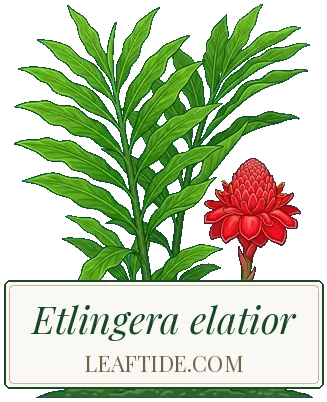
Torch Ginger is a spectacular tropical perennial growing 3-6m (10-20 ft) tall, prized for its dramatic torch-shaped inflorescences in vivid red and pink that emerge from the ground on separate stems. Native to Southeast Asia, it requires consistently warm temperatures above 15C, high humidity, and rich moist soil. In cooler climates it must be grown under heated glass. The flower buds are edible and widely used in Southeast Asian cuisine. Propagate by division of rhizomes.
 In your Leaftide garden


- Height
- 5 m (16 ft)
- Spread
- 2.5 m (8 ft)
- Flowers
- May - November
- Light
- Full sun to part shade
- Water
- High
Yearly Lifecycle
Care Essentials
Feed every two weeks with a balanced liquid fertiliser from spring through autumn. These are heavy feeders in active growth. Reduce to monthly in winter or during dormancy.
Watch For
- Spider mites in dry conditions
- Mealybugs on leaf sheaths
- Snails and slugs on young shoots
- Rhizome rot from waterlogged soil
- Leaf tip browning from low humidity
Care Requirements
Light
Full sun to partial shade
Thrives in bright light with some protection from intense midday sun. In cooler climates under glass, provide the brightest position available.
Watering
Keep consistently moist
Water regularly to maintain even moisture. Never let the soil dry out completely. Reduce slightly in winter but keep roots moist at all times.
Fertilizing
Heavy feeder, fortnightly in growth
Feed every two weeks with a balanced liquid fertiliser at full strength during active growth. Reduce to monthly in winter or dormancy.
Pruning
Remove spent flower stems and old pseudostems
Cut dead flower stems at the base once blooms fade. Remove yellowing or dead pseudostems at ground level. Thin congested clumps to improve airflow.
Spacing
200-300 cm (6.5-10 ft) apart
Space plants 2-3m (6.5-10 ft) apart to allow for their considerable spread. In containers, use the largest pot available, minimum 60cm (24 in) diameter.
Support
No support needed
Pseudostems are self-supporting. The separate flower stems emerging from ground level are sturdy and do not require staking.
Growing Tips
Separate flower stems
Flower stalks emerge directly from the rhizome at ground level, separate from the tall leafy pseudostems. Do not remove leafy stems thinking they will flower.
Harvest buds young
For culinary use, harvest flower buds when still tightly closed and firm. Once fully open they become fibrous and lose flavour.
Divide to propagate
Propagate by dividing established clumps in spring. Each division needs at least two growing points and a section of rhizome.
Pests & Diseases
Pest Red Spider Mites
Identification: Fine pale speckling on the upper leaf surface, then bronzing, with fine webbing under leaves and between shoots; look for tiny specks moving on the undersides. Worst in hot, dry or indoor conditions.
- Raise humidity by misting or hosing the foliage regularly; mites dislike damp.
- Wash off webbing and mites with a jet of water, including the undersides of leaves.
- Spray with insecticidal soap or horticultural oil, repeating weekly for a few weeks.
Pest Mealybugs
Identification: White, waxy, cottony tufts in leaf joints and on young shoots and leaf undersides, with sticky honeydew and sooty mould.
- Dab small colonies with a cotton bud dipped in soapy water.
- Wash larger colonies off with a jet of water, and keep checking, since they return.
- Spray with insecticidal soap or horticultural oil, repeating after a week or two.
Disease Rhizome Rot
Symptoms: Leaf bases soften and turn brown, shoots yellow and collapse, and the rhizome is soft and smells foul. It follows waterlogged or cold, wet soil.
Treatment: Lift the clump, cut away every soft, brown piece of rhizome with a clean knife and replant the firm, healthy parts in fresh, free-draining soil. Water less until new growth shows.
Prevention: Plant in rich, free-draining soil with plenty of organic matter, never in a hollow where water sits, and keep the clump warm: the rhizome rots fastest in cold, wet conditions.
Disease Leaf Tip Browning
Symptoms: Leaf tips and edges turn brown and crisp, usually on plants in dry air, indoors or in a heated glasshouse. It is a humidity problem, not an infection.
Treatment: Raise the humidity by misting often, standing pots on trays of wet pebbles, or damping down the glasshouse floor. Trim off the brown tips with clean scissors; the rest of the leaf is fine.
Prevention: Aim for humidity of 70% or more, keep the soil evenly moist and avoid hot, dry draughts.