How to Grow Komatsuna
Brassica rapa var. perviridis
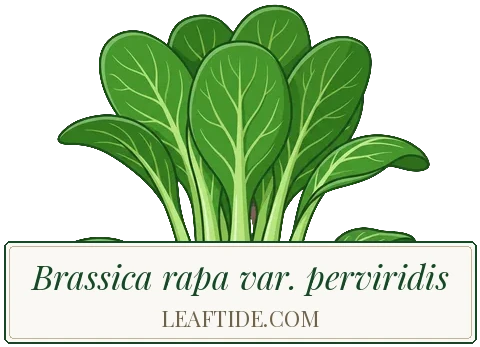
Komatsuna is one of the fastest and most forgiving leafy greens you can grow. Direct sow outdoors from early spring to early autumn, or under cover for winter harvests. Seeds germinate in 4-5 days and leaves are ready in as little as 4 weeks for baby leaf, or 6-8 weeks for full-sized plants. Harvest cut-and-come-again by taking outer leaves, or cut whole heads. Cold-hardy and heat-tolerant (though it bolts in prolonged heat). Mild mustard flavour eaten raw in salads or cooked like spinach. Succession sow every 2-3 weeks for continuous supply.
 In your Leaftide garden
- Hardiness
- Hardy
- Season
- Cool Season
- Harvest
- Continuous Harvest
- Spacing
- 15 cm (6 in)
- Height
- 30 cm (12 in)
- Sow depth
- 1 cm (½ in)
- Min. soil temperature
- 8 °C+ (46 °F+)
- Start from
- Seed
- Light
- Full sun to part shade
- Water
- Moderate
When to Start
Direct sow outdoors as soon as soil reaches 8 °C (46 °F) — typically early to mid spring. Can also be started indoors 3 weeks earlier for a head start.
Don't know your frost date? Find it here →
Growth Stages
Approximate days from start
Care Essentials
- Light balanced feed every 2-3 weeks during active growth. Avoid excess nitrogen which can make leaves tough.
- Extremely fast-growing and cold-tolerant. Ideal for succession sowing from early spring to autumn. Bolts in hot weather, so provide light shade in summer.
Growing Conditions
- Min. soil temperature
- 8 °C+ (46 °F+)
- Germination temperature
- 10–25 °C (50–77 °F)
- Sow indoors
- —
- Transplant out
- —
- First harvest
- —
Want your full season plan with reminders? Set up your garden free


Spacing & Planting
| Plant spacing | 15 cm (6 in) |
| Row spacing | 30 cm (12 in) |
| Sow depth | 1 cm (½ in) |
| Mature height | 30 cm (12 in) |
| Mature spread | 25 cm (10 in) |
Pests & Diseases
Pest Flea Beetles
Identification: Tiny black or striped beetles that jump when disturbed and pepper young leaves with small round holes. Worst on seedlings in dry weather, when they can stunt or kill them.
- Cover sowings with fine mesh straight after sowing and keep the edges buried.
- Water seedlings regularly, because damage is worst on dry soil and moist plants outgrow it.
Pest Cabbage White Caterpillars
Identification: Green or yellow-and-black caterpillars chewing ragged holes in the leaves, with clusters of yellow eggs or single pale eggs on the undersides.
- Pick off eggs and caterpillars by hand.
- Keep the crop under fine mesh so butterflies cannot lay on it.
Pest Slugs and Snails
Identification: Ragged holes and slime trails on young leaves and seedlings, mostly overnight or after rain.
- Collect them by torchlight in the evening and clear away hiding places such as boards and debris.
- Water the soil with a slug-parasitic nematode (Phasmarhabditis hermaphrodita) when the soil is moist and warm enough.
Disease Clubroot Plasmodiophora brassicae
Symptoms: Plants wilt in the daytime, leaves yellow or turn purplish and growth stalls. The roots are swollen, knobbly and distorted, and later rot.
Treatment: There is no cure. Lift and bin infected plants (not on the compost heap). The spores last in the soil for many years.
Prevention: Rotate brassicas, keep the soil well drained and limed to a slightly alkaline pH, raise seedlings in pots from clean compost, and clean tools and boots after working infected soil.
Growing Conditions
| Min. soil temperature | 8 °C (46 °F) |
| Germination temperature | 10–25 °C (50–77 °F) |
| Base growth temperature | 5 °C (41 °F) |
| Photoperiod sensitivity | day neutral |
Frequently Asked Questions
- How far apart should I plant komatsuna?
- Plant komatsuna 15 cm (6 in) apart, with 30 cm (12 in) between rows.
- When can I harvest komatsuna?
- Komatsuna is ready to harvest approximately 25 days after transplanting.
- Is komatsuna frost hardy?
- Yes, komatsuna is hardy.