How to Grow Garlic Chives
Allium tuberosum
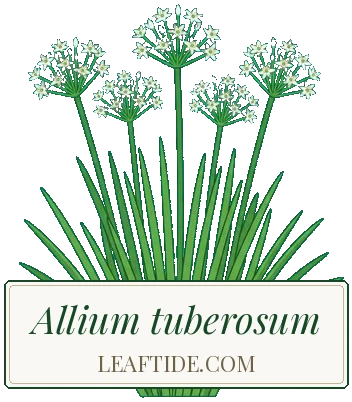
Garlic chives are a hardy clump-forming perennial with flat, strap-like leaves and a mild garlic-onion flavour. Plant in full sun to partial shade in moist, well-drained soil. Snip leaves from the outside of the clump as needed from spring through autumn. Deadhead flower stems promptly to prevent aggressive self-seeding, or enjoy the edible white star-shaped flowers for pollinators. Cut the whole plant back to 5 cm (2 in) after late-summer flowering for a flush of tender regrowth. Divide congested clumps every 2–3 years in spring or autumn to keep them vigorous.
 In your Leaftide garden


- Height
- 40 cm (16 in)
- Spread
- 25 cm (10 in)
- Spacing
- 20 cm (8 in)
- Flowers
- August - September
- Light
- Full sun to part shade
- Water
- Moderate
- Feed
- Light spring feed
Growing from seed
Track from seed- Germination
- 1 to 2 weeks at 18 to 21 °C (64 to 70 °F)
- Plant out
- 6 to 8 weeks after sowing
Yearly Lifecycle
Care Essentials
Light balanced feed in spring. Divide clumps every 2–3 years in spring or autumn.
Watch For
- Onion fly
- Rust
- Leek moth
- Aphids
Companions
Roses, Carrots, Tomatoes, Peppers
Pet Safety
Care Requirements
Light
Full sun to partial shade
Grows best in full sun but tolerates light shade. Flavour and leaf production are strongest in a sunny position. Suitable for most garden aspects.
Watering
Keep moist, especially in pots
Keep soil consistently moist, particularly during dry spells and in containers. Do not let pots dry out completely or leaves will yellow and weaken. Avoid waterlogging.
Fertilizing
Light spring feed; divide every 2–3 years
A light balanced feed in spring is sufficient. Dividing congested clumps every 2–3 years in spring or autumn does more for vigour than heavy feeding.
Pruning
Deadhead to prevent seeding; cut back after late-summer flowering
Remove spent flower heads promptly to prevent prolific self-seeding. Cut the whole plant back to about 5 cm (2 in) after late-summer flowering to encourage a flush of fresh, tender new growth.
Harvesting
Snip outer leaves as needed from spring to autumn
Cut leaf blades from the outside of the clump with scissors, leaving 3–5 cm (1–2 in) to regrow. Flowers and flower buds are also edible and have a mild garlic-onion flavour.
Growing Tips
Flat leaves, not hollow
Garlic chives have flat strap-like leaves, not the hollow round tubes of common chives. The flavour is milder and garlicky rather than oniony.
Cut little and often
Snip leaf blades with scissors, leaving 3–5 cm (1–2 in) to regrow quickly. Frequent harvesting keeps the plant producing tender, flavoursome leaves.
Deadhead or self-seeding follows
Garlic chives set seed prolifically. Remove spent flower heads before seeds ripen unless you want seedlings to appear nearby. They can become weedy.
Divide to revive
Split congested clumps every 2–3 years in spring or autumn. Older undivided clumps lose vigour and produce fewer, tougher leaves.
Pests & Diseases
Pest Allium Leaf Miner
Identification: Lines of tiny white dots along the leaves where the adult flies have fed, followed by twisted, distorted leaves. White legless maggots and brown pupae about 3 mm long sit in the leaf bases, and damaged clumps often rot.
- Cover the clump with fine insect-proof mesh while the adult flies are laying, roughly in spring and autumn. Because the clump stays put, cut out any leaves with maggots or pupae before covering, or flies can hatch under the mesh.
- Cut off and bin (not compost) leaves holding maggots or pupae.
Disease Onion White Rot Stromatinia cepivora
Symptoms: Leaves yellow and wilt, especially in dry weather, and plants come loose in the soil. The roots and base rot, covered in white fluffy fungus that later carries tiny black seed-like specks.
Treatment: There is no cure. Dig up affected clumps with the soil around their roots and put them in the bin, not the compost. Grow alliums somewhere else, as the fungus survives in the soil for many years.
Prevention: Start with healthy plants from a clean source, and don't carry soil from an affected plot on tools, boots or plant roots.
Disease Downy Mildew
Symptoms: Pale, yellowish patches on the leaves in cool, damp weather, soon covered in a grey to purplish fuzz. Affected leaves flop and die back.
Treatment: Cut off and bin affected leaves. If most of the clump is affected, shear it down and let it regrow clean leaves.
Prevention: Divide congested clumps and give them space so the leaves dry quickly. Water the soil, not the leaves.
Spacing & Planting
| Plant spacing | 20 cm (8 in) |
| Row spacing | 30 cm (12 in) |
| Mature height | 40 cm (16 in) |
| Mature spread | 25 cm (10 in) |
Forms dense clumps over time. Divide every 2–3 years to maintain vigour.