How to Grow Caraway
Carum carvi
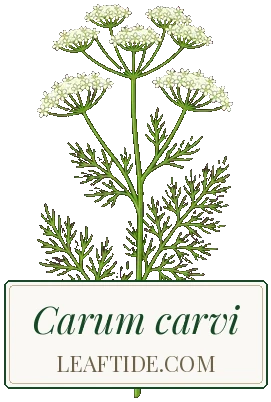
Caraway is a biennial herb grown mainly for its aromatic seeds, a staple in German and Dutch bread, Scandinavian aquavit, and Central European cuisine. Sow in late spring or early summer of year one; plants form a low, ferny rosette and build a strong taproot through their first season. They overwinter without protection, then bolt and flower the following summer. Harvest the seed heads when brown but before they shatter. The feathery young leaves are edible in salads (mild carrot-dill flavour), and the thick taproot can be eaten like parsnip. Completely hardy, undemanding, and troubled by few pests. Needs full sun and well-drained soil. Do not transplant mature plants as the taproot resents disturbance.
 In your Leaftide garden
- Hardiness
- Hardy
- Season
- Cool Season
- Harvest
- Single Harvest
- Spacing
- 20 cm (8 in)
- Height
- 60 cm (24 in)
- Sow depth
- 1 cm (½ in)
- Min. soil temperature
- 7 °C+ (45 °F+)
- Start from
- Seed
- Light
- Full sun
- Water
- Low
When to Start
Direct sow outdoors as soon as soil reaches 7 °C (45 °F) — typically early to mid spring. Can also be started indoors 4 weeks earlier for a head start.
Don't know your frost date? Find it here →
Growth Stages
Approximate days from start
Care Essentials
- Light balanced feed in early spring of the second year as growth resumes. No feeding needed in the first year while the root establishes.
- Biennial herb, sown one year and harvested for seeds the next. Forms a low rosette of feathery leaves in year one, then sends up flower stalks in year two. The taproots are also edible (similar to parsnip). Traditional in German and Dutch rye breads, Scandinavian aquavit, and Central European cooking.
Growing Conditions
- Min. soil temperature
- 7 °C+ (45 °F+)
- Germination temperature
- 10–20 °C (50–68 °F)
Pet Safety
- Sow indoors
- —
- Transplant out
- —
- First harvest
- —
Want your full season plan with reminders? Set up your garden free


Spacing & Planting
| Plant spacing | 20 cm (8 in) |
| Row spacing | 30 cm (12 in) |
| Sow depth | 1 cm (½ in) |
| Mature height | 60 cm (24 in) |
| Mature spread | 25 cm (10 in) |
Pests & Diseases
Pest Carrot Fly
Identification: Seedlings and young plants stall, the foliage reddens and wilts, and the taproot is scarred with rusty-brown tunnels containing small cream-coloured maggots. Worst in the first season, when the taproot is forming.
- Cover the row with insect-proof mesh or fleece from sowing, since the flies fly low.
- Sow thinly so you hardly need to thin, and do the thinning on a cool, still evening: the smell of bruised foliage draws the flies.
- Lift and bin badly damaged plants, and do not sow caraway or other umbellifers where carrots or parsnips grew the year before.
Pest Willow-Carrot Aphid
Identification: Clusters of small green to yellowish aphids on young leaves and flower stems, often curling and distorting them, with sticky honeydew. They gather on the umbels around flowering.
- Wash small colonies off with a firm jet of water, or squash them by hand; do not use sprays on a plant you harvest seed from.
- Let flowers feed hoverflies, lacewings and ladybirds, whose larvae eat aphids.
- Cut off and bin badly infested flowering stems before the seed sets.
Growing Conditions
| Min. soil temperature | 7 °C (45 °F) |
| Germination temperature | 10–20 °C (50–68 °F) |
| Base growth temperature | 5 °C (41 °F) |
| Photoperiod sensitivity | day neutral |
Frequently Asked Questions
- How far apart should I plant caraway?
- Plant caraway 20 cm (8 in) apart, with 30 cm (12 in) between rows.
- When can I harvest caraway?
- Caraway is ready to harvest approximately 370 days after transplanting.
- Is caraway frost hardy?
- Yes, caraway is hardy.