How to Grow Cacao Tree
Theobroma cacao
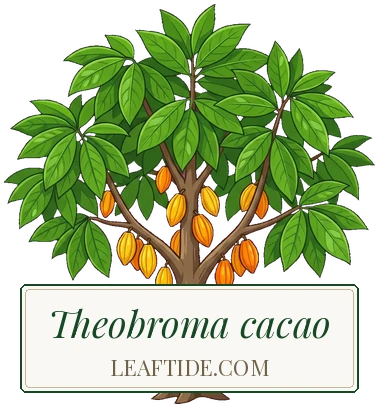
Cacao trees are tropical understory plants requiring warmth (min 15 degrees C), high humidity, and dappled shade: in temperate climates they must be grown in a heated greenhouse or conservatory. Plant in rich, free-draining soil with plenty of organic matter and mist regularly to maintain humidity. Feed monthly with a balanced fertiliser, switching to high-potash when pods form. The striking pods grow directly from the trunk and main branches; each takes 5-6 months to ripen. Prune lightly after harvest to remove dead wood and improve airflow.
 In your Leaftide garden


- Height
- 8 m (26 ft)
- Spread
- 5 m (16 ft)
- Harvest
- October - November
- Light
- Part shade
- Water
- High
Yearly Lifecycle
Care Essentials
Feed monthly from spring to autumn with a balanced fertiliser. Switch to a high-potash liquid feed when pods are developing to support fruit set and flavour.
Watch For
- Black pod disease (Phytophthora)
- Witches broom disease
- Mealybugs
- Scale insects
- Thrips
Companions
Banana, Heliconia, Ginger, Bird of Paradise
Pet Safety
Care Requirements
Light
Dappled shade or bright indirect light
Naturally grows as a tropical understory tree beneath forest canopy. Prefers dappled light or bright indirect light; direct midday sun can scorch leaves. Three to four hours of gentle morning sun is ideal when grown under glass.
Watering
Consistently moist, never waterlogged
Keep soil evenly moist at all times; cacao does not tolerate drought or waterlogging. Water deeply 2-3 times a week in warm weather, less in winter. Mist foliage regularly to maintain the high humidity (60-80%) it needs.
Fertilizing
Monthly balanced feed; high-potash when fruiting
Apply a balanced liquid fertiliser monthly from spring through autumn. Switch to a high-potash feed once pods begin to develop. Mulch annually with well-rotted compost or leaf mould.
Pruning
Light post-harvest pruning only
Prune lightly after each harvest cycle to remove dead wood and improve air circulation. Remove shoots that develop below the first jorquette (branch fork). Avoid heavy pruning which stresses the tree and reduces future fruiting.
Spacing
6m (20 ft) apart; or single specimen under glass
Allow 6m (20 ft) between trees in tropical plantations. In temperate climates usually grown as a single specimen in a large conservatory or greenhouse border. Needs space for its wide lateral branch spread.
Humidity
High humidity essential (60-80%)
Cacao is extremely sensitive to dry air. In heated greenhouses, group with other tropical plants, use pebble trays with water, and mist daily. Consistently low humidity causes leaf drop and prevents pod development.
Growing Tips
Hand-pollinate the flowers
Cacao is pollinated by tiny midges that don't live indoors, so flowers under glass usually drop without setting pods. Flowers open early in the morning: brush pollen from the anthers of one open flower onto the stigma of another with a small paintbrush. Many cacao types are self-incompatible and a lone seedling may never set pods, while the Amelonado type sets pods with its own pollen.
Thin the pods, then cut them off
Flowers and pods grow from cushions on the trunk and branches that flower again year after year. On a young tree, thin the pods to a few so it is not overloaded, and cut ripe pods off with secateurs once they turn yellow or red and yellow: pulling them tears the cushion and loses its next flowers.
Red new leaves are normal
New leaves come out pinkish red and turn green as they mature, so a red flush is healthy growth, not a deficiency. Some older leaves often drop as a new flush opens.
Flowers need warmth and time
Trees usually start flowering at three to four years old, and only flower when it is 20 °C (68 °F) or warmer. A plant kept at 15 °C (59 °F) through winter stays healthy but won't flower until it warms up again, so pods need a heated greenhouse or a warm room.
Pests & Diseases
Pest Mealybugs
Identification: White, waxy, woolly clusters in the leaf axils, along the veins under the leaves and around the flower cushions on the trunk. Leaves turn sticky with honeydew and may blacken with sooty mould.
- Wipe off small colonies with a damp cloth or a cotton bud, checking the trunk where flowers form.
- In a greenhouse or conservatory kept above 20 °C (68 °F), release the mealybug ladybird Cryptolaemus montrouzieri.
- Spray with a plant oil or fatty acid insecticide and repeat as the label says, as one spray rarely gets through the wax.
Pest Scale Insects
Identification: Flat or domed brown bumps, 2-5 mm long, fixed along stems and leaf veins. Sticky honeydew and sooty mould on the leaves below.
- Scrape or wipe the scales off by hand.
- Under glass in summer, release the parasitic wasp Metaphycus helvolus against soft scale.
- Spray the young crawlers with a plant oil or fatty acid insecticide.
Pest Red Spider Mite
Identification: Fine pale mottling on the upper side of the leaves, which turn dull and dry out; tiny mites and fine webbing on the undersides. Worst in hot, dry air under glass.
- Raise the humidity by damping down the greenhouse floor and misting the leaves: the mites thrive in dry air.
- Release the predatory mite Phytoseiulus persimilis as soon as you see damage.
Disease Phytophthora Root and Pod Rot Phytophthora spp.
Symptoms: In cold, waterlogged compost the plant wilts and drops leaves even though the soil is wet, and the roots are brown and soft instead of white. On a fruiting plant, pods develop dark brown patches that spread until the whole pod turns black.
Treatment: Cut off and bin blackened pods as soon as you see them. For root rot, take the plant out of its pot, cut away dead roots and repot in fresh, free-draining compost, then water sparingly until it grows again. A badly rotted plant rarely recovers.
Prevention: Use a pot with drainage holes and an open, free-draining mix, never leave the pot standing in water, and water less when it is cooler in winter. Keep air moving under glass.
Disease Cold Damage
Symptoms: Leaves brown, wilt and drop after a cold night or a cold draught, and flowering stops. Below 10 °C (50 °F) the plant can be badly damaged or killed.
Treatment: Move the plant somewhere warmer at once and water sparingly until new leaves appear. Wait for regrowth before cutting out dead shoots, so you can see where the live wood ends.
Prevention: Keep it above 15 °C (59 °F) all year, away from cold windows and outside doors in winter.