How to Grow Yam
Dioscorea spp.
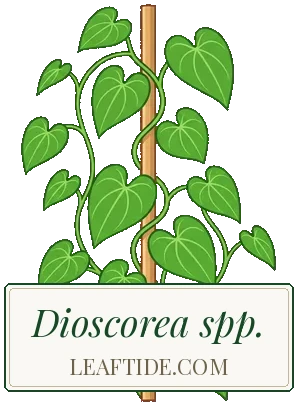
Yams are tropical climbing vines producing large starchy tubers underground. Plant tuber sections into warm, loose, well-drained soil once temperatures are consistently above 20C. Provide sturdy stakes or trellis as vines grow vigorously to 2-3 metres (6.5-10 ft). Keep soil consistently moist but not waterlogged during the long growing season of 8-11 months. Feed monthly with high-potash fertilizer once vines are established. Harvest when foliage dies back naturally, digging carefully to avoid damaging tubers. Cure in shade for several days before storing in a warm, dry, well-ventilated place above 15C.
 In your Leaftide garden


- Hardiness
- Tender
- Season
- Warm Season
- Harvest
- Single Harvest
- Spacing
- 1 m (3.5 ft)
- Height
- 2.5 m (8 ft)
- Sow depth
- 10 cm (4 in)
- Min. soil temperature
- 20 °C+ (68 °F+)
- Start from
- Bulb/Tuber
- Light
- Full sun
- Water
- Moderate
When to Start
Plant directly outdoors once soil temperature reaches 20 °C (68 °F). No seed starting needed — grow from bulbs, tubers, or sets.
Don't know your frost date? Find it here →
Growth Stages
Approximate days from start
Care Essentials
- Apply balanced fertilizer at planting, then high-potash feed monthly once vines are established. Avoid excess nitrogen which promotes vine growth over tubers.
- True yam (Dioscorea spp.) is a tropical climbing vine, not to be confused with sweet potato. Requires 8-11 months of warm weather and vertical support for vines that can reach 2-3 metres (6.5-10 ft). Staple food in West Africa, Caribbean, and Pacific Islands.
Growing Conditions
- Min. soil temperature
- 20 °C+ (68 °F+)
- Germination temperature
- 25–35 °C (77–95 °F)
Spacing & Planting
| Plant spacing | 1 m (3.5 ft) |
| Row spacing | 1.2 m (4 ft) |
| Sow depth | 10 cm (4 in) |
| Mature height | 2.5 m (8 ft) |
| Mature spread | 80 cm (31 in) |
Plant tuber sections or vine cuttings into warm, loose soil. Needs vertical support for climbing vines.
Pests & Diseases
Pest Mealybugs
Identification: White, waxy, cottony clusters on the vines, at leaf joints and, in storage, on the tuber skin. Leaves yellow and curl, growth slows, and sticky honeydew with black sooty mould builds up.
- Dab small colonies with a soft brush dipped in soapy water or rubbing alcohol.
- Check tubers before storing and now and then in store; brush off any insects and discard heavily infested tubers.
- Clear old vine debris at the end of the season so the insects have nowhere to overwinter.
Pest Yam Nematodes
Identification: Vines are stunted and yellow, and the tubers show a dry, yellow-brown, cracked rot just under the skin that spreads inward. It is often only noticed when digging or after weeks in store.
- Plant only healthy, undamaged seed tubers or vine cuttings, and never replant pieces from a tuber with dry rot.
- Do not grow yam on the same ground two years running; follow it with a crop from another plant family.
- Discard affected tubers rather than composting them.
Disease Anthracnose Colletotrichum gloeosporioides
Symptoms: Dark brown to black spots with a yellow halo appear on the leaves and join up to kill whole leaves; stems and shoots can die back from the tip. It is worst in warm, wet, humid weather.
Treatment: Cut off and bin affected leaves and shoots; do not compost them. Keep the vines on a trellis so air moves through, and water at the base.
Prevention: Start from healthy seed tubers, plant on fresh ground each year, and clear old vines at the end of the season.
Growing Conditions
| Min. soil temperature | 20 °C (68 °F) |
| Germination temperature | 25–35 °C (77–95 °F) |
| Base growth temperature | 15 °C (59 °F) |
| Min. daylength to start | 11 h |
| Photoperiod sensitivity | day neutral |
Frequently Asked Questions
- How far apart should I plant yam?
- Plant yam 1 m (3.5 ft) apart, with 1.2 m (4 ft) between rows.
- When can I harvest yam?
- Yam is ready to harvest approximately 270 days after transplanting.
- Is yam frost hardy?
- No, yam is tender.