How to Grow Land Cress
Barbarea verna
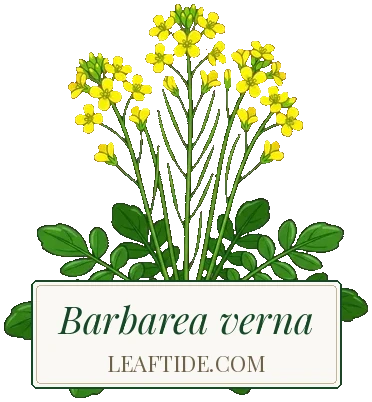
Land cress is a hardy, peppery salad leaf that grows in ordinary moist soil: no stream required. Direct sow from late winter through early autumn in a cool, partly shaded spot. It matures in 40–60 days and can be harvested cut-and-come-again over a long season. Succession sow every 3–4 weeks for continuity. Very frost-tolerant; one of the best winter salad options.
 In your Leaftide garden
- Hardiness
- Hardy
- Season
- Cool Season
- Harvest
- Continuous Harvest
- Spacing
- 15 cm (6 in)
- Height
- 20 cm (8 in)
- Sow depth
- 0.5 cm (¼ in)
- Min. soil temperature
- 4 °C+ (39 °F+)
- Start from
- Seed
- Light
- Full sun to part shade
- Water
- Moderate
When to Start
Direct sow outdoors as soon as soil reaches 4 °C (39 °F) — typically early to mid spring. Can also be started indoors 2 weeks earlier for a head start.
Don't know your frost date? Find it here →
Growth Stages
Approximate days from start
Care Essentials
- Light liquid feed every 2–3 weeks during the growing season. Rich soil reduces the need for feeding.
- Sow every 3–4 weeks from late winter to early autumn for a near-year-round supply. Grows in ordinary moist soil: no stream needed. Partial shade in summer extends the harvest season. A versatile and reliable watercress alternative.
Growing Conditions
- Min. soil temperature
- 4 °C+ (39 °F+)
- Germination temperature
- 7–18 °C (45–64 °F)
Pet Safety
- Sow indoors
- —
- Transplant out
- —
- First harvest
- —
Want your full season plan with reminders? Set up your garden free


Spacing & Planting
| Plant spacing | 15 cm (6 in) |
| Row spacing | 20 cm (8 in) |
| Sow depth | 0.5 cm (¼ in) |
| Mature height | 20 cm (8 in) |
| Mature spread | 20 cm (8 in) |
Can be sown more densely for cut-and-come-again baby leaf harvesting. Does not need water or a stream: grows in ordinary moist garden soil.
Pests & Diseases
Pest Flea Beetle
Identification: Numerous tiny round holes across leaves (shot-hole damage); small, shiny black beetles that jump when disturbed
- Cover with fine mesh or fleece from sowing: the most effective control
- Keep soil moist; flea beetles prefer dry conditions
- Spray with pyrethrin-based insecticide in the evening
Pest Slugs and Snails
Identification: Ragged holes in leaves overnight; slime trails on foliage and soil
- Apply organic ferric phosphate slug pellets around seedlings
- Hand-pick at dusk; use beer traps
- Apply ferric phosphate slug pellets
Disease Downy Mildew Hyaloperonospora barbareae
Symptoms: Yellow patches on upper leaf surfaces with grey-white fuzzy growth on undersides; leaves become papery
Treatment: Remove affected leaves; improve air circulation; avoid overhead watering
Prevention: Good spacing; water at base; rotate brassica crops
Growing Conditions
| Min. soil temperature | 4 °C (39 °F) |
| Germination temperature | 7–18 °C (45–64 °F) |
| Base growth temperature | 3 °C (37 °F) |
| Min. daylength to start | 8 h |
| Photoperiod sensitivity | day neutral |
Frequently Asked Questions
- How far apart should I plant land cress?
- Plant land cress 15 cm (6 in) apart, with 20 cm (8 in) between rows.
- When can I harvest land cress?
- Land cress is ready to harvest approximately 30 days after transplanting.
- Is land cress frost hardy?
- Yes, land cress is hardy.