How to Grow Golden Kiwi
Actinidia chinensis
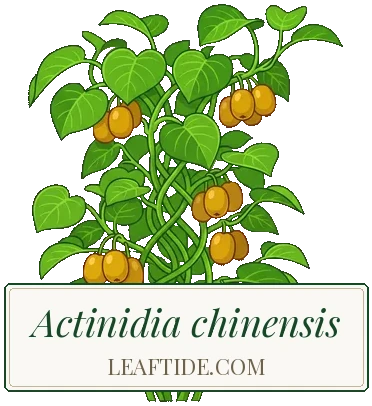
Golden kiwi (Actinidia chinensis) is a different species from the standard green kiwi (A. deliciosa). The fruit has smooth skin (less fuzzy), golden-yellow flesh, and a sweeter, less acidic flavour. Slightly less hardy than green kiwi, needing a warm sheltered spot. Vigorous vine growing 5-8m (16-26 ft). Requires a male pollinator plant nearby. Train on a sturdy T-bar trellis or pergola. Summer and winter pruning are both essential. Harvest before first frost in mid to late autumn and ripen indoors.
 In your Leaftide garden


- Height
- 5 m (16 ft)
- Spread
- 3 m (10 ft)
- Spacing
- 4 m (13 ft)
- Harvest
- October - November
- Light
- Full sun
- Water
- Moderate
- Feed
- Balanced spring feed
Yearly Lifecycle
Fruit-Growing Planning Tools
Check winter chill hours for your location and verify pollination compatibility before planting.
Care Requirements
Light
Full sun, warm sheltered position essential
Full sun in the warmest, most sheltered spot available. A warm, sunny wall is ideal in the UK. More heat-demanding than green kiwi. Insufficient warmth leads to poor fruit development.
Watering
Regular watering; especially during fruit development
Water regularly, especially during fruit development in summer. Kiwi vines have large leaves that lose moisture quickly. Mulch well to retain soil moisture. Avoid waterlogging.
Fertilizing
Balanced spring feed; fortnightly liquid feed after fruit set
Apply a balanced granular fertiliser in early spring. Follow with fortnightly liquid feeds once fruit has set to support the developing crop. Mulch annually with compost.
Pruning
Summer pinch beyond fruit; winter cut back fruited laterals
Summer pruning: pinch new shoots to five or six leaves beyond the fruit to direct energy into the crop. Winter pruning: cut fruited laterals back to two or three buds beyond the last fruit. Both are essential for productive plants.
Support
Very sturdy T-bar trellis or pergola
Provide a very sturdy pergola, T-bar trellis, or heavy-gauge wire system. Golden kiwi vines are vigorous and heavy. Lightweight structures will collapse under the weight within a few years.
Overwintering
Protect flowers from late frost; less hardy than green kiwi
Slightly less hardy than green kiwi. Protect young plants in winter. Drape fleece over the vine on frosty nights during flowering to protect the crop. Choose the most sheltered spot possible.
Growing Tips
Needs a male pollinator
Golden kiwi requires a compatible male plant nearby for pollination. One male can pollinate up to six females. Self-fertile varieties are not available for this species.
Less hardy than green kiwi
Golden kiwi is slightly more tender than the common green kiwi. Choose the warmest, most sheltered spot in the garden. A warm, sunny wall is ideal in cooler areas.
Two-stage pruning is essential
In summer, pinch new shoots back to five or six leaves beyond the fruit. In winter, cut fruited laterals back to two or three buds beyond the last fruit. Both are needed for productive plants.
Harvest before frost
Pick fruit in mid to late autumn before the first frost. The fruit will not be ripe on the vine. Store cool and bring to room temperature with a banana to ripen.
Pests & Diseases
Pest Cats
Identification: Cats are drawn to the scent of kiwi stems, much as they are to catnip. They rub against, chew and claw young plants, snapping new shoots in spring and scratching the bark at the base.
- Fit a chicken wire cylinder around the base of young plants for their first few years
- Once the trunk is thick and woody the plant usually shrugs off the attention
Disease Bacterial canker of kiwifruit (Psa) Pseudomonas syringae pv. actinidiae
Symptoms: Small dark brown leaf spots with a yellow halo, flower buds that turn brown and fail to open, wilting shoot tips, and cankers on canes and trunk that ooze a rusty red or whitish sticky liquid in spring. Golden kiwi (A. chinensis) is more susceptible than green kiwi; the virulent strain that spread from 2008 wiped out whole plantings of gold varieties in Italy and New Zealand.
Treatment: There is no cure. In dry weather, cut out infected canes well below the visible symptoms, disinfect your secateurs between cuts and bin or burn the prunings. Remove plants with cankers on the main trunk.
Prevention: Buy healthy plants from a reputable nursery. The bacteria enter through wounds, so prune only in dry weather and shelter the vine from frost and strong wind, which both damage tissue.
Disease Phytophthora root rot Phytophthora spp.
Symptoms: Leaves yellow and wilt even though the soil is wet, growth stalls and the vine declines over one or more seasons. Roots are dark and rotting, and the tissue under the bark at the stem base is reddish brown.
Treatment: There is no cure once the roots are badly rotted. Stop overwatering, improve drainage around the plant and remove vines that keep declining.
Prevention: Plant only in free-draining soil, or on a raised mound on heavy ground. Keep mulch a hand's width away from the stem.
Disease Late frost damage
Symptoms: New shoots and flower buds blacken and wilt after a frost in spring. The vine regrows, but the flowers on the lost shoots are gone, so the crop that year can be much smaller.
Treatment: Once the frost risk has passed, cut blackened shoot tips back to healthy growth.
Prevention: Avoid frost pockets and plant against a warm, sheltered wall. Once buds break, cover the vine with fleece or hessian on nights when frost is forecast.
Spacing & Planting
| Plant spacing | 4 m (13 ft) |
| Row spacing | 5 m (16 ft) |
| Mature height | 5 m (16 ft) |
| Mature spread | 3 m (10 ft) |
Vigorous vine needing sturdy T-bar trellis. 4-5m (13-16 ft) between plants. Requires male pollinator nearby.