How to Grow Cime di Rapa
Brassica rapa subsp. sylvestris
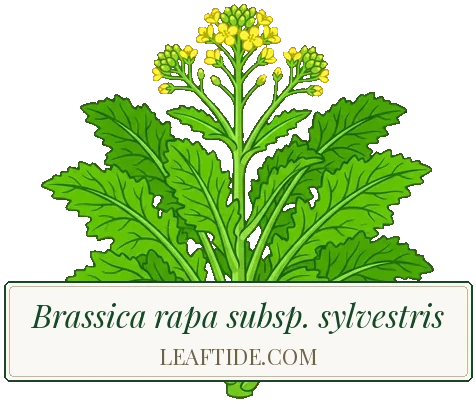
Cime di rapa is a fast-growing Italian leafy vegetable harvested for its tender shoots and flower buds. Direct sow in autumn or early spring into fertile, moist soil. Thin seedlings to 25 cm (10 in) apart and keep well watered. Harvest young shoots and unopened flower buds before they fully open: the bitterness mellows with cooking. Successive sowings extend the season from autumn through spring in mild climates.
 In your Leaftide garden


- Hardiness
- Hardy
- Season
- Cool Season
- Harvest
- Continuous Harvest
- Spacing
- 25 cm (10 in)
- Height
- 50 cm (20 in)
- Sow depth
- 1 cm (½ in)
- Start from
- Seed
- Light
- Full sun to part shade
- Water
- Moderate
When to Start
Direct sow outdoors as soon as soil reaches 5 °C (41 °F) — typically early to mid spring. Hardy enough to tolerate light frosts.
Don't know your frost date? Find it here →
Growth Stages
Approximate days from start
Care Essentials
- Cime di rapa bolts quickly in heat. Sow in succession from late summer through early spring for a continuous harvest. The bitterness is a feature, not a flaw; it mellows with blanching or slow cooking.
- Harvest young shoots and flower buds when buds are tight and green, before any yellow petals show. Cut stems 10-15 cm (4-6 in) long. Regular harvesting encourages new side shoots.
Growing Conditions
- Germination temperature
- 7–20 °C (45–68 °F)
Spacing & Planting
| Plant spacing | 25 cm (10 in) |
| Row spacing | 30 cm (12 in) |
| Sow depth | 1 cm (½ in) |
| Mature height | 50 cm (20 in) |
| Mature spread | 30 cm (12 in) |
Pests & Diseases
Pest Flea Beetle
Identification: Tiny shiny black beetles that jump when disturbed, peppering seedling leaves with small round holes. Seedlings in warm, dry spring weather can be killed outright.
- Cover the rows with fine insect mesh straight after sowing, with the edges buried or weighted down.
- Keep the seedbed moist in dry weather so seedlings grow quickly past the vulnerable stage.
Pest Cabbage White Caterpillars
Identification: Green or yellow-and-black caterpillars on the leaves and among the flower buds, with ragged holes and dark green droppings. Small ones hide among the shoots and are easy to miss at harvest.
- Cover plants with fine insect mesh, held clear of the leaves so butterflies cannot lay eggs through it.
- Check leaf undersides weekly and rub off yellow egg clusters and young caterpillars.
Pest Mealy Cabbage Aphid
Identification: Dense colonies of grey, waxy aphids on the leaf undersides and in the shoot tips, with yellowed, puckered leaves. Colonies that get into the flower shoots spoil them for eating.
- Squash small colonies or wash them off with a jet of water.
- Spray with an insecticidal soap or fatty-acid product, reaching the leaf undersides.
Disease Club Root Plasmodiophora brassicae
Symptoms: Plants are stunted and wilt in warm weather, and the leaves may turn purplish. Lifted plants have swollen, distorted roots.
Treatment: There is no cure. Lift affected plants with as much root as possible and bin them, never compost them. The spores survive in the soil for many years.
Prevention: Lime acid soil until it is slightly alkaline, keep brassicas off infected ground, and clean soil off boots and tools after working an infected bed.
Growing Conditions
| Germination temperature | 7–20 °C (45–68 °F) |
| Base growth temperature | 5 °C (41 °F) |
Frequently Asked Questions
- How far apart should I plant cime di rapa?
- Plant cime di rapa 25 cm (10 in) apart, with 30 cm (12 in) between rows.
- Is cime di rapa frost hardy?
- Yes, cime di rapa is hardy.