How to Grow Arrowroot
Maranta arundinacea
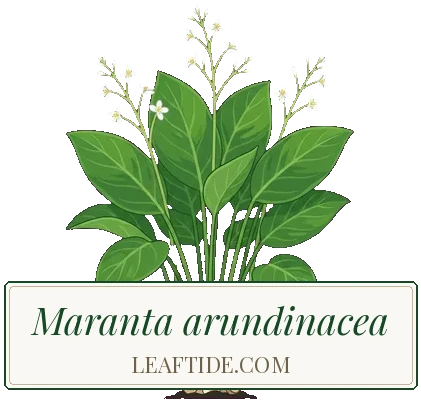
Arrowroot is a tropical perennial grown for its starchy rhizomes, which are dried and ground into the fine white powder used as a cooking thickener. Plant rhizome pieces with growth buds 5 cm (2 in) deep in warm, rich, moist soil in spring. It prefers partial shade and high humidity: ideal under the dappled canopy of trees. Keep consistently moist throughout the growing season. Growth is slow at first; large paddle-shaped leaves appear as temperatures rise. Harvest after 8–10 months when the foliage dies back, dig the rhizomes, and replant fresh pieces for the next crop. In temperate climates, grow in large containers and bring indoors before frost.
 In your Leaftide garden


- Height
- 1.2 m (4 ft)
- Spread
- 90 cm (35 in)
- Spacing
- 30 cm (12 in)
- Flowers
- July - October
- Light
- Full sun to part shade
- Water
- High
- Prune
- No pruning needed
Yearly Lifecycle
Care Essentials
Feed monthly during active growth (spring through late summer) with a balanced liquid fertiliser. Reduce feeding as foliage yellows and dies back in autumn: this signals the rhizomes are maturing.
Watch For
- Root rot from waterlogged soil
- Spider mites in dry or warm conditions
- Slugs on young shoots
- Fungal leaf spot in overly humid conditions
Pet Safety
Care Requirements
Light
Partial shade to bright indirect light
Arrowroot thrives in dappled shade or bright indirect light. It tolerates full sun only in consistently moist, humid conditions. Avoid direct midday sun which scorches the large leaves.
Watering
Consistently moist; never waterlogged
Keep soil evenly moist throughout the growing season. Arrowroot requires high humidity and regular watering. Reduce watering as foliage begins to die back in autumn.
Fertilizing
Monthly balanced feed during active growth
Apply a balanced liquid fertiliser monthly from spring to late summer. Avoid high-nitrogen feeds which promote leaf growth over rhizome development. Stop feeding when foliage yellows.
Pruning
No pruning needed
No pruning is required. Allow foliage to die back naturally. Cut spent stems to the ground after fully drying back in autumn.
Spacing
30 cm (12 in) apart; one per 30 cm (12 in) pot
Space rhizomes 30 cm (12 in) apart in rows 40 cm (16 in) apart. For containers, use one rhizome per 30 cm (12 in) diameter pot. Plants grow 90-120 cm (3-4 ft) tall.
Support
No support needed
Arrowroot is self-supporting with sturdy upright stems. No staking or support is required under normal growing conditions.
Growing Tips
Source fresh rhizomes
Use firm, plump rhizomes with visible growth buds from a tropical plant supplier or health food store. Plant with buds facing up, 5 cm (2 in) deep. One rhizome per 30 cm (12 in) pot in temperate climates.
Provide shade and moisture
Unlike many crops, arrowroot prefers partial shade over full sun. Under trees or in dappled light it grows lush. Keep soil consistently moist but ensure good drainage; never waterlogged.
Harvest when foliage dies back
Die-back of leaves signals rhizome maturity. Dig carefully to avoid breaking the brittle roots. Replant fresh vigorous pieces immediately for next year's crop; rhizomes do not store well long-term.
Pests & Diseases
Pest Spider Mites
Identification: Fine pale speckling on the leaves that spreads until they look dull, dry and bronzed, with fine webbing under the leaves. Plants kept in warm, dry air, such as indoors or under glass over winter, are attacked first.
- Wash the leaves, especially the undersides, with a gentle jet of water or a damp cloth every few days until the mites are gone.
- Raise the humidity around potted plants by standing the pot on a tray of damp pebbles, and keep plants away from heaters.
- In a greenhouse or conservatory, the predatory mite Phytoseiulus persimilis can be released against two-spotted spider mite.
Disease Rhizome and Root Rot
Symptoms: Leaves yellow and collapse, the stems go soft at the base, and the rhizomes dug up are brown, mushy and smelly instead of firm and white. It follows waterlogged soil or a pot with no drainage, and cold, wet soil.
Treatment: Lift the plant, cut away every soft or brown part of the rhizome and replant the firm, white pieces in fresh, free-draining soil or compost. Bin the rotten pieces.
Prevention: Keep the soil evenly moist but never soggy, use pots with drainage holes and open, humus-rich soil, and keep potted plants drier in winter, when growth slows.
Disease Brown Leaf Tips and Edges
Symptoms: The tips and edges of the leaves dry to a crisp brown while the rest of the leaf stays green. Leaves may also curl. It is a care problem, not an infection.
Treatment: Trim off the brown edges with clean scissors, following the leaf shape. Fix the cause: water more evenly and raise the humidity.
Prevention: Keep the soil evenly moist, avoid hot dry air and drying winds, and water with rainwater where your tap water is hard.
Spacing & Planting
| Plant spacing | 30 cm (12 in) |
| Row spacing | 40 cm (16 in) |
| Mature height | 1.2 m (4 ft) |
| Mature spread | 90 cm (35 in) |
Space rhizomes 30 cm (12 in) apart in rows 40 cm (16 in) apart. One rhizome per 30 cm (12 in) pot for container growing. Grows well in raised beds or large tubs in temperate climates.