How to Grow Ajwain (Carom)
Trachyspermum ammi
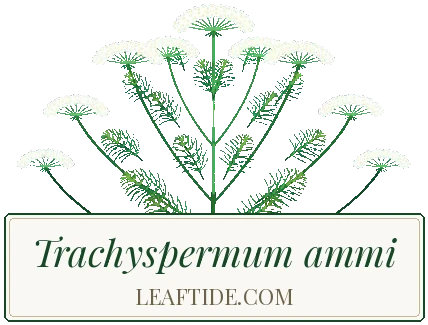
Ajwain is a slow-growing carrot-family herb grown for its intensely flavoured seeds used in Indian cooking. Sow in spring after last frost in full sun and well-drained soil. It needs a long season of 4 months to ripen seeds. Water sparingly: it tolerates dry conditions well. Harvest the grey-green seed heads before they shatter and dry thoroughly before storing.
 In your Leaftide garden
- Hardiness
- Half Hardy
- Season
- Warm Season
- Harvest
- Single Harvest
- Spacing
- 25 cm (10 in)
- Height
- 90 cm (35 in)
- Sow depth
- 0.5 cm (¼ in)
- Min. soil temperature
- 16 °C+ (61 °F+)
- Start from
- Seed
- Light
- Full sun
- Water
- Low
When to Start
Sow indoors 3 weeks before last frost, or direct sow outdoors after frost risk has passed and soil reaches 16 °C (61 °F).
Don't know your frost date? Find it here →
Growth Stages
Approximate days from start
Care Essentials
- Light balanced feed at planting. Ajwain is undemanding: excess feeding reduces seed flavour.
- Ajwain seeds have a strong thyme-like flavour and are widely used in Indian cuisine for their digestive properties. The plant is a member of the carrot family (Apiaceae) with feathery foliage and flat white flower heads.
Growing Conditions
- Min. soil temperature
- 16 °C+ (61 °F+)
- Germination temperature
- 18–25 °C (64–77 °F)
- Sow indoors
- —
- Transplant out
- —
- First harvest
- —
Want your full season plan with reminders? Set up your garden free


Spacing & Planting
| Plant spacing | 25 cm (10 in) |
| Row spacing | 35 cm (14 in) |
| Sow depth | 0.5 cm (¼ in) |
| Mature height | 90 cm (35 in) |
| Mature spread | 35 cm (14 in) |
Thin to 25cm (10 in) apart after germination. Good spacing is important for air circulation to prevent fungal issues.
Pests & Diseases
Pest Aphids
Identification: Clusters of small green or grey insects on the flower stalks and under the flower heads, with sticky honeydew, curled shoots and weak, distorted flowers that can cut the seed set.
- Wipe or rub small colonies off with your fingers, or wash them off with a jet of water, and repeat as needed.
- Leave hoverflies, ladybirds and lacewing larvae to eat them; the flat flower heads help bring them in.
- Do not spray the flower heads, as the seed is eaten.
Disease Powdery Mildew Erysiphe heraclei
Symptoms: A white, floury coating on the leaves and stems that spreads in humid weather. Badly affected leaves yellow and dry up, and the seed heads can ripen small.
Treatment: Remove and bin affected leaves; do not compost them. Water at the base and keep plants spaced so air moves through.
Prevention: Thin to the recommended spacing and avoid wetting the foliage, as the existing care notes advise.
Disease Root Rot
Symptoms: Plants wilt and yellow even though the soil is wet, growth stalls, and the base of the stem and the roots turn soft and brown. It follows waterlogged or heavy soil.
Treatment: There is no cure for an affected plant: pull it out and bin it. Let the soil surface dry between waterings for the rest.
Prevention: Grow ajwain in a sunny spot in free-draining soil or compost, and water sparingly once established.
Growing Conditions
| Min. soil temperature | 16 °C (61 °F) |
| Germination temperature | 18–25 °C (64–77 °F) |
| Base growth temperature | 10 °C (50 °F) |
| Photoperiod sensitivity | day neutral |
Frequently Asked Questions
- How far apart should I plant ajwain (Carom)?
- Plant ajwain (Carom) 25 cm (10 in) apart, with 35 cm (14 in) between rows.
- When can I harvest ajwain (Carom)?
- Ajwain (Carom) is ready to harvest approximately 100 days after transplanting.
- Is ajwain (Carom) frost hardy?
- Only partly: ajwain (Carom) is half-hardy.