How to Grow Wheat
Triticum aestivum
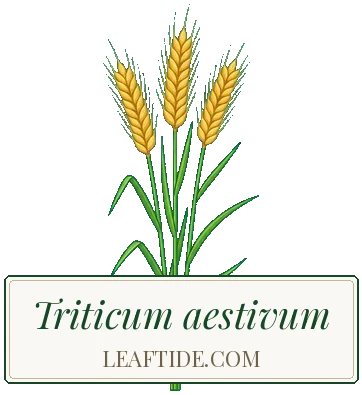
Wheat is a hardy cereal grain that thrives in cool weather and full sun. Sow winter wheat in mid-autumn for harvest the following midsummer, or spring wheat in early spring for a late-summer harvest. Broadcast seed or drill in rows 15-20 cm (6-8 in) apart at 3 cm (1 in) depth. It needs minimal care once established, just a feed at tillering and again at stem extension. Watch for rust and aphids. Harvest when ears are golden and grain is hard. A 10 sq m plot yields enough flour for several loaves.
 In your Leaftide garden


- Hardiness
- Hardy
- Season
- Cool Season
- Harvest
- Single Harvest
- Spacing
- 5 cm (2 in)
- Height
- 1.1 m (3.5 ft)
- Sow depth
- 3 cm (1 in)
- Min. soil temperature
- 4 °C+ (39 °F+)
- Start from
- Seed
- Light
- Full sun
- Water
- Moderate
When to Start
Direct sow outdoors as soon as soil reaches 4 °C (39 °F) — typically early to mid spring. Hardy enough to tolerate light frosts.
Don't know your frost date? Find it here →
Growth Stages
Approximate days from start
Care Essentials
- Apply a balanced fertilizer at tillering stage and again at stem extension. Avoid excess nitrogen late in the season which causes lodging.
- Wheat is the world's most widely grown cereal grain and surprisingly easy to grow on a small scale. It forms dense upright tillers topped by characteristic ears. Cool-season crop that tolerates frost well once established. Winter wheat is sown in autumn and harvested the following summer; spring wheat is sown in early spring and harvested in late summer. Both produce flour suitable for bread, pasta, and pastry.
Growing Conditions
- Min. soil temperature
- 4 °C+ (39 °F+)
- Germination temperature
- 4–25 °C (39–77 °F)
Spacing & Planting
| Plant spacing | 5 cm (2 in) |
| Row spacing | 20 cm (8 in) |
| Sow depth | 3 cm (1 in) |
| Mature height | 1.1 m (3.5 ft) |
| Mature spread | 15 cm (6 in) |
Broadcast sow at 15-20 g per sq m, or drill in rows 15-20 cm (6-8 in) apart. For small plots, thin to 5 cm (2 in) apart within rows.
Pests & Diseases
Pest Grain Aphid
Identification: Green to brownish aphids clustered on the ears and upper leaves as the ears emerge, sometimes with sticky honeydew.
- On a small plot, ladybirds, hoverflies and parasitic wasps usually keep numbers down, so wait before acting.
- Wash them off with a firm jet of water.
Pest Slugs and Snails
Identification: Seedlings nibbled or leaves shredded, with slime trails, especially after sowing in wet weather or on heavy soil.
- Sow into a fine, firm seedbed, which gives slugs fewer hiding places.
- Hand-pick at dusk or trap under boards and check each morning.
- Water in a slug-parasitic nematode (Phasmarhabditis hermaphrodita) when the soil is warm and moist.
Disease Yellow Rust Puccinia striiformis
Symptoms: Bright yellow to orange powdery stripes along the leaves, which can turn the whole leaf yellow and weaken the plant.
Treatment: Little can be done on a small plot once it is established. Pull badly affected plants and leave the rest.
Prevention: Choose resistant varieties, avoid heavy nitrogen feeding and remove self-sown wheat seedlings that carry the rust from one crop to the next.
Disease Septoria Leaf Blotch Zymoseptoria tritici
Symptoms: Yellow to brown blotches with tiny black dots inside, starting on the lower leaves and moving up in wet weather.
Treatment: No treatment is practical on a small plot. Remove badly affected plants.
Prevention: Sow resistant varieties at the recommended density, rotate the crop and clear straw and stubble after harvest.
Disease Ergot Claviceps purpurea
Symptoms: Hard, dark purple-black, horn-shaped bodies stick out of the ear in place of some grains. They are poisonous.
Treatment: Never eat or mill affected grain. Cut off the infected ears and bin them rather than composting them.
Prevention: Sow clean seed, rotate the crop and cut grasses nearby before they flower.
Growing Conditions
| Min. soil temperature | 4 °C (39 °F) |
| Germination temperature | 4–25 °C (39–77 °F) |
| Base growth temperature | 4 °C (39 °F) |
| Photoperiod sensitivity | long day |
Frequently Asked Questions
- How far apart should I plant wheat?
- Plant wheat 5 cm (2 in) apart, with 20 cm (8 in) between rows.
- Is wheat frost hardy?
- Yes, wheat is hardy.