How to Grow Welsh Onion
Allium fistulosum
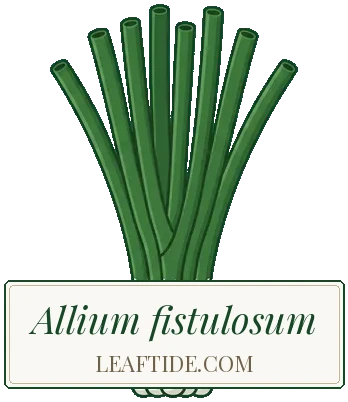
Welsh onion is a hardy bunching onion that regrows after cutting and multiplies by division. Sow direct or transplant in spring or autumn. Harvest the hollow green leaves and white stems throughout the year. Split clumps every couple of years to keep them vigorous.
 In your Leaftide garden
- Hardiness
- Hardy
- Season
- Cool Season
- Harvest
- Continuous Harvest
- Spacing
- 10 cm (4 in)
- Height
- 60 cm (24 in)
- Sow depth
- 1 cm (½ in)
- Min. soil temperature
- 5 °C+ (41 °F+)
- Start from
- Seed
- Light
- Full sun
- Water
- Moderate
When to Start
Direct sow outdoors as soon as soil reaches 5 °C (41 °F) — typically early to mid spring. Can also be started indoors 3 weeks earlier for a head start.
Don't know your frost date? Find it here →
Growth Stages
Approximate days from start
Care Essentials
- Light balanced feed at planting. Established plants rarely need feeding. Avoid excess nitrogen which produces soft, disease-prone growth.
- Hardy perennial treated as annual or biennial. Clumps multiply year on year. Edible green tops and white stems. Milder than onion, stronger than chives.
Companion Planting
Carrot
Growing Conditions
- Min. soil temperature
- 5 °C+ (41 °F+)
- Germination temperature
- 10–25 °C (50–77 °F)
Pet Safety
- Sow indoors
- —
- Transplant out
- —
- First harvest
- —
Want your full season plan with reminders? Set up your garden free


Spacing & Planting
| Plant spacing | 10 cm (4 in) |
| Row spacing | 30 cm (12 in) |
| Sow depth | 1 cm (½ in) |
| Mature height | 60 cm (24 in) |
| Mature spread | 15 cm (6 in) |
Companion Planting
Grows well with
- Carrot
Welsh onion is a perennial allium whose smell can help hide carrots from carrot fly. It stays in place for years, so plant clumps along one side of the carrot bed and they will be there for every new sowing.
Keep away from
- Broad Beans
The old rule that onions and their kin hold back legumes covers Welsh onions too, so keep them out of the bean bed. Welsh onions are perennial, so give the clump a fixed spot, perhaps among the herbs, outside the beds where you rotate beans.
- Garden Peas
Welsh onion is a perennial allium, and like its relatives it is said to hold back the growth of peas nearby. Give it a permanent place at the edge of the plot, away from the beds where you sow peas.
- French Bean
Welsh onion belongs to the allium family, which gardeners traditionally keep away from beans because it is thought to hold back legume growth. Pick Welsh onion stems as you need them, and sow your French beans at least a metre away.
- Runner Beans
Alliums such as Welsh onions are widely believed to hold back beans and peas, so most gardeners keep runner beans away from them. Welsh onions are perennial and stay in one place for years, so choose a bean site elsewhere in the plot.
- Mangetout
Welsh onion, a perennial allium, is thought to hold back the growth of nearby legumes, mangetout included. Divide Welsh onion clumps every few years to keep them vigorous, and sow mangetout in a bed well away from them.
- Borlotti Bean
Welsh onions are alliums, a group said to hold back legumes, so borlotti beans are better off growing somewhere else. Welsh onions are perennial and stay put for several years, so it is easiest to give them a permanent corner away from your bean rotation.
Pests & Diseases
Pest Allium Leaf Miner
Identification: Lines of small white dots along the leaves where female flies have fed, then twisted leaves and white headless maggots or 3 mm brown pupae inside the stems. Damaged stems often rot, especially in autumn.
- Cover the clumps with insect-proof mesh while the flies are laying, in spring and again in autumn.
- Lift and dispose of badly affected stems, so the pupae inside cannot hatch; do not compost them.
- Start new clumps on ground that did not grow onions, leeks or chives the year before, so flies do not emerge under the mesh.
Pest Onion Fly
Identification: Outer leaves yellow and wilt, and seedlings collapse and die, because white legless maggots up to 10 mm long are eating the roots and base. Worst in early and midsummer.
- Cover young plants with insect-proof mesh from late spring, when the first flies emerge.
- Lift and destroy badly affected plants in late summer so the maggots cannot finish developing.
- Encourage ground beetles, rove beetles and birds, which eat the maggots.
Disease Onion White Rot Stromatinia cepivora
Symptoms: From midsummer to early autumn leaves yellow and wilt and plants come loose in the soil. Fluffy white fungus covers the rotting base, later dotted with tiny black seed-like bodies (sclerotia).
Treatment: There is no cure. Dig out affected plants with the soil around them and bin them, not the compost. Do not grow any onion family plants in that spot again.
Prevention: The sclerotia survive in soil for at least 15 years, so keep the disease out: start from seed or clean plants, and do not carry soil in on tools, boots or plants from affected plots.
Disease Onion Downy Mildew Peronospora destructor
Symptoms: Leaves yellow and die back from the tip, and in damp weather a white, later purplish mould grows on the affected parts. Crowded clumps in cool, wet seasons are worst hit.
Treatment: Remove and bin affected plants; do not compost them. Avoid growing onions or shallots in that spot for five years.
Prevention: Do not let clumps get overcrowded, keep weeds down so air moves through, and grow Welsh onions well away from other onion crops, since overwintering perennial onions carry the disease into spring.
Growing Conditions
| Min. soil temperature | 5 °C (41 °F) |
| Germination temperature | 10–25 °C (50–77 °F) |
| Base growth temperature | 5 °C (41 °F) |
| Min. daylength to start | 8 h |
| Photoperiod sensitivity | day neutral |
Frequently Asked Questions
- How far apart should I plant Welsh onion?
- Plant Welsh onion 10 cm (4 in) apart, with 30 cm (12 in) between rows.
- When can I harvest Welsh onion?
- Welsh onion is ready to harvest approximately 50 days after transplanting.
- What grows well with Welsh onion?
- Welsh onion grows well with carrot.
- Is Welsh onion frost hardy?
- Yes, Welsh onion is hardy.