How to Grow Broad Beans
Vicia faba
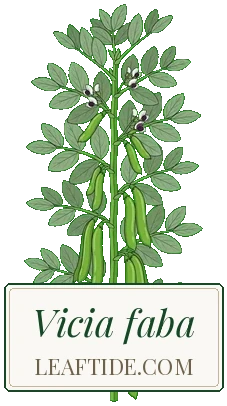
Broad beans thrive in cool weather, full sun, and fertile, well-drained soil. Sow in late autumn (hardy types) for an early crop or in late winter–spring for summer picking. Support rows with canes and string to stop wind rock. Blackfly favour soft shoot tips: pinch out tops at first pods set. Keep watered during flowering and pod fill. Harvest when pods are well filled but still green and tender; older beans can be shelled for freezing or dried.
 In your Leaftide garden
- Hardiness
- Hardy
- Season
- Cool Season
- Harvest
- Continuous Harvest
- Spacing
- 20 cm (8 in)
- Height
- 1.2 m (4 ft)
- Sow depth
- 5 cm (2 in)
- Min. soil temperature
- 5 °C+ (41 °F+)
- Start from
- Seed
- Light
- Full sun to part shade
- Water
- Moderate
When to Start
Direct sow outdoors as soon as soil reaches 5 °C (41 °F) — typically early to mid spring. Can also be started indoors 4 weeks earlier for a head start.
Don't know your frost date? Find it here →
Growth Stages
Approximate days from start
Care Essentials
- Rarely needed: beans fix their own nitrogen. Mulch with compost.
- Late autumn sowing gives earlier crops. Pinching out tips is the best blackfly control.
Companion Planting
Carrot, Sweetcorn, Lettuce
Growing Conditions
- Min. soil temperature
- 5 °C+ (41 °F+)
- Germination temperature
- 8–15 °C (46–59 °F)
- Sow indoors
- —
- Transplant out
- —
- First harvest
- —
Want your full season plan with reminders? Set up your garden free


Spacing & Planting
| Plant spacing | 20 cm (8 in) |
| Row spacing | 60 cm (24 in) |
| Sow depth | 5 cm (2 in) |
| Mature height | 1.2 m (4 ft) |
| Mature spread | 30 cm (12 in) |
Often planted in double rows, with the 60 cm (24 in) spacing between each pair of rows.
Companion Planting
Grows well with
- Carrot
Broad beans fix nitrogen and leave some in the soil, a gentle feed for carrots, which tend to fork in heavily manured ground. The beans also cast shade in late spring, so sow carrots on the sunnier side of the bean row.
- Sweetcorn
Broad beans fix atmospheric nitrogen through Rhizobium root nodules, gradually releasing ammonium that sweetcorn — one of the most nitrogen-hungry crops — draws on throughout its growth. Sow broad beans in autumn or early spring so they're already nodulating when corn goes in.
- Lettuce
Lettuce grows well in the light shade of broad beans, which keeps it tender and may slow bolting as the weather warms. Sow or plant lettuce along the side of the bean row in late spring, and harvest it before the beans are cleared.
- Spinach
Spinach bolts quickly in heat and long days, and the shade of broad beans can keep it producing leaves for longer. Sow spinach on the shadier side of the bean row in spring and keep it well watered as the beans grow tall.
- Potato
Broad bean root nodules fix 40-60 kg of atmospheric nitrogen per hectare via Rhizobium leguminosarum, making it available to neighbouring potato plants through soil microbial pathways. The tall bean stems also provide a partial windbreak for potato foliage.
- Cabbage
Broad beans fix nitrogen in their root nodules, and cabbage is a hungry crop that uses plenty of it. Many growers follow beans with cabbage: cut the bean stems at soil level after harvest, leave the roots in, and plant cabbages into the same bed.
- Sweet Potato
Broad beans form symbiotic partnerships with Rhizobium bacteria that fix atmospheric nitrogen into plant-available ammonium, which leaches into the surrounding soil and feeds the nitrogen-hungry sweet potato vines. Sow beans 3–4 weeks ahead so nodules are active before sweet potato transplants go in.
- Courgette
Broad beans fix nitrogen during spring, and hungry courgettes planted in the same ground can make use of it. Set courgette plants between the bean rows in early summer, then cut the beans down at soil level as they finish cropping.
- Quinoa
Quinoa responds well to nitrogen, and broad beans can supply some through the bacteria in their root nodules. Grow them in neighbouring rows, and when the beans are finished, cut them at ground level and leave the roots to rot down beside the quinoa.
- Summer Savory
Summer savory is a traditional companion for broad beans, grown to discourage blackfly, which cluster on the soft shoot tips. Sow a row of savory next to the beans in late spring, and still pinch out the bean tips once the first pods set.
Keep away from
- Onions
Onions have long been said to stunt beans, and broad beans grown right beside them may crop poorly. Spacing them apart also suits the onions, which need full sun and would be shaded by tall rows of broad beans.
- Leeks
Many gardeners won't grow leeks next to broad beans, following the old advice that alliums hold back legumes. Leeks sit in the ground well into winter, so choose their bed early and keep next spring's broad beans out of it.
- Garlic
Garlic produces allicin and related thiosulphinates that inhibit Rhizobium bacteria in broad bean root nodules, directly suppressing nitrogen fixation and stunting plant growth. Keep garlic at least 50 cm (20 in) from broad beans — even upwind separation helps since soil-borne leachates can travel some distance.
- Chives
Broad beans are said to grow poorly next to chives and other alliums, so most planting guides keep them apart. Chives are perennial, so a clump at the edge of the herb bed or in a pot keeps them well clear of your broad beans.
- Florence Fennel
Fennel is often listed as a poor neighbour, and beans are said to grow weakly beside it. Florence fennel also needs steady watering to swell its bulbs, so a bed of its own, away from the broad beans, makes it easier to care for.
- Shallots
Shallots belong to the onion family, and old gardening advice holds that onions and their relatives slow the growth of beans. Shallots planted in late winter are usually ready by midsummer; until then, keep them in a different bed from the broad beans.
- Spring Onions
Spring onions often get tucked into any spare gap, and old advice says to skip the gaps beside broad beans, since alliums are thought to hold back legumes. Fill those spaces with quick lettuce or radishes and sow the spring onions elsewhere.
- Welsh Onion
The old rule that onions and their kin hold back legumes covers Welsh onions too, so keep them out of the bean bed. Welsh onions are perennial, so give the clump a fixed spot, perhaps among the herbs, outside the beds where you rotate beans.
- Elephant Garlic
Broad beans and elephant garlic are both often planted in autumn, and since alliums are thought to hold back legumes, give them separate beds. Elephant garlic stays in the ground until the following summer, so mark both beds on your plan before you plant.
Pests & Diseases
Pest Black Bean Aphid
Identification: Colonies of black insects on shoot tips and flowers
- Pinch out growing tips after 4-5 flower trusses
- Spray with water
- Encourage ladybirds
- Fatty acid sprays
Pest Pea and Bean Weevil
Identification: Regular semicircular notches along the leaf edges
- Usually not necessary, plants tolerate the damage
- Protect seedlings with fleece
- Rarely necessary
Disease Chocolate Spot Botrytis fabae
Symptoms: Chocolate-brown spots on leaves, stems and pods. In severe cases the spots merge and plants collapse
Treatment: Remove badly affected plants. Improve air circulation
Prevention: Space plants well. Avoid excess nitrogen
Disease Rust Uromyces viciae-fabae
Symptoms: Orange-brown pustules on the undersides of leaves and on stems
Treatment: Remove affected leaves. Plants can still produce a crop
Prevention: Good air circulation. Crop rotation. Clear plant debris
Growing Conditions
| Min. soil temperature | 5 °C (41 °F) |
| Germination temperature | 8–15 °C (46–59 °F) |
| Base growth temperature | 4 °C (39 °F) |
| Min. daylength to start | 8.5 h |
| Photoperiod sensitivity | day neutral |
Frequently Asked Questions
- How far apart should I plant broad beans?
- Plant broad beans 20 cm (8 in) apart, with 60 cm (24 in) between rows.
- When can I harvest broad beans?
- Broad beans is ready to harvest approximately 75 days after transplanting.
- What grows well with broad beans?
- Broad beans grows well with carrot, sweetcorn, lettuce.
- Is broad beans frost hardy?
- Yes, broad beans is hardy.