How to Grow Napa Cabbage
Brassica rapa subsp. pekinensis
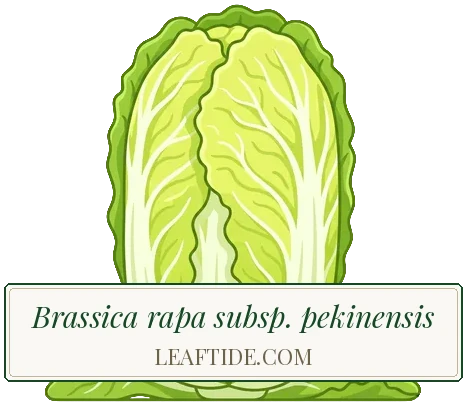
Napa cabbage forms tall, cylindrical heads with crinkly pale-green leaves. It prefers cool weather and bolts quickly in heat or long days. Best sown mid-to-late summer for autumn harvest. Direct sow or transplant into fertile, moisture-retentive soil. Cover with insect mesh against flea beetle. Keep consistently watered; drought stress causes bolting. Harvest when heads feel firm and solid.
 In your Leaftide garden
- Hardiness
- Hardy
- Season
- Cool Season
- Harvest
- Single Harvest
- Spacing
- 30 cm (12 in)
- Height
- 40 cm (16 in)
- Sow depth
- 1 cm (½ in)
- Min. soil temperature
- 8 °C+ (46 °F+)
- Start from
- Seed
- Light
- Full sun to part shade
- Water
- High
When to Start
Direct sow outdoors as soon as soil reaches 8 °C (46 °F) — typically early to mid spring. Can also be started indoors 3 weeks earlier for a head start.
Don't know your frost date? Find it here →
Growth Stages
Approximate days from start
Care Essentials
- Apply balanced liquid feed fortnightly once heads begin to form. Napa cabbage is a fast grower and benefits from consistent nutrition.
- Best grown as a late summer/autumn crop to avoid bolting. Sow from midsummer onwards for autumn harvest. Cover with fine mesh to protect from flea beetle and cabbage white. Keep soil consistently moist.
Companion Planting
Onions, Nasturtium, Dill
Growing Conditions
- Min. soil temperature
- 8 °C+ (46 °F+)
- Germination temperature
- 15–25 °C (59–77 °F)
- Sow indoors
- —
- Transplant out
- —
- First harvest
- —
Want your full season plan with reminders? Set up your garden free


Spacing & Planting
| Plant spacing | 30 cm (12 in) |
| Row spacing | 45 cm (18 in) |
| Sow depth | 1 cm (½ in) |
| Mature height | 40 cm (16 in) |
| Mature spread | 30 cm (12 in) |
Napa cabbage forms tall, upright cylindrical heads. Space 30 cm (12 in) apart for full-size heads, or 20 cm (8 in) for baby-leaf harvests.
Companion Planting
Grows well with
- Onions
Onions growing nearby may help keep flea beetles off Napa cabbage, whose young leaves they riddle with small holes. Napa cabbage bolts easily in the long days of early summer, so sow it from midsummer and set it out beside onions that are already growing.
- Nasturtium
Nasturtiums can lure aphids and cabbage white butterflies away from Napa cabbage, acting as a decoy. Plant them along the edge of the bed, a little apart from the cabbages, and check under the nasturtium leaves for eggs and caterpillars.
- Dill
Flowering dill attracts tiny parasitic wasps that help control pests on napa cabbage. Napa cabbage tends to bolt in long days, so sow it from midsummer, with a batch of dill sown a few weeks earlier to be flowering as the heads form.
Keep away from
- Tomato
Gardeners traditionally keep cabbage-family crops such as napa cabbage away from tomatoes, as the two are said to hold each other back. Grow them in separate beds; napa cabbage prefers cool weather and usually fits best in spring or autumn, outside the main tomato season.
- Strawberry
Strawberries and brassicas are traditionally said to suppress each other, so Napa cabbage is best kept out of the strawberry bed. Strawberries need a permanent sunny bed, and Napa cabbage fits better in the brassica rotation, where you can net it against pigeons and caterpillars.
Pests & Diseases
Pest Flea Beetle
Identification: Tiny shiny black or striped beetles that jump when disturbed. They pepper seedling leaves with small round holes and can kill young plants in warm, dry weather.
- Cover with fine insect-proof mesh from sowing or planting, with the edges sealed.
- Keep seedlings well watered so they grow quickly through the vulnerable stage.
Pest Cabbage Caterpillars
Identification: Clusters of yellow eggs or single pale eggs under the leaves, then yellow-and-black or velvety green caterpillars that chew large holes and burrow into the head, leaving dark droppings.
- Cover plants with insect-proof mesh held clear of the leaves, so butterflies can't lay through it.
- Check under the leaves every week, crush egg clusters and pick off caterpillars.
Pest Cabbage Root Fly
Identification: Young plants wilt in sunny weather, take on a bluish tinge, stop growing and may collapse. White maggots up to about 1 cm (½ in) long feed on the roots.
- Fit a collar of card or carpet underlay snugly around each transplant's stem at soil level.
- Cover with insect-proof mesh straight after planting.
- Pull up and destroy infested plants with the maggots.
Pest Slugs and Snails
Identification: Ragged holes in the leaves, slime trails and seedlings grazed to stumps, worst in damp weather.
- Pick them off on damp evenings by torchlight.
- Water slug nematodes (Phasmarhabditis hermaphrodita) into warm, moist soil.
- Keep the bed weeded, as weeds give slugs cover.
Disease Clubroot Plasmodiophora brassicae
Symptoms: Plants wilt on warm days and recover at night, with stunted, yellowing leaves. The roots are swollen and distorted into club-like galls that later rot.
Treatment: There is no cure. Pull up affected plants with as much root as possible and bin them, not the compost. The spores survive in soil for many years, so on affected ground grow brassicas in containers of fresh compost.
Prevention: Rotate brassicas, lime soil with a pH below 6, keep the soil well drained, and raise transplants in pots to a good size before planting out.
Disease Bolting
Symptoms: Plants send up a flowering stem before forming a firm head. The leaves turn bitter and the head never fills out.
Treatment: It can't be reversed. Pick the flower stems before the buds open and cook them like broccoli, and use the rest of the plant straight away. Others from the same sowing are likely to follow soon, so harvest them promptly.
Prevention: Sow in mid to late summer, choose bolt-resistant varieties and keep the soil moist. Protect spring sowings from cold: a week or more of nights below about 10 °C (50 °F), or a late frost, often makes young plants bolt once it warms up.
Disease Tipburn
Symptoms: Brown, papery edges on the inner leaves inside the head, often only found when you cut it open.
Treatment: Cut away the brown edges; the rest of the head is fine to eat. Water evenly from then on.
Prevention: Keep the soil evenly moist throughout growth: uneven watering cuts the supply of calcium to the fast-growing inner leaves.
Growing Conditions
| Min. soil temperature | 8 °C (46 °F) |
| Germination temperature | 15–25 °C (59–77 °F) |
| Base growth temperature | 5 °C (41 °F) |
| Min. daylength to start | 10 h |
| Photoperiod sensitivity | long day |
Frequently Asked Questions
- How far apart should I plant Napa cabbage?
- Plant Napa cabbage 30 cm (12 in) apart, with 45 cm (18 in) between rows.
- When can I harvest Napa cabbage?
- Napa cabbage is ready to harvest approximately 70 days after transplanting.
- What grows well with Napa cabbage?
- Napa cabbage grows well with onions, nasturtium, dill.
- Is Napa cabbage frost hardy?
- Yes, Napa cabbage is hardy.