How to Grow Kai Lan
Brassica oleracea var. alboglabra
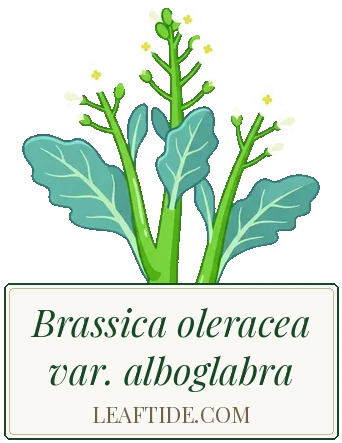
Kai lan is an Asian brassica grown for its thick, tender flowering stems, harvested just as the buds begin to open. Sow direct or start indoors in spring; plants are ready in around 60 days. Cut the main stem to trigger side shoot regrowth for multiple harvests. Cover with insect mesh and keep soil moist for best results.
 In your Leaftide garden


- Hardiness
- Half Hardy
- Season
- Cool Season
- Harvest
- Continuous Harvest
- Spacing
- 20 cm (8 in)
- Height
- 40 cm (16 in)
- Sow depth
- 1 cm (½ in)
- Min. soil temperature
- 10 °C+ (50 °F+)
- Start from
- Seed
- Light
- Full sun to part shade
- Water
- Moderate
When to Start
Sow indoors 6 weeks before last frost, or direct sow outdoors after frost risk has passed and soil reaches 10 °C (50 °F).
Don't know your frost date? Find it here →
Growth Stages
Approximate days from start
Care Essentials
- Incorporate well-rotted compost or a balanced granular fertiliser before sowing. Apply a nitrogen-rich liquid feed once plants are established to promote leafy stem growth.
- Kai lan is a productive Asian brassica harvested for its thick, sweet stems and flower buds. It tolerates more heat than other brassicas and can be grown through spring and early summer. Cover with insect mesh to protect against flea beetle and caterpillars.
Growing Conditions
- Min. soil temperature
- 10 °C+ (50 °F+)
- Germination temperature
- 15–25 °C (59–77 °F)
Spacing & Planting
| Plant spacing | 20 cm (8 in) |
| Row spacing | 30 cm (12 in) |
| Sow depth | 1 cm (½ in) |
| Mature height | 40 cm (16 in) |
| Mature spread | 25 cm (10 in) |
Pests & Diseases
Pest Flea Beetles
Identification: Small round holes scalloped out of the leaves, often not right through, that dry and turn pale brown. Tiny black or metallic beetles, 2-3 mm long, jump off when you disturb them. Seedlings suffer most, from mid-spring through summer.
- Sow or plant under fine insect-proof mesh and keep it on until the plants are growing strongly.
- Tolerate light damage on older plants; their growth only suffers when the beetles are numerous.
Pest Cabbage White Caterpillars
Identification: Green or yellow-and-black caterpillars on the leaves and among the flower buds, with ragged holes and dark green droppings. Small caterpillars hide in the bud clusters and are easy to miss at harvest.
- Cover plants with fine insect-proof mesh from planting out, held clear of the leaves so butterflies cannot lay eggs through it.
- Check leaf undersides weekly and rub off yellow egg clusters and young caterpillars.
Pest Mealy Cabbage Aphid
Identification: Dense colonies of grey, waxy aphids on leaf undersides and in the shoot tips, with yellowed, puckered leaves. Colonies that get into the flower shoots spoil them for eating.
- Squash small colonies or wash them off with a jet of water.
- Spray with an insecticidal soap or fatty-acid product, reaching the leaf undersides.
- Pull up and dispose of old brassica stems after harvest, as the aphid overwinters on them.
Disease Club Root Plasmodiophora brassicae
Symptoms: Plants are stunted and wilt in warm weather, and the leaves may turn purplish. Lifted plants have swollen, distorted roots.
Treatment: There is no cure. Lift affected plants with as much root as possible and bin them, never compost them. The spores survive in the soil for many years.
Prevention: Raise plants in pots so they go out with a strong root system, lime acid soil until it is slightly alkaline, and keep brassicas off infected ground. Clean soil off boots and tools after working an infected bed.
Disease Downy Mildew
Symptoms: Yellow patches on the upper leaf surface with grey-white fuzz beneath, in cool, damp weather. Seedlings and young plants suffer most.
Treatment: Remove affected leaves and improve the airflow; older plants with a few spots usually grow on.
Prevention: Space plants well, water at the base in the morning and do not sow too thickly.
Growing Conditions
| Min. soil temperature | 10 °C (50 °F) |
| Germination temperature | 15–25 °C (59–77 °F) |
| Base growth temperature | 5 °C (41 °F) |
| Photoperiod sensitivity | long day |
Frequently Asked Questions
- How far apart should I plant kai lan?
- Plant kai lan 20 cm (8 in) apart, with 30 cm (12 in) between rows.
- Is kai lan frost hardy?
- Only partly: kai lan is half-hardy.