How to Grow Celtuce
Lactuca sativa var. angustana
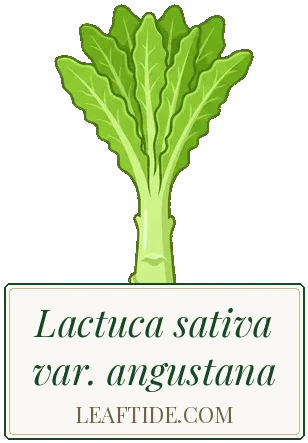
Celtuce is a Chinese salad vegetable grown for its thick, crunchy stem, the edible part once the outer skin is peeled. Sow in spring or autumn as a cool-season crop, spacing plants 30 cm (12 in) apart. Harvest when stems are 2–3 cm (¾–1 in) thick before bolting. Keep soil moist and protect from heat to prevent premature flowering.
 In your Leaftide garden


- Hardiness
- Half Hardy
- Season
- Cool Season
- Harvest
- Single Harvest
- Spacing
- 30 cm (12 in)
- Height
- 50 cm (20 in)
- Sow depth
- 0.5 cm (¼ in)
- Min. soil temperature
- 7 °C+ (45 °F+)
- Start from
- Seed
- Light
- Full sun to part shade
- Water
- Moderate
When to Start
Sow indoors 6 weeks before last frost, or direct sow outdoors after frost risk has passed and soil reaches 7 °C (45 °F).
Don't know your frost date? Find it here →
Growth Stages
Approximate days from start
Care Essentials
- Incorporate well-rotted compost before sowing. Apply a balanced liquid fertiliser at planting out and once mid-season to support stem development.
- Celtuce is grown primarily for its thick, fleshy stem rather than its leaves. It is a cool-season crop that bolts quickly in heat; grow in spring or autumn. Sow indoors 4 weeks before last frost, or direct sow in mild weather.
Growing Conditions
- Min. soil temperature
- 7 °C+ (45 °F+)
- Germination temperature
- 10–20 °C (50–68 °F)
Spacing & Planting
| Plant spacing | 30 cm (12 in) |
| Row spacing | 35 cm (14 in) |
| Sow depth | 0.5 cm (¼ in) |
| Mature height | 50 cm (20 in) |
| Mature spread | 30 cm (12 in) |
Pests & Diseases
Pest Aphids
Identification: Clusters of small green, pink or black insects on young stems and leaf undersides, with sticky honeydew and curled or distorted leaves.
- Wash them off with a strong jet of water, or squash small colonies by hand.
- Encourage ladybirds, lacewings and hoverflies, which eat aphids.
- Spray with a fatty acid or plant oil insecticide and repeat as the label directs; cover young plants with fine insect mesh to keep new aphids out.
Pest Slugs and Snails
Identification: Seedlings eaten off at ground level, or ragged holes in the leaves with slime trails.
- Go out after dark or after rain with a torch and pick them off.
- Scatter ferric phosphate slug pellets thinly around young plants, following the label.
- Raise seedlings in modules and plant them out once they are sturdier.
Pest Lettuce Root Aphid
Identification: Plants wilt in dry weather even when watered, outer leaves yellow, and waxy white fluff and pale aphids cover the roots.
- Lift and bin affected plants, not the compost heap.
- Do not grow celtuce or lettuce in the same ground the next year.
- Keep plants well watered in dry spells.
Disease Bolting
Symptoms: The stem shoots up fast, the leaves turn bitter, flower buds form and the stem turns pithy and bitter.
Treatment: Harvest at once, since the stem is too bitter once the flowers open. Bin plants that have already flowered.
Prevention: Sow in a cool season, avoid sowing when days are long and temperatures rise above 20 °C (68 °F), keep the soil evenly moist and give light afternoon shade in warm weather.
Disease Lettuce Downy Mildew Bremia lactucae
Symptoms: Pale yellow, angular patches on the upper leaf surface, with white fluffy growth underneath in cool, damp weather.
Treatment: Remove affected leaves and bin them, and avoid growing in the same bed the next year.
Prevention: Space plants for good airflow, water at the base in the morning and rotate the bed.
Growing Conditions
| Min. soil temperature | 7 °C (45 °F) |
| Germination temperature | 10–20 °C (50–68 °F) |
| Base growth temperature | 3 °C (37 °F) |
| Photoperiod sensitivity | long day |
Frequently Asked Questions
- How far apart should I plant celtuce?
- Plant celtuce 30 cm (12 in) apart, with 35 cm (14 in) between rows.
- Is celtuce frost hardy?
- Only partly: celtuce is half-hardy.