How to Grow Ammi majus
Ammi majus
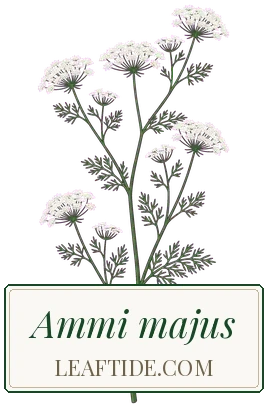
Ammi majus is the florist's favourite filler: its delicate white lacy umbels complement almost any cut flower. Sow in autumn for the biggest, earliest plants, or in spring once the soil reaches 5 °C (41 °F). Can be sown in modules and transplanted, unlike many hardy annuals. Pinch out tips at 15 cm (6 in) for more branching. Tall plants (90-120 cm, 3-4 ft) may need support in exposed sites. Cut when half the florets on each umbel are open. Caution: the sap is phototoxic; wear gloves when handling in sunlight.
 In your Leaftide garden
- Hardiness
- Hardy
- Season
- Cool Season
- Harvest
- Continuous Harvest
- Spacing
- 25 cm (10 in)
- Height
- 90 cm (35 in)
- Min. soil temperature
- 5 °C+ (41 °F+)
- Start from
- Seed
- Light
- Full sun to part shade
- Water
- Moderate
When to Start
Direct sow outdoors as soon as soil reaches 5 °C (41 °F) — typically early to mid spring. Can also be started indoors 4 weeks earlier for a head start.
Don't know your frost date? Find it here →
Growth Stages
Approximate days from start
Care Essentials
- Rarely needed. Thrives in average to poor, well-drained soil: rich soil produces lush leafy growth at the expense of flowers.
- THE cut flower filler for florists and flower farmers. Caution: the sap is phototoxic and can cause skin irritation in sunlight; wear gloves when handling. Autumn sowing gives much bigger, earlier plants than spring sowing.
Growing Conditions
- Min. soil temperature
- 5 °C+ (41 °F+)
- Germination temperature
- 15–20 °C (59–68 °F)
Pet Safety
- Sow indoors
- —
- Transplant out
- —
- First harvest
- —
Want your full season plan with reminders? Set up your garden free


Spacing & Planting
| Plant spacing | 25 cm (10 in) |
| Row spacing | 35 cm (14 in) |
| Sow depth | On the surface |
| Mature height | 90 cm (35 in) |
| Mature spread | 30 cm (12 in) |
Tall plant reaching 90-120 cm (3-4 ft). Pinch out growing tips when 15 cm (6 in) tall to encourage branching and more stems. May need support with netting or grow-through rings in exposed sites.
Pests & Diseases
Pest Aphids
Identification: Clusters of small green or black insects on shoot tips and flower buds, causing distorted growth and sticky honeydew
- Blast off with a strong jet of water
- Spray with fatty acid-based insecticide
- Encourage ladybirds, lacewings and hoverflies
- Spray with a contact insecticide containing deltamethrin or lambda-cyhalothrin
Pest Carrot Fly
Identification: Rusty-brown tunnels in stems near soil level; wilting and yellowing of lower leaves; small white maggots visible if stems are cut open
- Grow under fine insect-proof mesh
- Avoid sowing near carrots or parsnips
- Delay spring sowing until after the first carrot fly generation (late spring)
- Soil drench with an approved insecticide at sowing time
Disease Powdery Mildew
Symptoms: White powdery coating on leaves and stems, causing yellowing and reduced vigour, especially later in the season
Treatment: Remove badly affected leaves. Spray with a fungicide if severe. Improve airflow around plants
Prevention: Space plants well, avoid overhead watering, and water at the base in the morning
Growing Conditions
| Min. soil temperature | 5 °C (41 °F) |
| Germination temperature | 15–20 °C (59–68 °F) |
| Base growth temperature | 5 °C (41 °F) |
| Min. daylength to start | 10 h |
| Photoperiod sensitivity | day neutral |
Frequently Asked Questions
- How far apart should I plant Ammi majus?
- Plant Ammi majus 25 cm (10 in) apart, with 35 cm (14 in) between rows.
- When does Ammi majus flower?
- Ammi majus typically flowers approximately 70 days after transplanting.
- Is Ammi majus frost hardy?
- Yes, Ammi majus is hardy.