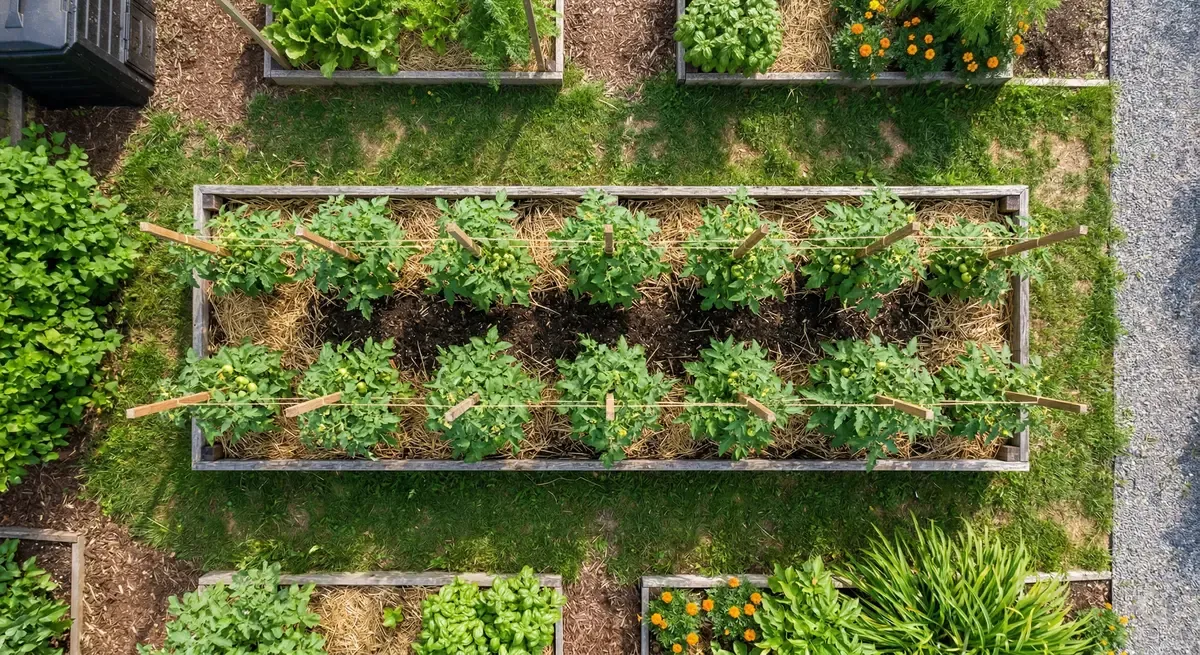
| Type | Between Plants | Between Rows |
|---|---|---|
| Indeterminate (cordon) | 45–60 cm | 60–75 cm |
| Determinate (bush) | 60–75 cm | 75–90 cm |
| Cherry (cordon) | 45 cm | 60–75 cm |
My first year growing tomatoes, I planted twelve plants in a bed that should have held six. The logic was simple: more plants, more tomatoes. By August, the bed was a wall of tangled foliage so dense I could not see the fruit, let alone pick it. Blight arrived in the second week of September and tore through the entire bed in four days. Every plant gone. The ones I had given proper space in a separate bed survived another three weeks and gave me a decent harvest.
That was the season I stopped treating tomato spacing as optional.
If you are here for a quick answer before the detail, here it is.
The short answer: tomato spacing at a glance
For most gardeners, these numbers will get you where you need to be:
- Indeterminate (cordon) tomatoes: 45-60cm apart, rows 60-75cm apart
- Determinate (bush) tomatoes: 60-75cm apart, rows 75-90cm apart
- Cherry tomatoes (cordon): 45cm apart
- Beefsteak tomatoes: 60cm apart
- In containers: one plant per pot, minimum 30cm diameter
The cordon vs bush distinction matters more than anything else. Cordon tomatoes grow upward on a single stem, so their ground footprint stays small. Bush tomatoes spread outward and need more room at soil level.
If you want a precise count for your bed dimensions, the spacing calculator will show you exactly how many plants fit.
Why the type of tomato matters most
Not all tomato plants grow the same way, and the growth habit decides how much space each one needs.
Indeterminate (cordon) tomatoes grow as a single main stem that you tie to a stake or string. You remove the side shoots (suckers) to keep the plant focused on one vertical leader. Because the plant goes up rather than out, it takes up relatively little ground space. A well-pruned cordon tomato might only be 30cm wide at the base, even when it is two metres tall. This is why you can plant them at 45cm spacing and still have good airflow between plants.
Determinate (bush) tomatoes grow to a set height and then stop. Instead of one tall stem, they produce multiple branches that spread outward. You do not prune side shoots on bush types because the fruit forms on those branches. A mature bush tomato can easily reach 60-90cm across, which is why they need wider spacing. Planting bush tomatoes at cordon spacing is one of the most common mistakes I see.
Semi-determinate varieties fall somewhere in between. They grow taller than bush types but do not keep going indefinitely like cordons. Treat them like bush tomatoes for spacing purposes, because they still spread sideways.
If you are not sure which type you have, check the seed packet or plant label. The words “cordon,” “vine,” or “indeterminate” mean vertical growth. “Bush,” “patio,” or “determinate” mean spreading growth.
Why tomato spacing matters
Tomatoes are sensitive to spacing because of two things: their susceptibility to blight and their need for light to ripen fruit.
Airflow prevents blight. Late blight (Phytophthora infestans) is the disease that destroys more tomato crops than anything else in the UK and northern Europe. The spores need moisture on the leaves to germinate. When tomatoes are packed tight, air cannot circulate, and the foliage stays damp for hours after rain or morning dew. Proper spacing lets air move through the canopy, drying the leaves faster and giving blight fewer opportunities to take hold.
I have seen this play out in my own garden more than once. The same variety, same soil, same watering. The plants at 45cm spacing stayed healthy. The ones I squeezed to 30cm got blight two weeks earlier. That two-week difference was the difference between a harvest and a compost heap.
Light drives ripening. Tomatoes ripen from the inside out, triggered by warmth and light reaching the fruit. When plants are too close, the lower trusses sit in permanent shade. The fruit stays green longer, and in a short growing season, “longer” can mean “never.” Adequate spacing lets sunlight reach all levels of the plant, not just the top.
Root competition reduces fruit size. Below the surface, closely planted tomatoes compete for water and nutrients. The result is smaller fruit and fewer of them. A single well-spaced plant will almost always out-produce two cramped ones in the same area.
Spacing by growing method
The right distance depends on where and how you grow. Practical numbers for each method below.
In-ground rows
This is the traditional allotment approach. Plant in rows with walking space between them.
| Type | Between plants | Between rows |
|---|---|---|
| Cordon / indeterminate | 45-60cm | 60-75cm |
| Bush / determinate | 60-75cm | 75-90cm |
The between-row distance accounts for access. You need to get in there to tie, prune, water, and harvest. If you are growing cordons on a string system (two parallel rows leaning toward each other in a V shape), you can tighten the row spacing to 50cm because the plants angle away from each other.
Raised beds
Raised beds have better soil, no compaction, and usually better drainage. You can plant at the tighter end of the range.
Cordon tomatoes at 45cm spacing work well in raised beds, especially if you are diligent about removing side shoots. Bush types still need 60cm minimum. In a standard 120cm wide raised bed, you can fit two rows of cordon tomatoes with 45cm between plants and 60cm between rows, giving you roughly 8-10 plants in a 240cm bed.
For a visual layout of how many tomatoes fit your specific bed, the spacing calculator handles the maths.
Square foot gardening
In the square foot method, each tomato gets one 30cm square. This works for cordon types that are staked and pruned. Bush tomatoes need two to four squares depending on the variety.
One tomato per square foot is the standard recommendation, and it works if you stay on top of pruning. If you let side shoots grow, the plants will crowd each other quickly.
Containers
One tomato per container. No exceptions. I have tried two in a large pot and the result is always two mediocre plants instead of one good one.
| Type | Minimum pot size | Ideal pot size |
|---|---|---|
| Determinate / bush | 30cm diameter | 35-40cm |
| Indeterminate / cordon | 35cm diameter | 40-45cm |
| Cherry (compact/patio) | 25cm diameter | 30cm |
If you are growing several containers on a patio or balcony, space the pots 45-60cm apart. The plants need airflow between them just as much as they do in the ground.
Common spacing mistakes
These are the ones I see most often, and the ones I have made myself.
Spacing for the seedling, not the plant. A tomato seedling is 15cm tall and 5cm wide. It feels absurd to leave 45cm gaps. But by July, that seedling is a metre tall and covered in foliage. Plant for the adult size, not the baby.
Treating all tomatoes the same. Bush and cordon types need different spacing. A bush ‘Roma’ at 45cm will be a tangled mess. A cordon ‘Sungold’ at 75cm is wasting space. Know your variety.
Skipping the side shoot pruning. If you plant cordon tomatoes at tight spacing, you must remove the side shoots. The spacing only works because the plant stays narrow. Let the side shoots grow and you have effectively turned a cordon into a bush, but at cordon spacing. The result is a jungle.
Forgetting vertical support. Cordon tomatoes at 45cm spacing only works if the plants are growing upward on stakes, canes, or strings. Without support, they flop sideways and take up three times the space.
Planting too close to the bed edge. Leave at least 15-20cm between the outermost plant and the edge of the bed or container. Roots need space on all sides, and foliage hanging over the edge shades the soil and traps moisture.
Plan your tomato bed before you plant it.


Spacing by variety
Different tomato varieties have different vigour, and that changes how much room they need. This table covers the most commonly grown types.
| Variety type | Example varieties | Spacing between plants | Growth habit |
|---|---|---|---|
| Cherry (cordon) | Sungold, Gardener’s Delight, Sweet Million | 45cm | Indeterminate, vigorous |
| Cherry (bush) | Tumbling Tom, Losetto, Vilma | 40-50cm | Compact, spreading |
| Plum / paste | San Marzano, Roma, Amish Paste | 45-60cm | Varies (check label) |
| Beefsteak | Brandywine, Costoluto Fiorentino, Marmande | 60cm | Indeterminate, heavy foliage |
| Standard slicing | Moneymaker, Ailsa Craig, Alicante | 45-50cm | Indeterminate, moderate |
| Dwarf / patio | Totem, Micro Tom, Red Robin | 30-40cm | Determinate, very compact |
Cherry tomatoes are the most forgiving on spacing. The plants are vigorous but the foliage is lighter and more open, so airflow is less of a problem. Beefsteak types are the least forgiving. They produce dense, heavy foliage and large trusses that need good air circulation to stay healthy.
If you are growing a variety you have not tried before, start at the wider end of the spacing range. You can always tighten it next year if the plants had room to spare.
Maximising yield in small spaces
If you have limited space, cramming more plants in is the wrong move. Growing smarter with fewer plants gets you further.
Grow vertically. Cordon tomatoes trained up strings or tall stakes (180-200cm) produce fruit along the entire height of the plant. A single cordon in 45cm of ground space can produce 4-5kg of fruit over a season. That is more productive per square metre than bush types, which is why commercial growers almost exclusively use cordons.
Prune consistently. Remove side shoots weekly. Every side shoot you leave diverts energy from fruit production into foliage. A well-pruned cordon puts its energy into fewer, larger trusses. In a short growing season, this also means the fruit ripens earlier because the plant is not trying to support unnecessary growth.
Use the space below. The base of a cordon tomato plant is mostly bare stem. You can underplant with low-growing crops like basil, lettuce, or radishes. These will be harvested before the tomato canopy fills in and shades them out. It is not cheating on spacing because the crops occupy different vertical layers.
Choose compact varieties for containers. Patio and dwarf varieties like ‘Totem’ or ‘Tumbling Tom’ were bred specifically for small spaces. They produce well in 30cm pots and do not need the staking and pruning that full-sized cordons demand.
Succession plant around them. Tomatoes do not go into the ground until late May or early June in most of the UK. You can grow a quick crop of lettuce, radishes, or spinach in the same space beforehand, and another after the tomatoes come out in autumn. The plant spacing guide covers interplanting in more detail.
Track every tomato from seed to harvest.
Getting it right
Tomato spacing comes down to one decision: cordon or bush. Get that right, and the numbers follow. Cordons at 45-60cm, bush types at 60-75cm, one per container, and always with vertical support for the tall growers.
The spacing feels generous when you plant out in May. By August, you will be glad you gave them room.
Ready to plan your layout? The Plot Designer guide shows you how to place plants with correct spacing on a map of your actual garden.