How to Grow Silver Bush
Convolvulus cneorum
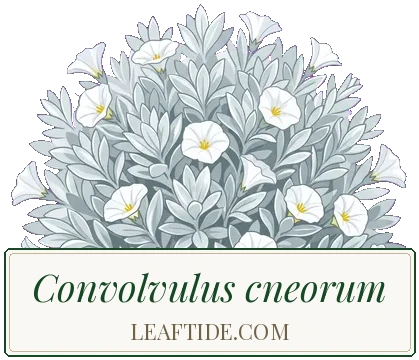
Silver Bush thrives in full sun and sharply drained, poor to moderately fertile soil. Plant in a sheltered spot: against a sunny, sheltered wall is ideal in the UK. Water sparingly once established; it is drought-tolerant but will rot in wet soil. Trim lightly after flowering to keep it compact. Provide a dry mulch at the base in autumn in cold areas.
 In your Leaftide garden


- Height
- 75 cm (30 in)
- Spread
- 80 cm (31 in)
- Flowers
- May - July
- Light
- Full sun
- Water
- Low
Yearly Lifecycle
Care Essentials
Light balanced feed in early spring. Avoid rich nitrogen feeds: they promote leggy growth at the expense of flowers.
Watch For
- Aphids on new shoots
- Red spider mite in hot dry conditions
- Root rot in wet or poorly drained soil
- Frost damage to shoots in cold wet winters
Companions
Lavender, Cistus, Rosemary, Thyme, Artemisia
Care Requirements
Light
Full sun
Requires at least 6 hours of direct sun daily. In the UK, a sunny, sheltered wall gives best results. Shade causes lax, leggy growth and reduces flowering.
Watering
Low: drought-tolerant once established
Water regularly in the first growing season to establish roots. Once established, water sparingly: it is drought-tolerant and dislikes sitting in wet soil. Overwatering and poor drainage are the main causes of plant loss.
Fertilizing
Light balanced feed in spring only
A light application of balanced fertiliser in early spring is sufficient. Avoid nitrogen-heavy feeds which promote leafy growth at the expense of flowers. Rich soil is not needed.
Pruning
Light trim after main flowering
Trim back lightly after the main flowering flush in summer to maintain a compact, bushy shape. Do not cut into old wood. Remove any frost-damaged shoots in spring once the risk of frost has passed.
Growing Tips
Drainage matters more than feeding
Silver bush comes from dry Mediterranean slopes. Plant it on a gentle slope, a raised bed or a gravel bed, mix grit into the planting hole, and keep a gravel mulch around the neck so winter rain drains away from the crown.
Trim lightly and never into old wood
Shorten the shoots after the main flush of flowers to keep the bush compact, but cut only into soft, leafy growth. It reshoots poorly from bare old wood, so hard pruning can leave gaps that do not refill.
Shelter it from cold, wet winters
Cold alone is less of a problem than cold with wet. Give it a sunny, sheltered wall or a spot under an overhang, and in cold areas put a dry mulch or horticultural fleece over it in the coldest weeks.
Pests & Diseases
Disease Root and Crown Rot
Symptoms: Silvery leaves turn dull and limp, shoots collapse and the base of the stems goes soft and brown. It follows winter wet or heavy soil and is the commonest way this plant is lost.
Treatment: Rotted plants rarely recover. If caught early, lift the plant, cut away soft roots, and replant on a mound in gritty soil with a gravel mulch. Water sparingly, only when the soil is dry deep down.
Prevention: Plant in very sharply drained soil, in a raised spot, and never water or mulch right up against the stems with anything that holds moisture.
Disease Cold and Wet Winter Damage
Symptoms: Shoot tips and whole stems turn brown and dry after a cold, wet winter, while the base may shoot again. The plant is not reliably hardy much below -5 °C (23 °F).
Treatment: Wait until growth restarts, then cut back to healthy green wood. Do not cut into bare old wood.
Prevention: Plant it in a sheltered, sunny spot with sharp drainage, and cover it with dry mulch or fleece in cold spells.