How to Grow Rice
Oryza sativa
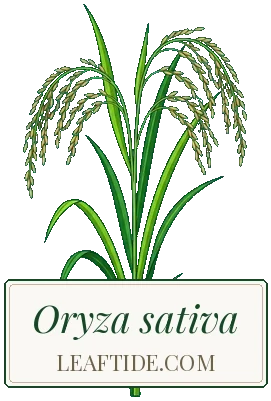
Rice is a warm-season grass that needs full sun, high temperatures, and consistently wet or flooded soil. Start seeds indoors in warm compost, transplant seedlings to flooded paddies or very moist beds once established. Paddy rice requires standing water 5-10cm (2-4 in) deep for most of its growth; upland rice needs daily watering. Feed with nitrogen at transplant and tillering. Harvest when grains turn golden and the stem bends; dry panicles before threshing.
 In your Leaftide garden
- Hardiness
- Tender
- Season
- Warm Season
- Harvest
- Single Harvest
- Spacing
- 20 cm (8 in)
- Height
- 1 m (3.5 ft)
- Sow depth
- 2 cm (¾ in)
- Min. soil temperature
- 15 °C+ (59 °F+)
- Start from
- Seed
- Light
- Full sun
- Water
- High
When to Start
Start seeds indoors 4 weeks before your last frost date. Transplant outdoors once night temperatures stay above 10 °C (50 °F) and soil has warmed to at least 15 °C (59 °F).
Don't know your frost date? Find it here →
Growth Stages
Approximate days from start
Care Essentials
- Apply a nitrogen-rich fertiliser at transplanting and again at tillering (4-6 weeks after transplant).
- Paddy rice needs flooded or consistently saturated soil. Upland varieties tolerate drier conditions but still need regular irrigation. Rice is a warm-season grass: it requires high temperatures throughout the growing season.
Growing Conditions
- Min. soil temperature
- 15 °C+ (59 °F+)
- Germination temperature
- 20–35 °C (68–95 °F)
- Sow indoors
- —
- Transplant out
- —
- First harvest
- —
Want your full season plan with reminders? Set up your garden free


Spacing & Planting
| Plant spacing | 20 cm (8 in) |
| Row spacing | 25 cm (10 in) |
| Sow depth | 2 cm (¾ in) |
| Mature height | 1 m (3.5 ft) |
| Mature spread | 30 cm (12 in) |
Pests & Diseases
Pest Birds
Identification: Grains stripped from the panicles as they fill and ripen, often by flocks that arrive all at once, leaving empty husks behind.
- Cover the plot with bird netting held clear of the panicles on a frame from the time the grains start to fill.
- Hang reflective tape or old CDs as scarers and move them often, since birds get used to them.
Disease Rice blast Magnaporthe oryzae
Symptoms: Diamond-shaped leaf spots with grey centres and brown edges, and rot at the stem nodes or just below the panicle that makes it break or fill with empty white grains. It occurs wherever rice is grown, including Europe.
Treatment: Remove and destroy badly affected plants and do not save seed from them. Keep nitrogen moderate, since lush growth is more susceptible.
Prevention: Use blast-resistant varieties and clean seed, avoid excess nitrogen and don't let upland plantings dry out.
Growing Conditions
| Min. soil temperature | 15 °C (59 °F) |
| Germination temperature | 20–35 °C (68–95 °F) |
| Base growth temperature | 10 °C (50 °F) |
| Photoperiod sensitivity | short day |
Frequently Asked Questions
- How far apart should I plant rice?
- Plant rice 20 cm (8 in) apart, with 25 cm (10 in) between rows.
- When can I harvest rice?
- Rice is ready to harvest approximately 120 days after transplanting.
- Is rice frost hardy?
- No, rice is tender.