How to Grow Natal Plum
Carissa macrocarpa
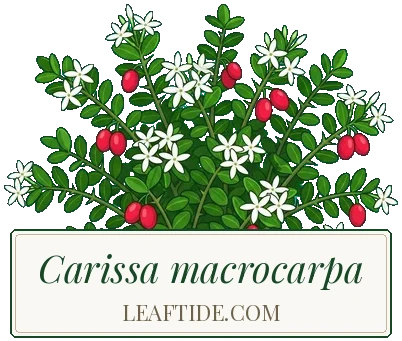
Natal plum is a tough subtropical evergreen that flowers and fruits almost year-round, bearing fragrant jasmine-like white blooms and sweet-tart red berries rich in vitamin C. In the UK it needs a sheltered warm spot or container culture, as it is damaged below -2C. Plant in well-drained soil in full sun. Drought-tolerant once established. The spiny growth makes an excellent security hedge in warm gardens. Use ripe fruit fresh, in juice, or in jam. Only the ripe fruit is edible; other parts may be mildly toxic to people. ASPCA lists Natal plum as non-toxic to cats and dogs.
 In your Leaftide garden


- Height
- 3 m (10 ft)
- Spread
- 2.5 m (8 ft)
- Spacing
- 2 m (6.5 ft)
- Light
- Full sun
- Water
- Low
Yearly Lifecycle
Care Essentials
Spring with a balanced fertiliser. Light feed in early summer to support fruiting. Avoid high nitrogen which promotes leafy growth over fruit.
Watch For
- Scale insects
- Mealybugs
- Frost damage (tender below -2C)
- Root rot in waterlogged soil
Companions
Agapanthus, Rosemary, Plumbago
Pet Safety
Care Requirements
Light
Full sun for best fruiting
Needs full sun for maximum flowering and fruit production. Tolerates light shade but yields drop significantly. In the UK, the sunniest wall provides essential warmth.
Watering
Drought-tolerant once established
Very drought-tolerant once established. Water regularly during the first year. Avoid waterlogged soil which causes root rot. Container plants need more frequent watering.
Fertilizing
Balanced feed in spring
Apply a balanced fertiliser in spring and a light feed in early summer to support fruiting. Avoid high nitrogen which promotes leafy growth over fruit.
Pruning
After harvest, can be hedged hard
Prune after the main harvest or in spring. Can be clipped hard as a formal hedge. Remove crossing branches and dead wood. Wear thick gloves as spines are very sharp.
Growing Tips
Flowers and fruit together
Natal plum bears fragrant white flowers and ripe red fruit simultaneously on the same plant, a beautiful and productive combination. The flowers are pollinated by hawk moths and bees.
Excellent jam fruit
Ripe fruit is high in pectin and sets easily into firm, jewel-red jam. Harvest when fully red and slightly soft. The flavour is cranberry-like with a hint of apple.
Security hedge
The dense, spiny growth makes natal plum one of the best security hedges for warm gardens. Clip to shape after flowering. Wear thick gloves; the thorns are long and sharp.
Pests & Diseases
Pest Scale Insects
Identification: Small brown or whitish bumps on stems and the undersides of leaves, with sticky honeydew, sooty mould and often ants. Most common on shrubs grown in pots or under cover.
- Scrub light infestations off with a soft brush and soapy water, wearing thick gloves because the spines are sharp.
- Prune out badly infested stems.
- Spray leaves and stems with a fatty acid or plant oil product, keeping it off ripening fruit, and wash fruit before eating.
Pest Mealybugs
Identification: White, cottony clumps in the leaf joints and under the leaves, with sticky honeydew. Most common on plants grown in pots or under glass.
- Dab the clumps with a cotton bud dipped in soapy water, and check again every few days.
- Keep ants off the plant, as they protect mealybugs and spread them.
- In a warm conservatory in summer, release the mealybug ladybird Cryptolaemus montrouzieri.
Disease Root Rot in Waterlogged Soil
Symptoms: Leaves yellow and drop, shoot tips wilt, and the roots are brown and soft. Natal plum is drought tolerant and dislikes wet feet, especially in heavy soil or a pot with poor drainage.
Treatment: Water less and improve drainage. A potted plant can be tipped out, with the soft roots cut away and the plant repotted into gritty, free-draining compost. A plant with a rotten base rarely recovers.
Prevention: Plant in free-draining soil or a raised bed, use a gritty mix in pots, and let the soil dry out between waterings, especially in winter.
Disease Frost Damage
Symptoms: Leaves and shoot tips turn brown or black after a frost. Natal plum is tender and short spells below about -2 °C (28 °F) are enough to damage it.
Treatment: Wait until new growth starts in spring before cutting back, as damaged stems often shoot again lower down.
Prevention: In cool climates grow it in a large container that can be moved under glass, mulch the root zone thickly and wrap the plant in fleece on cold nights.
Spacing & Planting
| Plant spacing | 2 m (6.5 ft) |
| Row spacing | 2 m (6.5 ft) |
| Mature height | 3 m (10 ft) |
| Mature spread | 2.5 m (8 ft) |
Evergreen shrub reaching 2-4m (6.5-13 ft). Can be grown as a dense hedge or specimen shrub. Space 2m (6.5 ft) apart for hedging, 3m (10 ft) as a specimen. Sharp spines. Wear gloves.