How to Grow Monkey Puzzle
Araucaria araucana
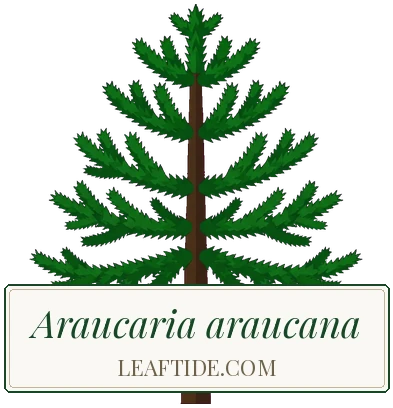
Plant in full sun in well-drained soil. Water regularly for the first 2-3 years until established. Mulch around the base to retain moisture. Do not prune, as this tree does not regenerate from old wood. Allow plenty of space for its eventual spread.
 In your Leaftide garden


Yearly Lifecycle
Care Essentials
Rarely needed once established. Young trees benefit from a balanced slow-release fertiliser in spring for the first 3-5 years.
Watch For
- Honey fungus
- Scale insects
- Needle browning from cold wind
Companions
Rhododendron, Camellia, Ferns, Heather
Pet Safety
Care Requirements
Light
Full sun preferred
Prefers full sun for best growth and form. Tolerates light shade when young but develops its characteristic shape best in an open position.
Watering
Regular when young, drought-tolerant later
Water deeply once a week during dry spells for the first 3 years. Established trees are drought-tolerant and rarely need supplemental watering.
Fertilizing
Rarely needed once established
Young trees benefit from a balanced slow-release fertiliser in spring for the first 3-5 years. Established trees need no feeding.
Pruning
Never prune, remove dead branches only
Monkey puzzles do not regenerate from old wood. Never top or shape this tree. Only remove dead or damaged lower branches cleanly at the trunk.
Growing Tips
Keep it clear of paths and seating
The leaves are hard and sharp-tipped, female trees drop cones up to about 20 cm (8 in) across, and surface roots can lift paving. Plant it well away from paths, patios, seating and play areas.
Seeds come late, and only on female trees
Most trees are either male or female, and only females bear the large round cones of edible seeds, best roasted. They start only at 30 to 40 years old, and need a male nearby: good seeds are fat and plump, unfertilised ones thin and flat.
Sow seed fresh
Seed does not keep, so sow it as soon as you have it. Soak it for up to 24 hours, then push it in pointed tip down with the top left uncovered, at about 20 °C (68 °F). It takes a few weeks to two months to germinate; grow seedlings on in pots for two or three years before planting out.
Pests & Diseases
Disease Honey Fungus Armillaria spp.
Symptoms: The tree dies back over one or more seasons. Under the bark at the base of the trunk there are white, mushroom-smelling sheets of fungus, and clumps of honey-coloured toadstools may appear at the base in autumn.
Treatment: There is no cure. Remove a dead or dying tree with as much of the stump and roots as you can, and do not replant the spot with another woody plant that is prone to honey fungus.
Prevention: Keep the tree free of drought and waterlogging stress. Where a neighbouring tree or stump is infected, a vertical barrier of heavy-duty plastic sheet buried about 45 cm (18 in) deep can stop the fungus spreading through the soil.
Disease Phytophthora Root Rot Phytophthora spp.
Symptoms: Whole branches turn brown and are shed, anywhere in the crown, and the tree thins and can die. Most likely on heavy, badly drained or waterlogged soil. A monkey puzzle cannot drop single leaves, so a tree with damaged roots sheds entire branches.
Treatment: There is no cure for an established tree. Improve drainage around it where you can and do not water soil that is already wet. Remove a dead tree with its roots.
Prevention: Plant only in free-draining soil, never in a hollow where water collects, and keep the top of the root ball level with the soil surface.
Disease Lower Branches Browning and Falling
Symptoms: The lowest tiers of branches turn brown and fall as the tree ages, leaving a bare trunk below the crown.
Treatment: This is normal on an older tree and needs no treatment. If you want a dead branch gone, cut it off whole at the trunk in early spring; cutting off part of a branch can make the rest of it die. If the whole tree turns brown, suspect drought, especially in a pot, or root problems.
Prevention: Water young trees in dry spells for their first few years, and never let a pot-grown tree dry out.