How to Grow Eccremocarpus as a Perennial
Eccremocarpus scaber
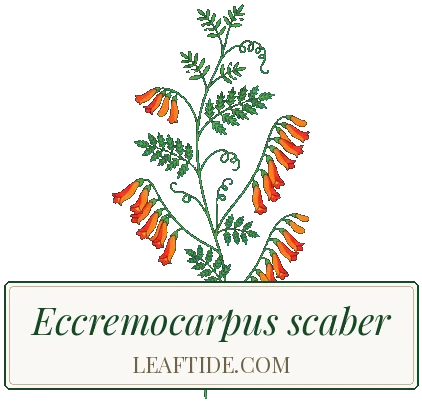
Eccremocarpus grown as an evergreen perennial climber in mild or sheltered conditions. Once established on a warm wall or sturdy trellis, it remains year after year, producing cascades of tubular orange-red flowers from late spring through autumn. Tie in new growth regularly, protect the root zone over winter, and prune lightly in spring to rejuvenate. In favourable spots it can reach 4 metres (13 ft) and provides outstanding vertical colour with minimal maintenance.
 In your Leaftide garden


- Height
- 4 m (13 ft)
- Spread
- 1.5 m (5 ft)
- Flowers
- May - October
- Light
- Full sun
- Water
- Moderate
Yearly Lifecycle
Care Essentials
Feed fortnightly with a high-potash liquid fertilizer from late spring through flowering to sustain the long bloom season.
Watch For
- Aphids on young shoots
- Red spider mite in sheltered positions
- Slugs on young spring growth
Companions
Cobaea, Sweet Pea, Morning Glory, Clematis
Care Requirements
Light
Full sun, warm sheltered wall
Needs a sunny, warm position such as a warm, sunny wall or sturdy trellis. Produces the longest flowering season in maximum sunlight with wind protection.
Watering
Regular during establishment
Water regularly in the first year and during dry spells. Once established, it is fairly drought-tolerant but flowers better with consistent moisture.
Fertilizing
High-potash feed fortnightly
Feed fortnightly with a high-potash liquid fertiliser from late spring through flowering to sustain the long bloom season.
Pruning
Cut back hard in early spring
In early spring, cut back to 30 cm (12 in) or to healthy buds to rejuvenate. Remove frost-damaged or dead wood at the same time.
Support
Trellis or wires essential
Climbs by tendrils but benefits from regular tying in to cover supports evenly. Provide a sturdy trellis, wires, or obelisk for the stems to grip.
Growing Tips
Cut back hard in spring
It flowers on the new season's growth, so cut the stems back hard once the worst frosts are over, to a pair of strong buds low down. A hard cut costs you no flowers and keeps the plant tidy.
Give the tendrils something thin to grip
It climbs by tendrils, so it needs trellis, wires or netting with thin supports. It cannot grip a plain wall or thick posts without help.
Keep a few self-sown seedlings
Seedlings often come up around the plant after flowering and flower in shades of orange, red, yellow or pink. Keep a few as insurance in case the parent is lost to a hard winter.
Pests & Diseases
Disease Frost Damage
Symptoms: Leaves and stems blacken and collapse after a frost. The woody base survives mild winters and often regrows.
Treatment: Leave the damaged top growth until new shoots show low down in spring, then cut back to just above them.
Prevention: Mulch the base thickly before winter and plant against a warm, sheltered wall. In cold areas treat it as an annual or keep cuttings indoors.
Disease Root Rot
Symptoms: Stems wilt and collapse in winter or spring, and the base and roots are soft and dark. Mostly in heavy, wet soil.
Treatment: Dig out and bin collapsed plants. Replant the spot with gritty, free-draining soil before trying again.
Prevention: Plant in free-draining soil in a sunny spot and do not let the base sit wet over winter.