How to Grow Cenizo
Leucophyllum frutescens
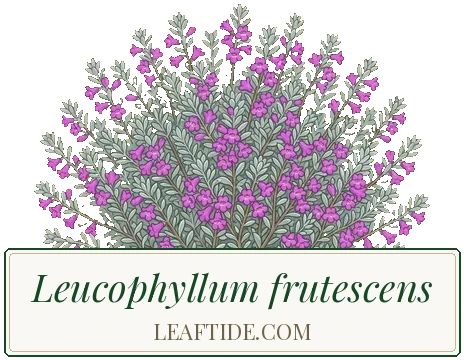
Cenizo (Texas Sage) is a rugged, drought-tolerant evergreen shrub native to the Chihuahuan Desert. Plant in full sun with fast-draining, poor soil. Water sparingly once established; it needs almost none in summer. Flowering flushes follow summer rains or humidity spikes. Prune lightly in late winter to keep a tidy shape; avoid cutting into old wood. Do not fertilise heavily.
 In your Leaftide garden


- Height
- 2 m (6.5 ft)
- Spread
- 1.5 m (5 ft)
- Flowers
- May - August
- Light
- Full sun
- Water
- Low
- Feed
- Avoid
Yearly Lifecycle
Care Essentials
Rarely, if ever. Cenizo thrives in poor, low-nutrient soil. If growth is very slow, apply a light balanced fertiliser in early spring only.
Watch For
- Root rot (overwatering or poor drainage)
- Aphids on new growth
- Cotton root rot in hot, alkaline clay soils
Care Requirements
Light
Full sun: 6+ hours daily; no shade
Cenizo requires full sun to bloom well. Even light shade causes leggy growth and poor flowering. South- or west-facing aspects in warmer climates are ideal.
Watering
Very low: drought tolerant once established
Water deeply but infrequently during establishment (first 1–2 seasons). Once established, cenizo needs little to no supplemental irrigation. Overwatering or standing water causes fatal root rot.
Fertilizing
Avoid; thrives in poor soil
Do not fertilise routinely. Excess nitrogen produces lush foliage at the expense of flowers and can weaken the plant. A light balanced feed in early spring is acceptable only if growth is very poor.
Pruning
Light shaping in late winter; avoid old wood
Prune lightly in late winter before new growth starts. Remove crossing or dead stems. Do not cut back hard into old wood; the plant may not recover. Avoid autumn pruning.
Soil
Fast-draining, alkaline, poor
Thrives in rocky, gravelly, or sandy alkaline soil. Will not tolerate heavy clay or poorly drained sites. Does not need amended or enriched soil; lean soil encourages flowering.
Growing Tips
Don't shear it into a hedge
Clipping cenizo into a tight hedge or ball strips off most of its living foliage and leaves a twiggy shrub that dies back in the centre and flowers poorly. Keep its natural shape and just pinch out the shoot tips if you want it denser.
Buy the size you need
Cultivars differ a lot in height and spread, from compact forms of about 1.2 m (4 ft) to shrubs of 2 m (6.5 ft) or more, and an oversized plant can't be cut back to fit its space. Check the label before you plant.
Thin winter foliage is normal
Cenizo is hardy to about -12 °C (10 °F), but it often drops many leaves in a cold winter, and the green-leaved 'Green Cloud' can lose nearly all of them. They grow back once it warms up, so don't water or feed it to revive it.
Lime acid soil
Cenizo grows wild on limestone and wants alkaline soil. On acid ground, work dolomitic lime into the planting area before you plant.
Pests & Diseases
Disease Cotton Root Rot Phymatotrichopsis omnivora
Symptoms: In early summer, once the soil is warm, the whole plant wilts suddenly and dies within a few days, its dried leaves staying attached. Dead plants pull out easily, the rotted roots carry white to brown fungal strands, and losses recur in the same patches.
Treatment: There is no cure. Dig out the dead plant. The fungus survives for years in the soil and kills most shrubs planted in the same spot, so replant there with grasses or other monocots, which survive it.
Prevention: Plant in well-drained soil, on raised beds where rainfall is high, and do not overwater.
Disease Root Rot
Symptoms: Leaves yellow and the plant wilts or dies back even though the soil is moist, usually after a wet spell, in heavy clay or in a pot without drainage. The roots are brown and soft.
Treatment: A badly affected plant rarely recovers. Stop watering, and repot a container plant into gritty compost in a pot with drainage holes.
Prevention: Plant only in fast-draining soil, on a mound or raised bed if your soil is clay, and stop watering once the shrub is established.