How to Grow Black Nightshade
Solanum nigrum
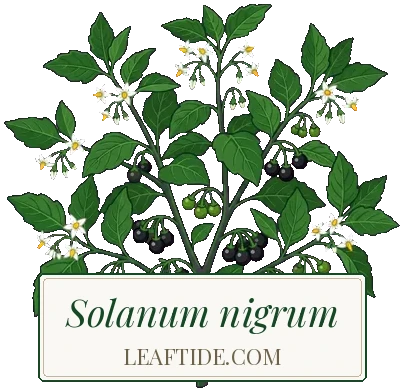
Black Nightshade (Solanum nigrum) is a warm-season leafy green widely eaten in Africa and Asia. Not to be confused with Deadly Nightshade (Atropa belladonna). Sow after last frost in fertile, moist soil in full sun or part shade. Plants grow 30-60 cm (12-24 in) tall and self-seed freely. Pinch tips at 30 cm (12 in) for bushier growth. Harvest young leaves and shoot tips continuously; always cook before eating. Berries are edible only when fully ripe and black. Frost-tender annual, killed by first frost.
 In your Leaftide garden
- Hardiness
- Tender
- Season
- Warm Season
- Harvest
- Continuous Harvest
- Spacing
- 40 cm (16 in)
- Height
- 60 cm (24 in)
- Sow depth
- 0.5 cm (¼ in)
- Min. soil temperature
- 15 °C+ (59 °F+)
- Start from
- Seed
- Light
- Full sun to part shade
- Water
- Moderate
When to Start
Start seeds indoors 4 weeks before your last frost date. Transplant outdoors once night temperatures stay above 10 °C (50 °F) and soil has warmed to at least 15 °C (59 °F).
Don't know your frost date? Find it here →
Growth Stages
Approximate days from start
Care Essentials
- Balanced liquid feed every two weeks once established. Avoid high nitrogen which promotes leaf growth at the expense of flavour.
- Not to be confused with Deadly Nightshade (Atropa belladonna). Black Nightshade is a widely eaten leafy vegetable in Africa and Asia. Self-seeds readily and prefers warm, fertile soil with consistent moisture.
Growing Conditions
- Min. soil temperature
- 15 °C+ (59 °F+)
- Germination temperature
- 18–30 °C (64–86 °F)
Pet Safety
- Sow indoors
- —
- Transplant out
- —
- First harvest
- —
Want your full season plan with reminders? Set up your garden free


Spacing & Planting
| Plant spacing | 40 cm (16 in) |
| Row spacing | 60 cm (24 in) |
| Sow depth | 0.5 cm (¼ in) |
| Mature height | 60 cm (24 in) |
| Mature spread | 45 cm (18 in) |
Pests & Diseases
Pest Aphids
Identification: Clusters of small green or black sap-sucking insects on the shoot tips and under young leaves. Heavy colonies curl and wrinkle the very leaves you want to eat and can stunt or kill young plants, worst in dry spells.
- Rub out small colonies by hand or knock them off with a jet of water, and check the undersides of the leaves before each harvest.
- Spray insecticidal soap on affected plants only, so ladybirds, lacewings and hoverfly larvae survive to clear the rest.
Pest Flea Beetles
Identification: Tiny shiny black beetles, about 2 mm long, that jump when disturbed and pepper the leaves with small round shot-holes. Young transplants in warm, dry weather suffer most.
- Cover young plants with fine insect mesh from planting until they are growing strongly.
- Water in dry spells so plants grow away from the damage; older plants shrug off a few holes.
Pest Red Spider Mite
Identification: Fine pale speckling on the upper side of the leaves, which turn dull and bronzed, with tiny mites and fine webbing underneath and at the shoot tips in bad attacks. Worst in hot, dry weather and under glass.
- Keep plants well watered and mist the undersides of the leaves in the morning in hot weather.
- Under glass, introduce the predatory mite Phytoseiulus persimilis.
- Avoid broad-spectrum insecticides, which kill the predators that keep mites in check and can make outbreaks worse.
Disease Early Blight (Alternaria)
Symptoms: Brown spots up to about 1 cm (½ in) across with rings inside them like a target, starting on the oldest leaves and moving up the plant. Spotted leaves yellow and drop, and a bad attack can strip the plant. Worst in warm, wet weather.
Treatment: Pick off spotted leaves as soon as you see them and bin them, and clear away all plant remains at the end of the season.
Prevention: Tomatoes, potatoes, peppers and aubergines carry the same disease, so do not grow black nightshade where they grew recently. Space plants more widely in humid weather, water at the base, and save seed only from healthy plants.
Growing Conditions
| Min. soil temperature | 15 °C (59 °F) |
| Germination temperature | 18–30 °C (64–86 °F) |
| Base growth temperature | 10 °C (50 °F) |
| Photoperiod sensitivity | day neutral |
Frequently Asked Questions
- How far apart should I plant black nightshade?
- Plant black nightshade 40 cm (16 in) apart, with 60 cm (24 in) between rows.
- When can I harvest black nightshade?
- Black nightshade is ready to harvest approximately 50 days after transplanting.
- Is black nightshade frost hardy?
- No, black nightshade is tender.