How to Grow Yaupon Holly
Ilex vomitoria
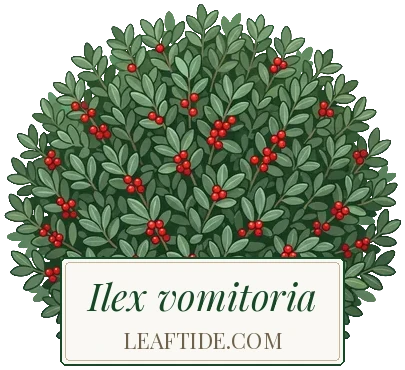
Yaupon Holly is a tough evergreen native of the south-eastern US that grows into a large shrub or small tree of 4-6 m (13-20 ft), with small, smooth, spineless leaves. Plant it in sun or part shade in almost any soil, from sandy to clay; it copes with drought once established and with short spells of wet ground. Water regularly for the first year. Female plants carry red winter berries if a male grows nearby; the berries are toxic to people and pets. It takes shearing well, so it makes a good hedge, screen or clipped specimen, and dwarf cultivars stay below 1.2 m (4 ft). Shape it in late winter. Hardy outdoors to about -15 °C (5 °F).
 In your Leaftide garden


- Height
- 4.5 m (15 ft)
- Spread
- 3 m (10 ft)
- Flowers
- April - May
- Light
- Full sun to part shade
- Water
- Moderate
- Prune
- Shape in late winter
Yearly Lifecycle
Care Essentials
Rarely needed. If growth is pale or slow, apply a light balanced or holly fertiliser in early spring as new growth starts.
Watch For
- Scale insects on stems and leaf undersides
- Leaf miners causing pale trails in the leaves
- Root rot in permanently waterlogged soil
- Suckers forming thickets around the base
Pet Safety
Care Requirements
Light
Full sun to part shade
Grows densest and berries best in full sun. It tolerates part shade and even fairly heavy shade under trees, but becomes more open there.
Watering
Moderate; drought tolerant once established
Water weekly through the first growing season so the roots establish. After that it copes with drought and needs water only in long dry spells. It also tolerates short periods of waterlogged soil.
Fertilizing
Light feed in spring if needed
Most garden soils supply enough. If leaves are pale, give a light balanced or holly fertiliser in early spring. Avoid heavy nitrogen, which gives soft, leggy growth.
Pruning
Shape in late winter; shears well
Prune or renovate in late winter before new growth. Hedges and dwarf forms can be sheared again in early summer. It also takes well to being limbed up into a small multi-stemmed tree.
Spacing
300 cm (10 ft) as a specimen; 90-150 cm (3-5 ft) for hedges
Allow about 3 m (10 ft) for a free-growing shrub or small tree. Plant 90-150 cm (3-5 ft) apart for a screen or hedge, and about 90 cm (35 in) for dwarf cultivars.
Support
None needed
Yaupon is self-supporting. Young trees trained to a single or multi-stem form may need a short stake for the first year in windy sites.
Growing Tips
Male and female plants
Only female yaupons bear berries, and they need a male plant within reach of bees. Buy named female cultivars if you want berries, or berry-free dwarfs such as 'Bordeaux' if you don't.
Berries are toxic
The red berries cause vomiting in people, cats and dogs. Birds eat them safely. Choose a male or berry-free cultivar where small children or pets play.
Pull suckers early
Yaupon spreads by root suckers and can form a thicket. Pull or cut suckers while small unless you want a naturalised screen.
Wet or dry is fine
Few shrubs handle both drought and heavy, wet clay. Once established it needs little water, which makes it a good native choice for Gulf Coast gardens.
Pests & Diseases
Pest Yaupon psyllid
Identification: A native of the south-eastern United States. Young leaves in spring curl, cup and thicken into small pouches or puckered clusters at the shoot tips, with sticky honeydew. Tiny jumping insects sit inside.
- Clip off distorted shoot tips and bin them. Healthy plants outgrow the damage, which is mostly cosmetic.
Pest Scale insects
Identification: Small waxy or flat bumps on stems and the undersides of the leaves, with sticky honeydew and black sooty mould, and sometimes yellow spots on the upper leaf surface.
- Rub light infestations off with a soft brush or cloth dipped in soapy water.
- On bigger plants, prune out heavily infested stems and spray the stems and undersides of the leaves with horticultural oil in the dormant season or when the pale young crawlers are active.
Popular Varieties
Bordeaux
[object Object]