How to Grow White Sage
Salvia apiana
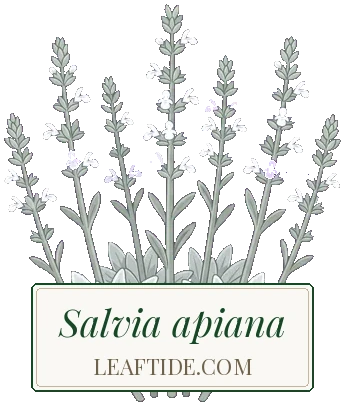
White sage is a drought-tolerant evergreen shrub native to California and Mexico with silvery-white aromatic leaves used for smudging. Hates wet conditions and needs full sun, excellent drainage, and sandy or gravelly soil. In the UK, grow in a greenhouse or against a very sheltered, sunny wall only as it will not survive wet winters outdoors. Water very sparingly once established.
 In your Leaftide garden


- Height
- 1.2 m (4 ft)
- Spread
- 90 cm (35 in)
- Spacing
- 90 cm (35 in)
- Flowers
- May - September
- Light
- Full sun
- Water
- Low
- Feed
- None needed
- Prune
- Light shaping only
Yearly Lifecycle
Care Requirements
Light
Full sun, maximum heat
Requires full sun and as much heat as possible. Native to arid California chaparral. In the UK a greenhouse or conservatory in the sunniest spot provides the best conditions.
Watering
Very sparingly, almost none in winter
Extremely drought-tolerant once established. Water only when the soil is bone dry. No water at all in winter. Overwatering is the primary killer.
Fertilizing
None needed
Adapted to poor, mineral soils. Fertilizing produces soft, disease-prone growth that is uncharacteristic of the plant. Leave unfed.
Pruning
Light shaping only
Minimal pruning needed. Remove dead or damaged stems in spring. Can be lightly shaped after flowering but avoid hard cuts into old wood.
Growing Tips
Drainage is everything
Plant in pure grit, sand, or gravel-heavy mix. Even a small amount of water retention in the root zone will cause rot. Raised beds or containers with mineral substrate work best.
Greenhouse or sunny wall only
In the UK, white sage cannot survive outdoors through winter. A cold greenhouse with no supplemental watering in winter is ideal. A very sheltered, sunny wall may work in mild coastal areas.
Do not overwater
White sage is adapted to desert conditions. Water only when completely dry and even then sparingly. More plants are killed by kindness than neglect.
Pests & Diseases
Pest Aphids
Identification: Clusters of small green or black insects on soft shoot tips and young leaves in spring, with sticky honeydew. Young plants are hit hardest; older plants are rarely troubled.
- Rub off small colonies or wash them off with a jet of water
- Leave the rest for ladybirds, lacewing larvae and hoverfly larvae, which usually clear them within a few weeks
Disease Root Rot
Symptoms: Leaves wilt, yellow or turn brown even though the soil is moist, and the stems darken and soften at the base. A whole plant often collapses within a few weeks of a wet spell, a wet winter or regular summer watering. The roots are brown and soft.
Treatment: Once the base of the stem is soft the plant rarely recovers. Stop watering, move a potted plant somewhere dry and airy and check the roots. If most of them are soft and brown, discard the plant and its compost.
Prevention: Grow it in full sun in pure grit, gravel or a very mineral mix, in a raised bed, or in a container under cover where winters are wet. Water only when the soil is bone dry and not at all in winter. Heavy clay or any spot where water lingers will kill it.
Disease Powdery Mildew
Symptoms: White powdery coating on the leaves and young stems, easy to miss at first on the silvery foliage. It appears when the air stays humid or the plant grows in too much shade.
Treatment: Cut off the worst affected shoots and open up the space around the plant. Move a potted plant into full sun with room around it.
Prevention: Give it full sun, plenty of space and moving air, and keep it out of humid, sheltered corners. In a greenhouse, ventilate well.
Spacing & Planting
| Plant spacing | 90 cm (35 in) |
| Row spacing | 90 cm (35 in) |
| Mature height | 1.2 m (4 ft) |
| Mature spread | 90 cm (35 in) |