How to Grow Watsonia
Watsonia borbonica
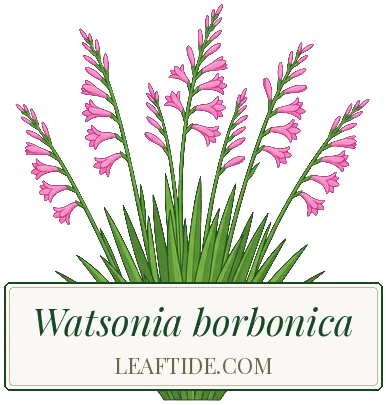
Watsonia, the bugle lily, is a South African corm that forms clumps of stiff, sword-shaped leaves and sends up tall spikes of tubular flowers in pink, coral, orange, red or white, loved by bees and nectar-feeding birds. The commonly grown garden kinds start growing in spring, flower in early to midsummer and die back in autumn. Plant the corms about 10 cm (4 in) deep in spring, in full sun and very free-draining soil. Water in dry spells while it grows and flowers, then let the leaves yellow before you cut them back. It survives to about -5 °C (23 °F) under a dry winter mulch; in colder gardens lift the corms in autumn or grow it in a pot you can move under cover. Leave clumps alone for a few years and divide them only when they get crowded.
 In your Leaftide garden


- Height
- 1.2 m (4 ft)
- Spread
- 45 cm (18 in)
- Flowers
- June - September
- Light
- Full sun
- Water
- Moderate
- Feed
- Light feed in spring
- Prune
- Cut spent spikes
Yearly Lifecycle
Care Essentials
One light feed of balanced or high-potash fertiliser as shoots appear in spring. Plants in pots can have a liquid high-potash feed every two weeks until flowering.
Watch For
- Corm rot in cold, wet soil
- Gladiolus thrips (silvery streaks on leaves and flowers)
- Slugs and snails on young shoots
- Spreading by seed or bulbils into bushland (Australia)
Companions
Agapanthus, Kniphofia, Crocosmia, Salvia, Ornamental grasses
Care Requirements
Light
Full sun
Give it a warm spot in full sun, ideally at the foot of a sunny wall in cooler gardens. In shade it makes fewer spikes and they lean towards the light.
Watering
Moderate while growing, dry when dormant
Water during dry spells from the moment shoots appear until flowering ends, soaking the soil rather than sprinkling it. Once the leaves start to yellow, let the soil dry out. Evergreen species want some water through summer as well.
Fertilizing
Light feed in spring
Scatter a balanced or high-potash fertiliser around the clump as the shoots emerge in spring. Rich feeding gives leaves at the expense of flowers, and lean, sandy soil suits it well.
Pruning
Cut spent spikes; clear dead leaves in autumn
Cut faded flower spikes to the base to keep the clump tidy and stop it seeding around. Let the leaves yellow naturally so they feed the corms, then cut them to the ground in autumn. Evergreen kinds only need dead leaves pulled away.
Spacing
20-30 cm (8-12 in) apart
Plant corms 8-10 cm (3-4 in) deep and 20-30 cm (8-12 in) apart, in groups of five or more for a good show. Each clump slowly widens to about 45 cm (18 in).
Support
Usually none; stake in exposed spots
The stiff spikes normally stand on their own. In windy gardens or rich soil tall spikes can lean, so give them a discreet cane or plant them among sturdy neighbours.
Growing Tips
Know which kind you have
Most watsonias sold for gardens, such as Watsonia borbonica and its hybrids, are deciduous; in frosty gardens they grow from spring, flower in early summer and rest dry over winter. Evergreen species such as Watsonia pillansii keep their leaves all year and like some summer water. In mild, dry-summer climates many watsonias follow their wild cycle instead, sprouting with the autumn rains, flowering in late spring and resting through the dry summer.
Keep the corms dry in winter
Cold, wet soil rots the corms faster than frost does. Plant in a raised bed, on a slope or in gritty soil, and once the leaves have died back cover the clump with a dry mulch of straw, bracken or bark.
In Australia, check your weed list first
Several watsonias have escaped into bushland in Australia. Bulbil watsonia (Watsonia meriana var. bulbillifera) is a declared weed in Victoria and South Australia, where selling or moving it is banned, and Watsonia borbonica has also gone wild in parts of the south. Check your state or council weed list before planting, and cut off spent spikes before they drop seed or bulbils.
Leave clumps to settle
Watsonias dislike being moved and may skip a year of flowers afterwards. Divide crowded clumps only every four or five years, after the leaves have died back, and replant the corms straight away.
Pests & Diseases
Pest Gladiolus Thrips
Identification: Silvery streaks and flecks on the leaves, and flower buds that are streaked, deformed or fail to open. Worst in warm, dry weather.
- Cut off and bin badly affected flower spikes.
- Spray with a fatty acid or plant oil insecticide, reaching into the leaf bases, and repeat as the label directs.
- Clear dead leaves and old stems at the end of the season, where thrips shelter.
Disease Corm Rot
Symptoms: Leaves yellow early and the clump weakens. Corms lifted from the soil are soft, brown or mushy. Usually caused by cold, wet soil.
Treatment: Lift the clump, throw away soft corms and replant firm ones in free-draining soil.
Prevention: Plant in sharply drained soil in the sunniest spot, on a bed of grit or a raised mound, and keep the corms from sitting wet while they rest.