How to Grow Watermelon Peperomia
Peperomia argyreia
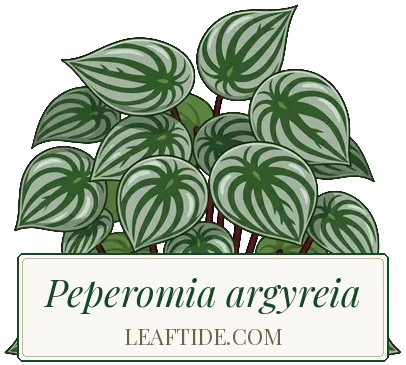
Watermelon Peperomia is a compact tropical houseplant grown for its eye-catching leaves patterned like watermelon rind. Keep it in bright indirect light and water only when the top centimetre of soil has dried out; its fleshy leaves store moisture, so overwatering is the biggest risk. Maintain temperatures between 18-24 °C (64-75 °F), away from cold draughts, and feed lightly once a month in spring and summer. It appreciates higher humidity but adapts well to normal indoor conditions.
 In your Leaftide garden


- Height
- 20 cm (8 in)
- Spread
- 20 cm (8 in)
- Light
- Bright indirect light
- Water
- Low
Yearly Lifecycle
Care Requirements
Light
Bright indirect light; never direct sun.
Thrives in bright indirect light from a north or east-facing window. Direct sun bleaches and scorches the distinctive striped leaves. Low light causes slow, weak growth and faded markings.
Watering
Allow top inch of soil to dry between waterings.
The thick, slightly succulent leaves store water, so watermelon peperomia tolerates short dry spells well. Overwatering is the most common cause of failure: always let the top 2-3 cm (¾-1 in) dry before watering again.
Fertilizing
Light feed monthly during the growing season.
Apply a balanced liquid fertiliser at half strength once a month from spring through summer. Stop feeding in autumn and winter when growth naturally slows. Overfeeding produces weak, leggy stems.
Pruning
Minimal: remove dead or yellowing leaves only.
Watermelon peperomia rarely needs pruning. Simply remove dead, damaged, or yellowing leaves at the base to keep the plant tidy and encourage airflow around the rosette.
Growing Tips
Pot small and shallow
The roots are fine and shallow, so a small pot with drainage suits it better than a big one, where the extra compost stays wet and rots the roots. Repot only when roots fill the pot, using a gritty mix with added perlite or bark.
Water the compost, not the plant
Pour water around the edge of the pot, or let it soak up from a saucer for a few minutes, and keep the leaves dry. Water that pools where the leaf stalks meet starts rot.
Flower spikes are normal
In spring or summer it can send up thin, pale, tail-like spikes of tiny flowers. They are harmless and last a few weeks; cut them off at the base once they brown.
Pests & Diseases
Disease Stem and Root Rot
Symptoms: Stems turn soft, dark and mushy at the soil line, and the leaves go limp and drop even though the compost is wet.
Treatment: Unpot and cut away all soft tissue. If a firm piece of stem or healthy leaves remain, root a leaf with a short stalk, or the healthy top, in fresh gritty compost kept barely moist; discard the old compost.
Prevention: Water only when the top centimetre of compost is dry, use a pot with drainage holes and a free-draining mix with added perlite, and empty the saucer.
Disease Oedema (Corky Blisters)
Symptoms: Small raised, watery or corky blisters on the undersides of the leaves, turning brown and rough over time; a few leaves may yellow and drop.
Treatment: Cut off badly marked leaves. The blisters are cosmetic and do not spread, so the rest of the plant carries on as normal once the cause stops.
Prevention: It comes from taking up more water than the leaves can lose, in cool, dim, humid conditions. Water less in winter, keep the plant above 18 °C (64 °F) and give it bright light and some air movement.