How to Grow Tropical Sage
Salvia coccinea
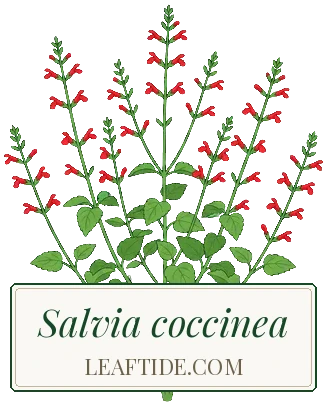
Tropical sage (Salvia coccinea) is an easy native salvia, a different plant from the bedding salvia Salvia splendens, with slender spikes of red, pink, white or coral flowers from late spring until frost. It is a short-lived perennial in zones 8-10 that reseeds freely, and is grown as an annual where winters are colder. Plant in full sun or part shade (it even flowers in light shade) in well-drained soil, water during dry spells, and skip heavy feeding. Trim spent spikes and cut back by a third in midsummer to keep it bushy. Hummingbirds, bees and butterflies love it.
 In your Leaftide garden


- Height
- 75 cm (30 in)
- Spread
- 45 cm (18 in)
- Flowers
- May - November
- Light
- Full sun to part shade
- Water
- Moderate
Yearly Lifecycle
Care Essentials
Little feeding needed. A light dose of balanced slow-release fertiliser in spring is plenty; rich soil gives floppy stems and fewer flowers.
Watch For
- Self-sown seedlings popping up where you do not want them
- Leggy, floppy growth if not trimmed
- Whitefly and aphids on soft growth
- Root rot in wet, poorly drained soil
Companions
Lantana, Mealy Cup Sage, Gregg's Mistflower, Coneflower, Black-eyed Susan
Pet Safety
Care Requirements
Light
Full sun to part shade
Flowers most heavily in full sun with at least 6 hours of direct light. It also does well in part shade and still blooms in light shade, with looser growth and fewer flowers.
Watering
Moderate, tolerates short dry spells
Water regularly while young and during dry spells; it flowers more freely when the soil does not dry out for long. Established plants cope with brief drought, but avoid waterlogged soil.
Fertilizing
Light feed in spring only
A light application of balanced slow-release fertiliser in spring is enough. Too much nitrogen gives tall, floppy stems with fewer flowers.
Pruning
Deadhead, trim in midsummer
Snip off spent flower spikes to keep blooms coming, leaving a few to self-seed if you want new plants. Cut back by a third in midsummer if it gets leggy, and remove frost-killed stems in late winter.
Spacing
40-60 cm (16-24 in) apart
Space plants 40-60 cm (16-24 in) apart. Self-sown seedlings will fill in, so thin them in spring to keep good air flow.
Support
No support needed
Stems are self-supporting when grown in good light and trimmed in midsummer. In deep shade or rich soil, neighbouring plants help hold up the looser stems.
Growing Tips
Let it reseed, then edit
Leave a few spikes to set seed in late summer and you will get free plants next spring. Pull or move the extra seedlings once they have a few true leaves.
Midsummer haircut
When stems get long and flop, cut the whole plant back by about a third. It regrows within weeks and flowers again until frost.
A salvia for shady spots
Unlike most salvias, tropical sage still blooms in part shade and even light shade, though a little less heavily and on looser stems.
Do not give up on it too early
After a frost the top dies, but in mild areas new shoots come from the roots in spring. Wait until mid-spring before deciding it has died, and look for seedlings nearby.
Pests & Diseases
Pest Whitefly
Identification: Tiny white moth-like insects that flutter up when the plant is shaken, with pale scale-like nymphs under the leaves, sticky honeydew and yellowing leaves.
- Check the undersides of leaves on soft new growth and squash or wash off early colonies.
- Hang yellow sticky traps in a greenhouse or near container plants.
- Spray with insecticidal soap, wetting the undersides of leaves, and repeat after a week.
Pest Aphids
Identification: Clusters of small green, black or grey insects on shoot tips and flower buds, with sticky honeydew, curled or distorted growth and sometimes black sooty mould.
- Rub small colonies off by hand or wash them off with a jet of water.
- Encourage ladybirds, hoverflies and lacewings, which eat them.
- For a bad outbreak, spray with insecticidal soap, covering the undersides of leaves.
Disease Root Rot
Symptoms: Leaves yellow, wilt and drop even though the soil is wet, growth stalls, and the roots are brown, soft and smell sour. It follows waterlogging or heavy, badly drained soil.
Treatment: There is rarely a cure. Stop watering, let the soil drain and dry, and on a potted plant cut away any soft brown roots before repotting into fresh, free-draining mix. A badly affected plant should be removed.
Prevention: Plant in free-draining soil, on a slight mound if the ground is heavy, and water only when the top of the soil has dried. Containers need drainage holes.