How to Grow Toyon
Heteromeles arbutifolia
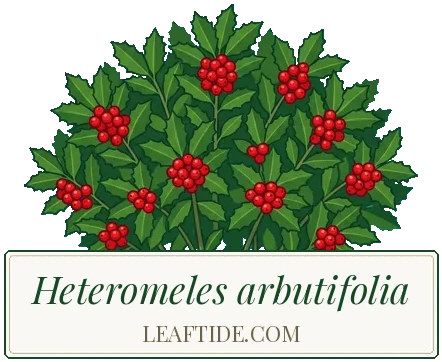
Toyon is a California native evergreen shrub or small tree prized for clusters of bright red berries in winter. Extremely drought-tolerant once established, it thrives in full sun to partial shade and needs minimal care. The white flower clusters in early summer attract pollinators, and the berries feed birds through winter. Avoid summer watering on established plants as this promotes root rot. Prune lightly to shape after fruiting if needed.
 In your Leaftide garden


- Height
- 4 m (13 ft)
- Spread
- 3 m (10 ft)
- Light
- Full sun to part shade
- Water
- Low
Yearly Lifecycle
Care Essentials
Toyon rarely needs fertiliser. If desired, apply a light application of balanced fertiliser in early spring for the first two years only.
Watch For
- Root rot from summer irrigation
- Fireblight
- Aphids on new growth
Care Requirements
Light
Full sun to partial shade
Produces the most berries in full sun. Tolerates partial shade, especially in hot inland areas. Handles coastal exposure well.
Watering
Drought-tolerant, avoid summer irrigation
Water deeply every two weeks during the first year only. Once established, summer watering should be avoided as it promotes root rot. Let nature provide moisture.
Fertilizing
Rarely needs fertiliser
Adapted to poor soils and rarely benefits from feeding. If desired, a light application of balanced fertiliser in early spring for the first two years only.
Pruning
Light shaping after berries drop
Prune lightly in late winter or early spring after berries have dropped. Remove dead wood and shape as desired. Avoid heavy pruning which reduces berry production.
Growing Tips
Keep summers dry
Toyon comes from regions with dry summers. Once it is established, leave out summer watering: extra water in warm weather invites root rot more than it helps.
Sun for berries
Toyon flowers and fruits best in full sun. In partial shade it still grows but sets fewer clusters of the red winter berries.
Prune lightly, after the berries
Hard pruning removes the shoots that carry flowers and berries, and the berries are the main attraction of this shrub. Shape it lightly once the berries have gone.
Pests & Diseases
Pest Aphids
Identification: Clusters of small green, black or grey insects on shoot tips and flower buds, with sticky honeydew, curled or distorted growth and sometimes black sooty mould.
- Rub small colonies off by hand or wash them off with a jet of water.
- Encourage ladybirds, hoverflies and lacewings, which eat them.
- For a bad outbreak, spray with insecticidal soap, covering the undersides of leaves.
Disease Fireblight Erwinia amylovora
Symptoms: Flowers and shoot tips wilt, turn brown to black and curl over into a shepherd's crook, with scorched-looking leaves that stay on the branch. Sticky ooze may weep from cankers on the stems. Worst in warm, wet weather at flowering.
Treatment: There is no cure. In dry weather cut out affected shoots at least 30 cm (12 in) below the visible damage, into healthy wood, and disinfect the secateurs between cuts. Burn or bin the prunings; do not compost them.
Prevention: Avoid heavy feeding, which pushes soft growth, and check the plant often during flowering so you catch it early.
Disease Root Rot
Symptoms: Leaves yellow, wilt and drop even though the soil is wet, growth stalls, and the roots are brown, soft and smell sour. It follows waterlogging or heavy, badly drained soil.
Treatment: There is rarely a cure. Stop watering, let the soil drain and dry, and on a potted plant cut away any soft brown roots before repotting into fresh, free-draining mix. A badly affected plant should be removed.
Prevention: Plant in free-draining soil, on a slope or mound if the ground is heavy, and do not water an established plant in summer: it is adapted to dry summers and rots in wet, warm soil.