How to Grow Texas Bluebonnet
Lupinus texensis
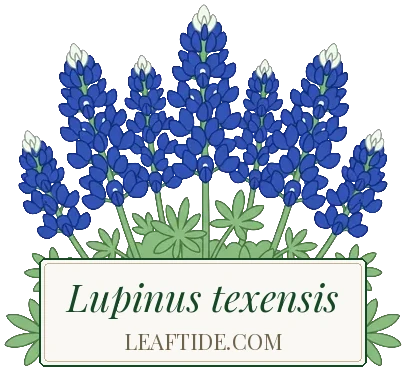
Texas bluebonnets are winter annuals for full sun and lean, gritty, well-drained soil, ideally alkaline. Scarify or soak the hard seed and sow it direct in autumn, barely covered; seedlings sit as low rosettes through winter and flower in early to mid spring. They dislike transplanting, rich soil and wet feet, so skip the fertiliser and water only to get seed started or in a long dry spell. Leave the pods to ripen in late spring for next year's plants, then clear the dead stems.
 In your Leaftide garden


- Hardiness
- Hardy
- Season
- Cool Season
- Harvest
- Continuous Harvest
- Spacing
- 25 cm (10 in)
- Height
- 40 cm (16 in)
- Sow depth
- 0.5 cm (¼ in)
- Min. soil temperature
- 7 °C+ (45 °F+)
- Start from
- Seed
- Light
- Full sun
- Water
- Low
When to Start
Direct sow outdoors as soon as soil reaches 7 °C (45 °F) — typically early to mid spring. Hardy enough to tolerate light frosts.
Don't know your frost date? Find it here →
Growth Stages
Approximate days from start
Care Essentials
- Do not feed. Bluebonnets fix their own nitrogen and flower best in lean soil; fertiliser gives soft leafy growth and fewer blooms.
- The state flower of Texas, grown as a winter annual. Sow scarified seed direct in autumn; seedlings form a flat rosette that sits through winter frosts, then send up blue spikes with white tips in early to mid spring. Let the pods ripen and split in late spring so the plants reseed, then cut them down once they brown off. The seeds are toxic if eaten, so keep them away from children and pets.
Growing Conditions
- Min. soil temperature
- 7 °C+ (45 °F+)
- Germination temperature
- 10–21 °C (50–70 °F)
Spacing & Planting
| Plant spacing | 25 cm (10 in) |
| Row spacing | 30 cm (12 in) |
| Sow depth | 0.5 cm (¼ in) |
| Mature height | 40 cm (16 in) |
| Mature spread | 30 cm (12 in) |
A winter annual sown direct where it is to flower. Broadcast or sow in shallow drills in autumn and leave the seedlings in place; the deep taproot makes transplanting difficult.
Pests & Diseases
Pest Slugs and Snails
Identification: Ragged holes in young shoots and leaves, with silvery slime trails around the plant. Worst on soft new growth in damp weather.
- Search at dusk and after rain and remove them by hand.
- Keep the soil around the plant clear of damp debris where they hide.
- Use a wildlife-friendly slug nematode on warm, moist soil, or set beer traps.
Pest Aphids
Identification: Clusters of small green, black or grey insects on shoot tips and flower buds, with sticky honeydew, curled or distorted growth and sometimes black sooty mould.
- Rub small colonies off by hand or wash them off with a jet of water.
- Encourage ladybirds, hoverflies and lacewings, which eat them.
- For a bad outbreak, spray with insecticidal soap, covering the undersides of leaves.
Disease Root and Crown Rot
Symptoms: Rosettes yellow, wilt and collapse after wet weather, and the taproot and crown are soft, brown and sometimes slimy. It is the main cause of losses in heavy or poorly drained soil.
Treatment: There is no cure. Pull out collapsed plants with the soil around the roots and bin them. Do not water the survivors; let the soil dry out.
Prevention: Sow in gritty, fast-draining soil, on a raised bed or mound if the ground is heavy, and sow thinly so air reaches the rosettes. Do not mulch over the crowns or add fertiliser.
Disease Powdery Mildew
Symptoms: A white, powdery coating on leaves, stems and buds, which then yellow, curl and drop early.
Treatment: Cut off and bin badly affected leaves; do not compost them. Water the soil rather than the leaves, and thin crowded growth so air moves through.
Prevention: Space plants so air moves freely and keep the soil from drying out completely, since stressed plants are hit first.
Growing Conditions
| Min. soil temperature | 7 °C (45 °F) |
| Germination temperature | 10–21 °C (50–70 °F) |
| Base growth temperature | 5 °C (41 °F) |
| Min. daylength to start | 9 h |
| Photoperiod sensitivity | day neutral |
Frequently Asked Questions
- How far apart should I plant Texas bluebonnet?
- Plant Texas bluebonnet 25 cm (10 in) apart, with 30 cm (12 in) between rows.
- When does Texas bluebonnet flower?
- Texas bluebonnet typically flowers approximately 90 days after transplanting.
- Is Texas bluebonnet frost hardy?
- Yes, Texas bluebonnet is hardy.