How to Grow Tansy
Tanacetum vulgare
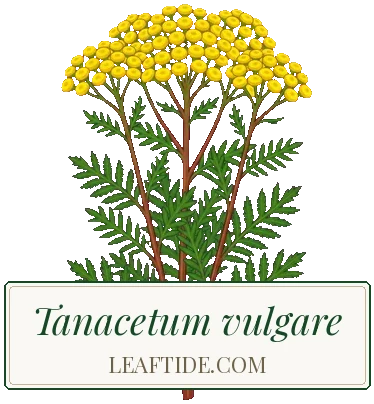
A vigorous hardy perennial herb with fern-like aromatic foliage and clusters of bright yellow button flowers in summer. Excellent companion plant that naturally repels many insect pests. Contains rhizomes and will spread if not contained.
 In your Leaftide garden


- Height
- 1.2 m (4 ft)
- Spread
- 60 cm (24 in)
- Spacing
- 60 cm (24 in)
- Flowers
- July - September
- Light
- Full sun to part shade
- Water
- Low
Yearly Lifecycle
Care Essentials
Minimal feeding needed. A light compost top-dressing in spring is sufficient.
Watch For
- Aphids
- Spreading beyond boundaries via rhizomes
Companions
Potatoes, Cucumbers, Squash, Roses
Pet Safety
Care Requirements
Light
Full sun to partial shade
Flowers best in full sun but tolerates partial shade. In very hot climates, light afternoon shade prevents wilting.
Watering
Drought-tolerant once established
Needs little supplemental water once established. Only water during extreme drought. Overwatering promotes excessive spreading.
Fertilizing
Minimal, light compost in spring
A light compost top-dressing in spring is sufficient. Tansy is adapted to poor soils and heavy feeding encourages rampant growth.
Pruning
Deadhead to prevent self-seeding
Remove spent flower heads regularly to prevent self-seeding. Cut all stems to ground level in late autumn after foliage dies back.
Growing Tips
Contain the spreading roots
Tansy spreads quickly by creeping rhizomes and also self-seeds. Grow it in a large bottomless pot sunk into the soil or inside a root barrier, and cut off the button flowers before the seed ripens.
Wear gloves, keep it away from the kitchen
Tansy was once used in cooking and as a herbal remedy, but it contains thujone and is poisonous if eaten. The aromatic foliage can irritate skin, so wear gloves when cutting it, and keep it away from pets and livestock.
Pests & Diseases
Pest Tansy Aphids
Identification: Dense colonies of dark brown to black aphids on the stems and flower buds, often tended by ants.
- Tolerate them if the plant is vigorous: ladybirds, hoverflies and lacewings usually move in.
- Rub or wash small colonies off with a jet of water.
- Cut off and bin heavily infested flowering shoots.
Pest Tansy Beetle
Identification: A shiny, metallic green and bronze beetle about 8 mm long that eats tansy leaves.
- Leave it alone. The damage is minor and the beetle is a rare, protected species in Britain.
Spacing & Planting
| Plant spacing | 60 cm (24 in) |
| Row spacing | 75 cm (30 in) |
| Mature height | 1.2 m (4 ft) |
| Mature spread | 60 cm (24 in) |