How to Grow Sumac
Rhus typhina
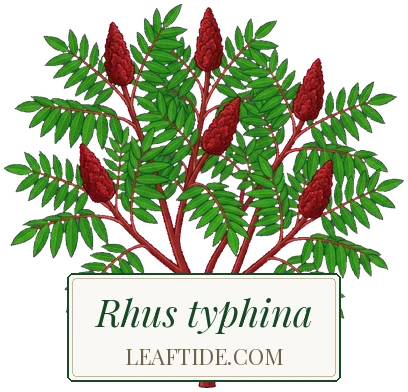
Staghorn Sumac is an extremely low-maintenance shrub native to North America with dramatic fall color in fiery reds, oranges, and yellows. Plant in full sun and well-drained soil; tolerates poor, rocky, or sandy ground. Virtually drought-proof once established. Spreads by root suckers to form colonies; remove unwanted suckers to control spread. Prune in late winter to shape or rejuvenate. Rarely needs feeding. Velvety antler-like branches provide winter interest.
 In your Leaftide garden


- Height
- 6 m (20 ft)
- Spread
- 7 m (23 ft)
- Light
- Full sun to part shade
- Water
- Low
- Feed
- Rarely needed
- Prune
- Late winter
Yearly Lifecycle
Care Requirements
Light
Full sun
Thrives in full sun for best fall color and form. Tolerates partial shade but flowering, fruiting, and autumn color are reduced.
Watering
Very low once established
Water deeply during the first growing season to establish roots. Once mature, Staghorn Sumac is very drought-tolerant and rarely needs supplemental watering. Does not tolerate waterlogged soil.
Fertilizing
Rarely needed
Thrives in poor soils without feeding. If growth appears weak, apply a balanced slow-release fertiliser in early spring. Over-fertilizing encourages excessive suckering.
Pruning
Late winter; control suckers
Prune in late winter or early spring to shape. Remove unwanted root suckers regularly to control spread. Rejuvenate older plants by cutting oldest stems to the ground every 3-5 years.
Growing Tips
Don't dig around it
Damaged roots throw up suckers, so forking, digging or rotavating near a sumac makes it spread faster. Mulch the surrounding bed instead of cultivating it, and in a lawn keep the mower from scalping surface roots.
Cutting it down brings more suckers
Cutting the main stems to the ground does not kill the roots and often triggers a flush of new suckers. Remove each sucker at its source: scrape back the soil and tear it off the root, which takes out more dormant buds than cutting.
Only female plants carry the red fruit heads
Sumac has separate male and female plants, and the dense crimson fruit heads form only on females. If you want them, buy a plant sold as female.
It is not poison sumac
Staghorn sumac is a different plant from poison sumac (Toxicodendron vernix), which grows on wet ground and has smooth-edged leaflets and loose, drooping clusters of whitish berries. Staghorn has toothed leaflets and upright red fruit heads at the branch tips.
Pests & Diseases
Disease Verticillium wilt
Symptoms: Leaves on one or more branches wilt, yellow or colour early in summer, and the branches die back, often on one side of the plant. Cut stems show brown or olive-green streaks in the wood.
Treatment: There is no cure. Cut affected branches back into healthy wood and dispose of them; remove the plant if the whole shrub declines.
Prevention: The fungus survives in the soil for years, so do not replant sumac or other susceptible shrubs, such as maples and smoke bush, where wilt has killed a plant.
Disease Coral spot Nectria cinnabarina
Symptoms: Small coral-pink pustules, later darkening to red, on dead twigs and pruning stubs. The fungus can spread from dead wood into living branches and kill them.
Treatment: In dry weather, cut out affected shoots well into healthy wood, and remove the prunings and other dead wood, on which the fungus keeps fruiting.
Prevention: Prune just above a bud or at the branch collar so no dead stubs are left, and clear dead wood from around the plant.
Disease Honey fungus Armillaria spp.
Symptoms: Dieback, or the plant failing to leaf out in spring, with a creamy-white fungal sheet smelling of mushrooms under the bark at the base of the stems. Honey-coloured toadstools may appear in autumn, and black bootlace-like strands can be found in the soil.
Treatment: There is no cure. Dig out the affected plant with as much of its root system as you can, including the roots of nearby suckers.
Prevention: A vertical barrier of heavy-duty plastic sheet, buried 45 cm (18 in) deep and standing just above the soil, stops the fungus spreading through the soil from infected roots nearby.