How to Grow Stephanotis
Stephanotis floribunda
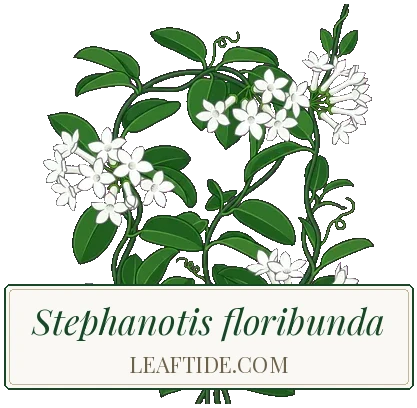
Stephanotis is a tropical evergreen climber prized for its intensely fragrant, waxy white flowers, a classic for weddings and gifts. It needs bright indirect light, consistent warmth (never below 13 °C, 55 °F), and high humidity. Once in bud, never move it: even a small shift can trigger bud drop. Water moderately in growth, reduce in winter, and feed fortnightly in spring and summer. It is safe for cats and dogs.
 In your Leaftide garden


- Height
- 3 m (10 ft)
- Spread
- 1 m (3.5 ft)
- Flowers
- May - October
- Light
- Bright indirect light
- Water
- Moderate
- Prune
- Trim after flowering
Yearly Lifecycle
Care Essentials
Feed every two weeks with a balanced liquid fertiliser from spring through summer. Reduce to once a month in autumn and stop feeding entirely in winter.
Watch For
- Mealybug
- Scale insects
- Spider mites
- Bud drop (caused by moving the plant or fluctuating temperatures)
- Root rot from overwatering
Pet Safety
Care Requirements
Light
Bright indirect light
Place near a bright window but out of direct sun, which scorches the waxy leaves. An east- or west-facing windowsill is ideal. Too little light and the plant will not flower.
Watering
Moderate; let top centimetre dry between waterings
Water thoroughly in spring and summer, allowing the top centimetre of compost to dry out before watering again. Reduce watering in autumn and keep barely moist in winter. Never let the plant sit in water.
Fertilizing
Fortnightly balanced feed in spring and summer
Apply a balanced liquid fertiliser every two weeks from late spring through summer. Cut back to monthly in autumn and stop completely in winter.
Pruning
Trim after flowering; train stems onto support
Cut back long or straggly stems after the main flush of flowers to maintain shape and encourage the following season's buds. Tie new growth onto a hoop or trellis as it develops.
Humidity
Prefers high humidity; avoid draughts
Mist the leaves occasionally or stand the pot on a pebble tray with water, especially in winter when central heating dries the air. Keep away from cold draughts and temperature fluctuations, which trigger bud drop.
Growing Tips
Flowers come on this year's stems
Stephanotis flowers mostly on the whippy shoots it makes in the current year. Wind new stems round the hoop or trellis rather than cutting them off, and keep trimming to a light tidy-up after flowering.
Pot on one size at a time
Repot in spring every other year, moving up only one pot size, to about 23 cm (9 in) across, in a peat-free soil-based compost such as John Innes No. 2. Once the plant is too big to move up, scrape away as much old compost as you can and replace it with fresh.
The fruit is a seed pod
A contented plant can set a green, egg-shaped fruit up to 10 cm (4 in) long. It is not edible, but you can leave it on the plant to ripen and sow the seeds in spring at 18 to 21 °C (64 to 70 °F).
Pests & Diseases
Pest Mealybugs
Identification: White, woolly patches in the leaf joints and along the stems, with sticky honeydew on the leaves below.
- Wipe off small colonies with a cotton bud dipped in a fatty acid or plant oil spray.
- Check the leaf joints and the places where stems twine round the support regularly, as colonies hide there.
Pest Scale insects
Identification: Raised brown, flat or domed bumps on the stems and leaf undersides, often with sticky honeydew and black sooty mould.
- Scrape or wipe the scales off by hand.
- Treat light infestations with a fatty acid or plant oil spray and repeat it, since it works best on young, newly hatched scale insects.
Pest Glasshouse red spider mite
Identification: Fine pale mottling on the upper side of the leaves, then yellowing, and fine webbing in bad attacks. The tiny mites are easiest to see with a hand lens on the leaf undersides.
- Mist the leaves regularly: the mites thrive in hot, dry air.
- In a conservatory, release the predatory mite Phytoseiulus persimilis once it is warm enough for it to work.
Pest Root mealybug
Identification: The plant grows slowly and wilts even when the compost is moist. When you knock it out of its pot, white waxy specks and powdery patches cover the roots and the outside of the root ball.
- Wash the old compost off the roots, cut away the worst-affected roots and repot in fresh compost in a clean pot.
- Throw the old compost away rather than reusing it.
Disease Bud and flower drop
Symptoms: Buds turn yellow and fall before they open, or open flowers drop early.
Treatment: Find the cause: moving or turning the plant, temperature swings, cold draughts, dry air, or compost kept too dry or too wet. Put that right, then leave the plant where it is.
Prevention: Settle the plant in its spot before buds form, keep the temperature steady, and water as soon as the compost surface starts to dry.