How to Grow Staghorn Fern
Platycerium bifurcatum
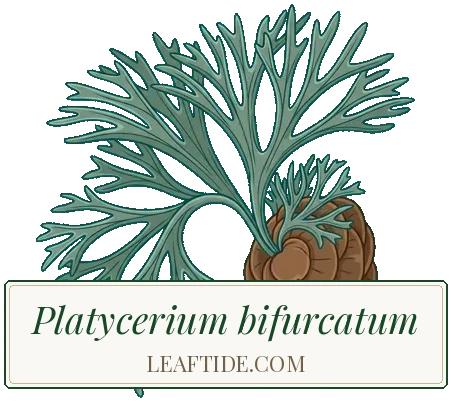
Staghorn fern is an epiphytic fern that grows mounted on boards or in hanging baskets rather than in soil. It produces flat shield fronds (which anchor it and should never be removed, even when brown) and dramatic antler-shaped fertile fronds. Water by soaking the root ball weekly in spring/summer, less in winter. It thrives in bright indirect light with good humidity. Avoid direct sun and never let water pool in the crown. Non-toxic to pets.
 In your Leaftide garden


- Height
- 90 cm (35 in)
- Spread
- 80 cm (31 in)
- Light
- Bright indirect light
- Water
- Moderate
Yearly Lifecycle
Care Essentials
Feed monthly during spring and summer with a diluted balanced liquid fertiliser at half strength. Pour it into the root ball or soak the mount. Do not feed in winter.
Watch For
- Scale insects on frond undersides
- Mealybug in crevices between shield and antler fronds
- Black spot fungus from overwatering or poor air circulation
- Brown patches from direct sun scorching
Pet Safety
Care Requirements
Light
Bright indirect light
Thrives in bright filtered light. Avoid direct sun which scorches the fronds. A bright window out of hot midday sun is ideal.
Watering
Soak weekly, less in winter
Submerge the root ball in room-temperature water for 10-15 minutes weekly. Let drain fully before re-hanging. Reduce to fortnightly in winter.
Fertilizing
Monthly diluted feed, spring to summer
Add half-strength balanced liquid fertiliser to the soaking water monthly during spring and summer. Stop feeding in autumn and winter.
Pruning
Never remove shield fronds
Do not remove brown shield fronds as they protect the roots and absorb nutrients. Only trim dead or diseased antler frond tips if needed.
Growing Tips
The grey fuzz is normal
Both frond types are covered in fine grey-white hairs that help the plant take in moisture and reflect light. Don't wipe, polish or mist them heavily: the hairs rub off and the frond stays bare.
Brown patches on antler tips are spores
The velvety brown patches on the tips of mature antler fronds are where the spores form. They are a sign of a healthy plant, not a disease, so leave them alone.
Propagate from pups
Small plantlets (pups) form around the base. Once a pup has a few fronds of its own and is a few centimetres across, cut it away with a sharp knife, keeping some roots, and mount it separately.
Mind the weight of the mount
A soaked mount is heavy and gets heavier as the plant grows. Fix it to a sturdy hook or screw into masonry or a stud, and tie the plant on with soft ties or wire that won't cut into the fronds.
Pests & Diseases
Pest Scale insects
Identification: Small brown or tan flat or domed bumps on the undersides of fronds and along the veins, with sticky honeydew. They do not move.
- Rub them off gently with a soft cloth or cotton bud dipped in soapy water, taking care not to scrape off the fuzzy coating.
- Repeat weekly and check new fronds and crevices until none are left.
- Avoid oil-based sprays and strong insecticides, which can mark or burn the fronds.
Pest Mealybugs
Identification: White, waxy, cottony tufts in the crevices between the shield and antler fronds and behind the shield, often with sticky honeydew.
- Dab them with a cotton bud dipped in soapy water or rinse off with a gentle spray of water.
- Isolate the plant so mealybugs don't spread to neighbours.
- Check behind the shield fronds each time you soak the plant.
Disease Black spot and frond rot
Symptoms: Black or dark brown patches that spread and turn soft or mushy, on fronds or at the base of the shield fronds, usually after water has sat in the crown or the air is stagnant. Dry brown patches from sun scorch, and the natural browning of old shield fronds, are different.
Treatment: Cut off affected antler fronds with clean scissors and let the plant dry out before the next soak. Move it to a spot with better airflow.
Prevention: Never let water collect in the crown, soak earlier in the day so the plant dries by evening, and always let it drain fully.