How to Grow Southern Magnolia
Magnolia grandiflora
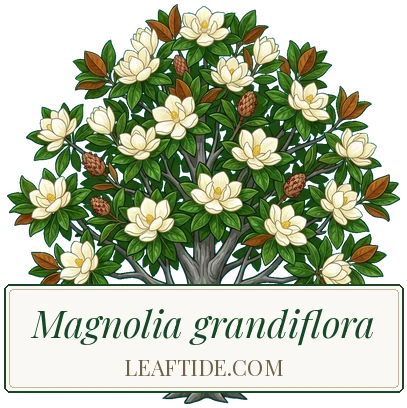
Southern magnolia is a large evergreen tree with glossy dark green leaves and spectacular fragrant white flowers up to 30cm (12 in) across. Plant in moist, well-drained, slightly acidic soil in full sun to partial shade. Shelter from cold winds in cooler climates; wall training works well in borderline areas. Water regularly until established. Minimal pruning needed. Drops old leaves year-round rather than seasonally.
 In your Leaftide garden


- Height
- 20 m (66 ft)
- Spread
- 12 m (39 ft)
- Flowers
- May - September
- Light
- Full sun to part shade
- Water
- Moderate
- Prune
- Minimal
Yearly Lifecycle
Care Essentials
Apply a slow-release balanced fertilizer in early spring. Mulch with acidic compost or leaf mould annually.
Watch For
- Scale insects
- Algal leaf spot
- Sooty mould from honeydew
Companions
Camellias, Azaleas, Ferns, Hostas
Pet Safety
Care Requirements
Light
Full sun to partial shade
Thrives in full sun but tolerates partial shade. In cooler climates, a warm south or west-facing wall provides ideal shelter and heat retention.
Watering
Regular watering for young trees
Water deeply and regularly during dry spells for the first 3-5 years until established. Mature trees are moderately drought-tolerant once their deep root system develops.
Fertilizing
Annual mulch with acidic compost
Apply slow-release balanced fertilizer in early spring. Mulch annually with acidic compost or leaf mould. Prefers slightly acidic soil; chlorosis can develop on alkaline soils.
Pruning
Minimal; prune after flowering in summer
Requires very little pruning. Remove dead, damaged, or crossing branches after flowering in mid-summer. Tolerates hard renovation pruning if necessary but recovers slowly.
Spacing
8-10m (26-33 ft) from structures and other trees
A large tree reaching 15-25m (49-82 ft) tall with a spread of 8-12m (26-39 ft). Allow ample space for the wide canopy. Can be wall-trained in restricted spaces.
Support
Stake young trees for 2-3 years
Stake newly planted trees with a low stake for the first 2-3 years until the root system anchors firmly. Remove stakes once the trunk can support the canopy independently.
Growing Tips
Leaf drop is normal
Evergreen but drops old leaves year-round. This is normal, not a sign of stress. Rake fallen leaves or leave as mulch.
Protect young trees from cold
Young trees are vulnerable to cold. Plant in a sheltered spot or against a warm wall. Protect with fleece in harsh winters for the first few years.
Do not disturb roots
Avoid disturbing roots once planted. Magnolias resent root disturbance and are slow to re-establish. Mulch rather than cultivating.
Pests & Diseases
Pest Scale Insects
Identification: Small, immobile, shell-like bumps on twigs and along the leaf veins, often on the undersides. Heavy infestations turn leaves yellow, cause leaf drop and kill back twigs; soft scales also coat the leaves below with sticky honeydew and black sooty mould.
- Spray a dormant oil in late winter, then again when the crawlers are active (check twigs in summer), covering twigs and leaf undersides.
- On small or wall-trained trees, scrape off scales or prune out heavily infested twigs.
Disease Algal Leaf Spot Cephaleuros virescens
Symptoms: Round, raised, velvety spots on the upper leaf surface, green at first and turning rusty orange-brown; the same alga can cause small cankers on twigs. Worst in warm, humid climates such as the US Gulf Coast.
Treatment: Rake up and dispose of fallen leaves, and pick off spotted leaves on lightly affected trees. Spraying is rarely practical on a large tree.
Prevention: Keep irrigation water off the foliage, thin surrounding plants so air can move, and keep the tree vigorous by watering steadily in dry spells.