How to Grow Silene
Silene dioica
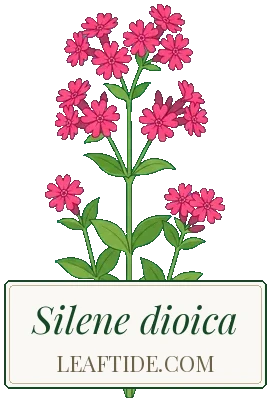
Red campion is a charming native wildflower with pink-red flowers from late spring through summer, thriving in partial shade and ordinary soil. Ideal for woodland edges, hedgerows, and cottage gardens. Plant 30 cm (12 in) apart in autumn or spring. It is short-lived (3-4 years) but self-seeds freely to maintain a persistent colony. Deadhead to control spread or leave for natural regeneration. Virtually maintenance-free once established.
 In your Leaftide garden


- Height
- 60 cm (24 in)
- Spread
- 30 cm (12 in)
- Flowers
- April - July
- Light
- Part shade
- Water
- Moderate
- Feed
- No feeding needed
Yearly Lifecycle
Care Essentials
No feeding needed. Red campion is a wildflower that thrives in ordinary soil without supplementary nutrition.
Watch For
- Prolific self-seeding
- Rust on leaves
- Aphids on stems
Companions
Foxglove, Bluebells, Ferns, Cow Parsley
Pet Safety
Care Requirements
Light
Partial shade to dappled sun
Thrives in partial shade and woodland edges. Tolerates full sun in moist soil but prefers some shelter. Ideal for shady hedgerows and under deciduous trees.
Watering
Minimal, tolerates dry shade
Once established, largely self-sufficient in ordinary soil. Tolerates dry conditions under hedges. Only water newly planted specimens during prolonged drought.
Fertilizing
No feeding needed
A wildflower that thrives in ordinary unfertilised soil. Rich conditions encourage excessive leafy growth and reduce flowering.
Pruning
Deadhead or cut back in late summer
Remove spent flowers to prevent excessive self-seeding, or leave to naturalise freely. Cut back tatty foliage in late summer to encourage fresh basal growth.
Growing Tips
Deadhead for a second flush
Cut off faded flower stems after the first flush and red campion often flowers again in late summer. It also stops seedlings coming up everywhere. Leave a few stems on the plant if you want a self-sown colony.
Only female plants make seed
Red campion has separate male and female plants, and only the females form the round seed capsules, so deadheading matters most on them. Keep some of each sex if you want the colony to renew itself, as individual plants live only a few years.
Pests & Diseases
Disease Anther Smut Microbotryum lychnidis-dioicae
Symptoms: Flowers open normally, but the anthers are filled with a violet-purple, powdery mass of spores instead of pollen. Affected plants are sterile and carry the disease into the following year.
Treatment: There is no cure. Pull out or cut off affected plants and bin them, not the compost, before pollinators carry the spores to healthy campions nearby.