How to Grow Scaevola
Scaevola aemula
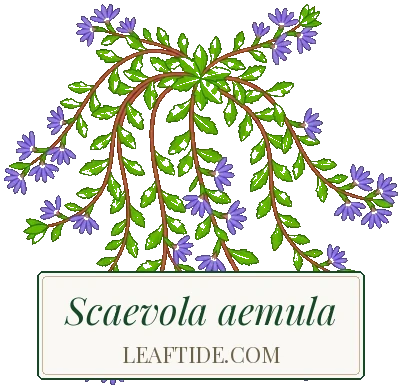
Scaevola is a trailing tender annual with fan-shaped purple-blue flowers produced continuously from early summer until frost. Ideal for hanging baskets, window boxes, and spilling over container edges. Grow in full sun with regular watering and weekly feeding. Self-cleaning flowers need no deadheading. Pinch tips when young for bushier growth. Cannot tolerate frost, so overwinter it frost-free under glass, or take cuttings in late summer.
 In your Leaftide garden
- Hardiness
- Tender
- Season
- Warm Season
- Harvest
- Continuous Harvest
- Spacing
- 30 cm (12 in)
- Height
- 25 cm (10 in)
- Sow depth
- 0.3 cm (¼ in)
- Min. soil temperature
- 15 °C+ (59 °F+)
- Start from
- Seed
- Light
- Full sun
- Water
- Moderate
When to Start
Start seeds indoors 6 weeks before your last frost date. Transplant outdoors once night temperatures stay above 10 °C (50 °F) and soil has warmed to at least 15 °C (59 °F).
Don't know your frost date? Find it here →
Growth Stages
Approximate days from start
Care Essentials
- Feed weekly with a balanced liquid fertiliser throughout the growing season. Heavy feeder that performs best with regular nutrition.
- Trailing Australian native grown as a summer annual in Europe. Ideal for hanging baskets, window boxes, and container edges. Self-cleaning flowers that do not require deadheading. Pinch tips early to encourage bushier growth.
Growing Conditions
- Min. soil temperature
- 15 °C+ (59 °F+)
- Germination temperature
- 20–25 °C (68–77 °F)
- Sow indoors
- —
- Transplant out
- —
- First harvest
- —
Want your full season plan with reminders? Set up your garden free


Spacing & Planting
| Plant spacing | 30 cm (12 in) |
| Row spacing | 35 cm (14 in) |
| Sow depth | 0.3 cm (¼ in) |
| Mature height | 25 cm (10 in) |
| Mature spread | 50 cm (20 in) |
Pests & Diseases
Pest Aphids
Identification: Clusters of small green or black insects on soft shoot tips and flower buds, with sticky honeydew and distorted growth.
- Squash small colonies by hand or hose them off with a jet of water.
- Pinch out badly infested tips and bin them.
- Spray persistent colonies with horticultural soap, and encourage ladybirds and hoverflies.
Pest Whitefly
Identification: Tiny white insects that fly up in a cloud when the plant is shaken, with sticky honeydew and sooty mould on the leaves. Mostly a problem under glass or in a conservatory.
- Hang yellow sticky traps near the plant to catch adults.
- Spray the leaf undersides with horticultural soap every few days until numbers fall.
Disease Root Rot from Overwatering
Symptoms: Leaves yellow and drop, shoots wilt even though the compost is wet, and the stem base turns dark and soft. Common in hanging baskets and pots that stay waterlogged.
Treatment: Let the compost dry out and water only when the top feels dry. A plant with a soft, rotted stem base rarely recovers and is best replaced.
Prevention: Use a free-draining compost and a container with drainage holes, and never leave it standing in water.
Growing Conditions
| Min. soil temperature | 15 °C (59 °F) |
| Germination temperature | 20–25 °C (68–77 °F) |
| Base growth temperature | 10 °C (50 °F) |
| Min. daylength to start | 12 h |
| Photoperiod sensitivity | day neutral |
Frequently Asked Questions
- How far apart should I plant scaevola?
- Plant scaevola 30 cm (12 in) apart, with 35 cm (14 in) between rows.
- When does scaevola flower?
- Scaevola typically flowers approximately 50 days after transplanting.
- Is scaevola frost hardy?
- No, scaevola is tender.