How to Grow False Acacia
Robinia pseudoacacia
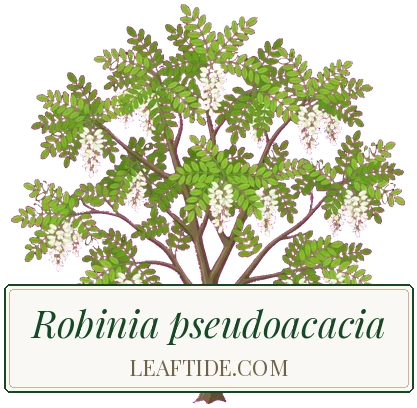
False acacia is a fast-growing, drought-tolerant tree with pinnate foliage and highly fragrant white flowers in early summer. It thrives in poor, dry soils where other trees struggle, and its roots fix nitrogen. The golden-leaved 'Frisia' cultivar is popular for foliage effect. Plant in full sun; avoid heavy clay. Prune in late summer or autumn to avoid sap bleed. Remove root suckers promptly. Note that all parts are toxic if ingested.
 In your Leaftide garden


- Height
- 14 m (46 ft)
- Spread
- 8 m (26 ft)
- Flowers
- June - October
- Light
- Full sun
- Water
- Low
Yearly Lifecycle
Care Essentials
Robinia fixes its own nitrogen so requires little feeding. Mulch with compost in spring if growth seems poor. Avoid high-nitrogen feeds which promote lush, wind-susceptible growth.
Watch For
- Robinia gall midge
- Leaf miners
- Honey fungus
Companions
Sambucus, Cotinus, Gleditsia, Native grasses
Pet Safety
Care Requirements
Light
Full sun
Needs full sun for best flowering and form. Tolerates light shade but produces fewer flowers. Avoid heavy clay soils.
Watering
Drought-tolerant once established
Extremely drought-tolerant once the root system is established. Only water young trees during prolonged dry spells in the first two years.
Fertilizing
Rarely needed, fixes own nitrogen
Robinia fixes atmospheric nitrogen through root nodules and seldom needs feeding. Avoid high-nitrogen fertilisers which encourage soft, wind-prone growth.
Pruning
Late summer only, never spring
Prune in late summer or early autumn to avoid heavy sap bleeding. Remove dead wood, crossing branches, and root suckers promptly.
Growing Tips
Give it a sheltered spot
Robinia wood is brittle and the branches snap in strong wind, so keep it away from paths, parking and buildings and plant it out of the worst gales.
Prune in late summer, not spring
Cut in late summer or early autumn in dry weather. Pruning in spring makes the tree bleed heavily. Take out dead wood and crossing branches only; it rarely needs more.
Expect suckers, and deal with them early
Robinia spreads by suckers from the roots, and cutting or damaging roots makes more. Pull or cut suckers off at their source as they appear, and keep the tree away from lawns, drains and boundaries. It is invasive in parts of Europe and North America, so check local advice before planting.
Give Frisia full sun
The golden cultivar 'Frisia' only holds its bright yellow-green colour in full sun, and in shade the leaves turn plain green.
Pests & Diseases
Pest Robinia Gall Midge
Identification: Leaflet edges roll or fold upwards into pods, which swell and turn yellow or brown, with small whitish larvae inside.
- Usually harmless to the tree's health, so no treatment is needed.
- On a small tree, pick off and bin the worst curled leaflets, and rake up fallen leaves in autumn.
Pest Leaf Miners
Identification: Pale blotches or folded patches on the undersides of the leaflets, caused by tiny moth caterpillars feeding inside the leaf.
- Healthy trees tolerate leaf miners with little harm, so no treatment is needed.
- Rake up and bin fallen leaves in autumn to reduce the numbers the following year.
Disease Brittle Branches and Heart Rot
Symptoms: Branches snap or tear off in wind or under snow, and old trees can develop hollow, rotten trunks with bracket fungi on the bark.
Treatment: Cut off broken limbs back to a clean cut and remove dead or weak wood. A tree with a rotten, hollow trunk or large brackets should be checked by a qualified arborist.
Prevention: Plant in a sheltered spot, keep the tree away from buildings and paths, and avoid wounding the trunk with mowers or strimmers.