How to Grow Castor Oil Plant
Ricinus communis
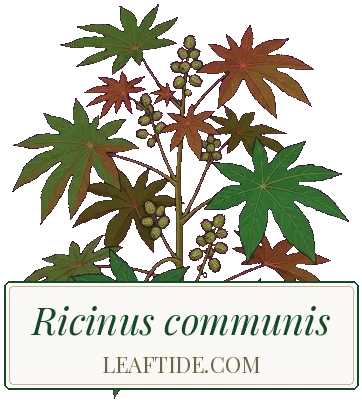
⚠️ TOXIC: all parts, especially seeds, are poisonous to humans, cats, dogs, and livestock. Grow Ricinus communis for its dramatic tropical foliage, not for harvest. Sow seeds indoors in individual pots in early to mid-spring, soaking for 24 hours first. Germination takes 2–3 weeks at 18–24 °C (64–75 °F). Grow on in a warm bright place and harden off carefully. Plant out after all frost risk has passed, in a sheltered, sunny, rich border. Plants can reach 2 m (6.5 ft) or more in one UK summer. Water freely and feed fortnightly. Remove developing seed pods promptly to reduce toxicity risk. Discard plants at season end; they are killed by the first frost.
 In your Leaftide garden


- Hardiness
- Tender
- Season
- Warm Season
- Spacing
- 1.2 m (4 ft)
- Height
- 2 m (6.5 ft)
- Sow depth
- 2.5 cm (1 in)
- Min. soil temperature
- 15 °C+ (59 °F+)
- Start from
- Seed
- Light
- Full sun
- Water
- Moderate
When to Start
Start seeds indoors 8 weeks before your last frost date. Transplant outdoors once night temperatures stay above 10 °C (50 °F) and soil has warmed to at least 15 °C (59 °F).
Don't know your frost date? Find it here →
Growth Stages
Approximate days from start
Care Essentials
- Apply a balanced liquid feed every two weeks from late spring through summer to support vigorous growth.
- ⚠️ TOXIC. All parts of Ricinus communis are poisonous to humans, cats, dogs, and livestock. The seeds contain ricin, one of the most toxic naturally occurring substances known. Never allow children or pets near this plant. Wear gloves when handling and wash hands thoroughly afterwards. Do not grow where children or pets have unsupervised access. Ricinus is grown purely as a dramatic foliage annual. Its enormous palmate leaves, bronze-red or deep green depending on cultivar, can reach 60 cm (24 in) across and give tropical impact to borders and containers. Plants grow 1.5-3 m (5-10 ft) in a single season, even in cool-climate summers. Deadhead the spiky seed pods as they form to reduce toxicity risk and prevent self-seeding.
Growing Conditions
- Min. soil temperature
- 15 °C+ (59 °F+)
- Germination temperature
- 18–25 °C (64–77 °F)
Pet Safety
Spacing & Planting
| Plant spacing | 1.2 m (4 ft) |
| Row spacing | 1.2 m (4 ft) |
| Sow depth | 2.5 cm (1 in) |
| Mature height | 2 m (6.5 ft) |
| Mature spread | 1.5 m (5 ft) |
Pests & Diseases
Pest Spider Mites
Identification: Fine yellow speckling on the big leaves, which turn dull and bronzed, with fine webbing on the undersides. Worst in hot, dry spells and under cover.
- Spray the undersides of the leaves with water every few days, since mites dislike damp.
- Under glass, release predatory mites (Phytoseiulus persimilis) in warm weather.
- Cut off and bin badly affected leaves.
Pest Aphids
Identification: Clusters of small green or black insects on young shoots and leaf undersides, with sticky honeydew and curled, distorted new growth.
- Squash small colonies by hand or hose them off with a jet of water.
- Encourage ladybirds, lacewings and hoverflies, which eat aphids.
- Spray persistent colonies with horticultural soap.
Disease Grey Mould Botrytis cinerea
Symptoms: Grey, fuzzy mould on leaves, flower spikes and developing seed pods, with brown soft patches beneath it. It appears in cool, wet weather.
Treatment: Cut off affected parts and bin them, not the compost. Improve airflow around the plant.
Prevention: Give plants the full spacing, water the soil rather than the leaves, and clear fallen leaves.
Disease Root Rot in Waterlogged Soil
Symptoms: Leaves yellow and droop even though the soil is wet, and the stem base turns brown and soft.
Treatment: Stop watering and let the soil dry out. A plant with a rotted stem base is unlikely to recover and should be removed.
Prevention: Plant in free-draining soil, raise it on a mound if the ground is heavy, and use pots with drainage holes.
Growing Conditions
| Min. soil temperature | 15 °C (59 °F) |
| Germination temperature | 18–25 °C (64–77 °F) |
| Base growth temperature | 10 °C (50 °F) |
| Photoperiod sensitivity | day neutral |
Frequently Asked Questions
- How far apart should I plant castor oil plant?
- Plant castor oil plant 1.2 m (4 ft) apart, with 1.2 m (4 ft) between rows.
- Is castor oil plant frost hardy?
- No, castor oil plant is tender.