How to Grow Red Bush Monkeyflower
Diplacus puniceus
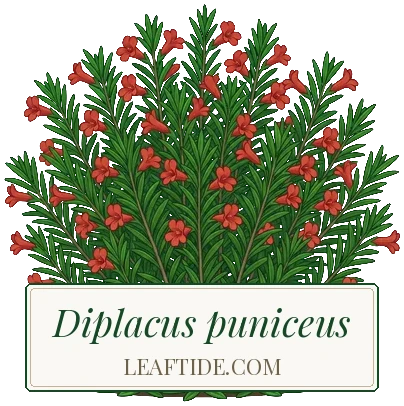
Red bush monkeyflower is a small, sticky-leaved evergreen shrub from coastal Southern California and Baja California, covered in brick-red tubular flowers in spring that hummingbirds and bees love. Give it full sun near the coast or light afternoon shade in hot inland gardens, and sharply drained, lean soil; sandy or gravelly ground and raised beds suit it best. Water through the first summer, then in a summer-dry climate stop once flowering ends and let it rest semi-dormant until autumn rain. Pinch the tips in spring and cut flowered stems back by a third afterwards, never into bare wood. It takes short frosts to about -5 °C (23 °F); in colder or wetter areas grow it in a pot and keep it in a cold greenhouse for winter.
 In your Leaftide garden


- Height
- 90 cm (35 in)
- Spread
- 90 cm (35 in)
- Spacing
- 90 cm (35 in)
- Flowers
- April - July
- Light
- Full sun to part shade
- Water
- Low
- Feed
- None or very little
Yearly Lifecycle
Care Essentials
Rarely needed. It grows naturally on poor, stony slopes; a thin layer of compost in early spring is plenty, and rich feeding gives soft, floppy growth that rots more easily.
Watch For
- Root and crown rot in wet soil, especially from summer watering in hot weather or waterlogged ground in winter
- Aphids on soft shoot tips in spring
- Leggy, woody plants after a few years; it is naturally short-lived, so take cuttings to replace it
- Checkerspot and buckeye caterpillars on the leaves in its native range (welcome guests, no need to spray)
Companions
California lilac (Ceanothus), White sage, Lavender, Rock rose (Cistus)
Care Requirements
Light
Full sun to light shade
Full sun gives the most flowers and the most compact plants, especially near the coast. In hot inland gardens light afternoon shade helps it stay green longer into summer. In deep shade it gets leggy and flowers poorly.
Watering
Low; dry in summer once established
Water regularly through the first summer while the roots establish. After that, in a summer-dry climate, stop once flowering ends and let it rest until autumn rain; a monthly soak at most in very hot spells. In rainier climates it needs no extra water, but the soil must drain freely, especially in winter.
Fertilizing
None or very little
Adapted to poor, stony soil. A thin layer of compost in early spring is enough. Rich feeding makes soft, leggy growth that rots more easily.
Pruning
Pinch in spring, trim after flowering
Pinch out the shoot tips in spring to keep it bushy. After flowering, cut the flowered stems back by a third to a half, leaving leafy current-year growth. Never cut into old bare wood.
Spacing
90 cm (35 in) apart
Plants grow 60-90 cm (24-35 in) tall and about as wide, sometimes larger. Allow about 90 cm (35 in) between plants so air circulates around the sticky foliage.
Support
None needed
A self-supporting, mounding shrub. Stems are brittle, so place it away from paths where it gets knocked.
Growing Tips
Let it rest in summer
In a hot, dry summer the leaves curl, darken and some drop. That is its natural summer rest, not thirst. In a summer-dry climate, extra water in late summer is the commonest way to kill an established plant; wait for autumn rain and it greens up again.
Drainage first
Plant in sharply drained, lean soil, ideally on a slope, in a raised bed or in a pot with plenty of grit. In wetter climates such as the UK or northern Europe, winter wet around the roots is the main danger, so keep it off heavy clay.
Pinch now, trim later
Pinch out the soft tips of new shoots in spring for a denser bush with more flowers. After flowering, trim the flowered stems back by a third, staying in leafy growth.
Pests & Diseases
Pest Aphids
Identification: Clusters of small green or black insects on the soft shoot tips and flower buds, with sticky honeydew and distorted growth, mostly on lush spring growth.
- Rub off small colonies with your fingers or knock them off with a jet of water.
- Encourage ladybirds, hoverflies and lacewings, and avoid heavy feeding that makes soft growth.
Disease Root and Crown Rot
Symptoms: Leaves yellow and wilt, stems collapse from the base and the plant dies, usually after summer watering in hot weather or waterlogged ground in winter.
Treatment: Plants rarely recover once the crown is rotten. Remove the plant and replace it with a cutting grown in gritty compost, in a spot that drains well.
Prevention: Plant in sharply drained soil, on a slope or mound, water established plants little or not at all in summer and keep irrigation away from the crown.
Disease Leggy, Woody Plants
Symptoms: After a few years the plant gets leggy and bare at the base, with flowers only at the tips and less vigour overall.
Treatment: Cut flowered stems back by a third to a half, always leaving some leafy growth, and never cut into old bare wood. Take tip cuttings to replace the plant when it declines.
Prevention: Pinch the tips in spring, trim lightly after flowering and root fresh cuttings every few years, since the plant is naturally short-lived.
Spacing & Planting
| Plant spacing | 90 cm (35 in) |
| Row spacing | 90 cm (35 in) |
| Mature height | 90 cm (35 in) |
| Mature spread | 90 cm (35 in) |
Wild plants are usually 60-90 cm (24-35 in) tall and up to 1.2 m (4 ft) across; old plants on good sites can reach 1.5 m (5 ft). Allow about 90 cm (35 in) between plants so air moves freely through the sticky foliage.