How to Grow Pickerel Weed
Pontederia cordata
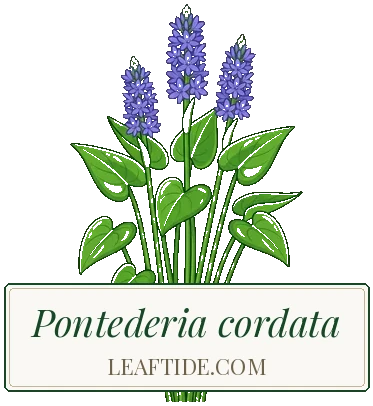
Pickerel Weed is a marginal aquatic perennial, native to the Americas, with striking spikes of blue-violet flowers from early summer to early autumn and glossy, heart-shaped leaves. Plant at pond margins in up to 15 cm (6 in) of water, or in permanently wet soil. It spreads steadily by rhizomes: divide every 3-4 years in spring to keep it in check. Excellent for wildlife ponds as it attracts bees and other pollinators in large numbers.
 In your Leaftide garden


- Height
- 90 cm (35 in)
- Spread
- 60 cm (24 in)
- Spacing
- 60 cm (24 in)
- Flowers
- June - September
- Light
- Full sun to part shade
- Water
- High
- Feed
- No feeding required
Yearly Lifecycle
Care Essentials
Rarely needed. The pond or wet soil provides sufficient nutrients. Avoid fertilising directly into water as it encourages algae.
Watch For
- Water snails damaging foliage
- Aphids on flower spikes
Companions
Yellow Flag Iris, Marsh Marigold, Water Forget-Me-Not
Care Requirements
Light
Full sun to partial shade
Prefers full sun but tolerates partial shade. Flowering is best in an open, sunny position.
Watering
Aquatic: grow in up to 15 cm (6 in) of water
Plant at pond margins or in permanently wet soil. Tolerates standing water up to 15 cm (6 in) deep. Never allow to dry out.
Fertilizing
No feeding required
Nutrients from pond water or wet soil are sufficient. Feeding encourages algal growth and is not recommended.
Pruning
Cut back in late autumn or early spring
Remove dead foliage in late autumn or early spring before new growth emerges. Leave seed heads for wildlife if possible.
Growing Tips
Plant at the water's edge
Grow in up to 15 cm (6 in) of standing water at pond margins, or in permanently waterlogged soil. Containers submerged in the pond work well for control.
Leave seed heads for wildlife
After flowering, the seed heads provide food for wildfowl. Leave them standing until early spring before cutting back.
Divide to control spread
Lift and divide congested rhizomes every 3-4 years in spring. This keeps the plant vigorous and prevents it from crowding out other marginals.
Pests & Diseases
Pest Aphids
Identification: Clusters of small dark aphids (the waterlily aphid) on the leaves and flower spikes in warm weather.
- Wash them off with a jet of water from a hose so they fall onto the water, where fish eat them. Do not use insecticide near a pond.
- Cut off badly infested flower spikes and bin them.
Disease Plenty of Leaves, Few Flowers
Symptoms: Healthy leaves but few or no spikes of blue flowers.
Treatment: Move the plant to a sunnier spot, keep the water level at no more than 15 cm (6 in) over the crown, and lift and divide an overcrowded clump.
Prevention: Plant at the pond margin in an open, sunny position in shallow water.
Spacing & Planting
| Plant spacing | 60 cm (24 in) |
| Row spacing | 60 cm (24 in) |
| Mature height | 90 cm (35 in) |
| Mature spread | 60 cm (24 in) |
Marginal aquatic perennial. Plant at pond margins in up to 15 cm (6 in) of water or in consistently wet soil. Space 60 cm (24 in) apart to allow full spread.