How to Grow Pigeonberry
Rivina humilis
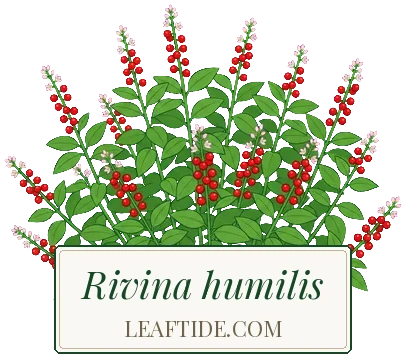
Pigeonberry (Rivina humilis) is a low, bushy native perennial for shade, 30-45 cm (12-18 in) tall, that carries spikes of tiny pink-white flowers and glossy red berries at the same time from spring to autumn. Plant it 30-45 cm (12-18 in) apart in part to full shade, under trees where grass struggles, in almost any well-drained soil. Water weekly through the first summer, then only in long droughts, when it may otherwise drop its leaves and rest. Birds eat the berries and sow seedlings around the garden. A hard freeze kills it to the ground; cut the dead stems off in late winter and it regrows from the roots.
 In your Leaftide garden


- Height
- 40 cm (16 in)
- Spread
- 50 cm (20 in)
- Flowers
- April - December
- Light
- Part to full shade
- Water
- Moderate
- Feed
- Not needed
Yearly Lifecycle
Care Essentials
No feeding needed. Pigeonberry grows in ordinary clay, loam, sand or rocky limestone soil; a layer of fallen leaves around the plants is all the nutrition it needs.
Watch For
- Seedlings popping up wherever birds drop the berries
- Berries and leaves are toxic if eaten, so keep small children from picking them
- Leaf drop or summer dormancy in long droughts
- Leggy, floppy stems in deep shade
- Stems killed to the ground by hard frost
Companions
Turk's Cap, Inland Sea Oats, Cedar Sage, Columbine, Ferns
Care Requirements
Light
Part shade to full shade
Grows best in dappled or full shade under trees and shrubs, where it stays lush and flowers for months. It tolerates full sun with extra water, but the leaves can yellow and the plant rests sooner in hot, dry spells.
Watering
Moderate, with summer drought watering
Water weekly through the first summer until established. After that, water deeply every week or two in long dry spells; without it the plant survives but may drop its leaves and go dormant until rain returns.
Fertilizing
Not needed
Pigeonberry grows in clay, loam, sand and rocky limestone without feeding. Let fallen leaves stay around the plants as a natural mulch instead of adding fertiliser.
Pruning
Cut frozen stems in late winter
Cut stems killed by frost to a few centimetres above the ground in late winter. Trim a leggy plant back by a third at the same time, or lightly in summer to keep it compact.
Spacing
30-45 cm (12-18 in) apart
Plant 30-45 cm (12-18 in) apart for a groundcover in shade. Each clump grows 30-60 cm (12-24 in) wide, and bird-sown seedlings fill gaps over a few seasons.
Support
No support needed
It is a low, bushy perennial with upright to slightly sprawling stems. In deep shade the stems can flop, which a light trim corrects.
Growing Tips
Made for dry shade
Pigeonberry is at its best under trees and on the shady side of the house, where lawn grass gives up. In full sun it grows too, but it needs more water and the leaves can bleach in the heat.
Flowers and berries together
New flower spikes keep opening while the older ones ripen into red berries, so a single plant shows pink, green and red at once for months. Leave the berries for the birds; they are not for eating.
A summer rest is normal
In a long dry spell pigeonberry may drop its leaves and stop flowering. A deep soaking every week or two keeps it going, and even a plant that has rested usually leafs out again once rain returns.
Late to wake up
After a frozen winter the plant comes back from the roots, often not until mid or late spring when the soil warms. Mark the spot so you do not dig into it, and wait before deciding it has died.