How to Grow Pernettya
Gaultheria mucronata
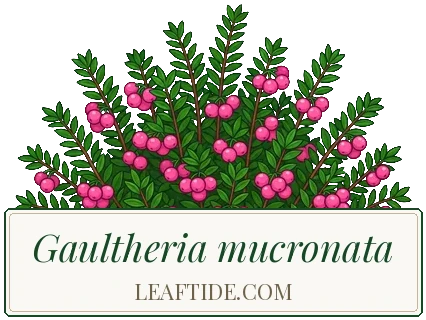
Pernettya (prickly heath) is a compact evergreen shrub with small, spiny leaves, white bell-shaped flowers in late spring and early summer, and large glossy berries in pink, red, purple or white that last from autumn through winter. Plants are male or female, and only females berry, so plant one male among up to five or six females. It needs acid soil that stays moist but drains well, in partial shade or in sun where the soil never dries out. Use ericaceous compost in pots, mulch with bark and water with rainwater in hard-water areas. The berries are ornamental and should not be eaten.
 In your Leaftide garden


- Height
- 1.2 m (4 ft)
- Spread
- 1.2 m (4 ft)
- Flowers
- May - July
- Light
- Full sun to part shade
- Water
- Moderate
Yearly Lifecycle
Care Essentials
Spring with an ericaceous fertiliser. Mulch with composted bark.
Watch For
- Lime-induced chlorosis
- Phytophthora root rot
- Vine weevil in pots
- Honey fungus
Companions
Heather, Skimmia, Rhododendron, Ferns
Care Requirements
Light
Partial shade, or sun if the soil stays moist
Grows well in partial shade. It also takes full sun, and berries more freely there, as long as the soil never dries out.
Watering
Keep moist, rainwater in hard-water areas
Keep the soil evenly moist but never waterlogged, and water in dry spells, especially plants in pots. Use rainwater where tap water is hard, since lime turns the leaves yellow.
Fertilizing
Ericaceous feed in spring, bark mulch
Feed once in spring with an ericaceous fertiliser. Mulch with composted bark or pine needles to keep the soil acid and moist.
Pruning
Little needed, remove suckers in spring
Needs little pruning. In mid to late spring remove dead or straggly shoots and cut out suckers that spread beyond where you want the plant.
Spacing
75 cm (30 in) apart, one male per five or six females
Space plants about 75 cm (30 in) apart; they spread by suckers into a low thicket. Plant one male within a few metres of the females so they berry.
Support
No support needed
A dense, self-supporting shrub. It needs no staking.
Growing Tips
Plant a male for berries
Pernettya plants are male or female and only females berry. Plant one male within a few metres of up to five or six females; the named berrying varieties are all female.
Keep the soil acid
Yellow leaves with green veins mean the soil is too alkaline. Grow it in acid soil or ericaceous compost, mulch with bark or pine needles, and water with rainwater in hard-water areas.
Keep suckers in check
Pernettya spreads by suckers into a thicket. Cut or dig out unwanted ones in spring; rooted suckers can be potted up as new plants.
Berries are for looking at
The berries ripen in autumn and last through winter, but they are ornamental and can cause nausea and dizziness if eaten. Keep children and pets from eating them.
Pests & Diseases
Pest Vine Weevil
Identification: Notches in leaf edges from adults feeding at night; plants in pots wilt and collapse when cream C-shaped larvae eat the roots
- Water pots with Steinernema kraussei nematodes in late summer or early autumn
- Check the root ball when repotting and remove the larvae
- Use a vine weevil drench approved for ornamentals in containers
Disease Lime-Induced Chlorosis Iron deficiency (nutritional disorder)
Symptoms: Leaves turn yellow between green veins, starting on new growth; growth slows and berrying falls off
Treatment: Water with rainwater, apply a chelated iron feed and mulch with ericaceous material.
Prevention: Grow only in acid soil or ericaceous compost. Avoid tap water in hard-water areas.
Disease Phytophthora Root Rot Phytophthora spp.
Symptoms: Leaves yellow and wilt even though the soil is wet; the stem base darkens and the plant dies back
Treatment: Remove and destroy affected plants. Do not replant ericaceous shrubs in the same spot.
Prevention: Plant in soil that drains well. Make sure pots have drainage holes and never stand in water.
Disease Honey Fungus Armillaria spp.
Symptoms: Sudden dieback; white fungal sheets under the bark at the base; honey-coloured toadstools in autumn
Treatment: Dig out and destroy the plant with as much root as possible.
Prevention: Keep plants growing strongly; avoid planting where honey fungus has killed shrubs before.
Popular Varieties
Pink Pearl
Compact female form with round lilac-pink berries about 10 mm across from autumn into winter. Berries only with a male plant nearby.
Mulberry Wine
Female form with magenta-purple berries that darken as the winter goes on. Berries only with a male plant nearby.
Crimsonia
Female form with large crimson berries about 12 mm across. Berries only with a male plant nearby.
White Pearl
Female form with white berries from autumn into winter, good beside the pink and red forms. Berries only with a male plant nearby.