How to Grow Oakleaf Hydrangea
Hydrangea quercifolia
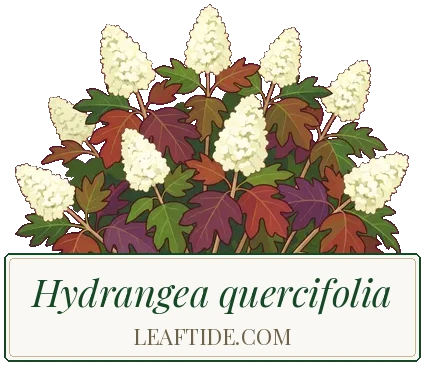
Oakleaf Hydrangea is a US-native deciduous shrub with bold oak-shaped leaves that turn spectacular shades of red, orange, and burgundy in autumn. It produces large conical panicles of white flowers that age to pink. Thrives in partial shade with moist, well-drained soil. More drought-tolerant and shade-tolerant than other hydrangeas. Flowers on old wood; prune minimally.
 In your Leaftide garden


- Height
- 2 m (6.5 ft)
- Spread
- 2.5 m (8 ft)
- Flowers
- July - August
- Light
- Full sun to part shade
- Water
- Moderate
Yearly Lifecycle
Care Essentials
Apply a balanced slow-release fertilizer in early spring. Unlike mophead hydrangeas, oakleaf types do not need acidic feeds for flower colour.
Watch For
- Powdery mildew in humid conditions
- Leaf spot in wet weather
- Aphids on new growth
- Deer browsing (less resistant than other hydrangeas)
Pet Safety
Care Requirements
Light
Partial shade to full sun
Thrives in partial shade with morning sun. Tolerates full sun in cooler climates if soil stays moist. More drought-tolerant and shade-tolerant than other hydrangeas.
Watering
Consistent moisture, drought-tolerant for a hydrangea
Prefers moist, well-drained soil but is more drought-tolerant than mophead types. Water deeply during dry spells, especially in the first two years.
Fertilizing
Balanced slow-release in early spring
Apply a balanced slow-release fertiliser once in early spring. Not a heavy feeder. Unlike mophead hydrangeas, does not need acidic feeds for flower colour.
Pruning
Minimal, flowers on old wood
Flowers form on old wood, so only remove dead or crossing branches in late winter. Never hard-prune or you will lose next season's blooms. Keep pruning minimal to preserve natural form.
Growing Tips
Prune only for shape, right after flowering
Flower buds form on last year's wood, so hard pruning removes next year's blooms. If a shoot needs shortening, do it just after the flowers fade, and take out only dead or crossing branches otherwise.
Sun for colour, shade for the roots
It tolerates part shade, but the leaves colour best in autumn with a few hours of sun. Mulch over the shallow roots and water in prolonged dry spells; it copes with drier soil than mophead hydrangeas but still sulks in baked ground.
Allow room to spread
Oakleaf hydrangeas slowly send up suckers and form a wide, suckering clump. Plant where it can reach its full spread, and dig out or divide unwanted suckers in the dormant season.
Pests & Diseases
Pest Aphids
Identification: Clusters of small green or black insects on soft new shoots and under young leaves, often with sticky honeydew and curled or distorted growth.
- Squash small colonies by hand or wash them off with a firm jet of water.
- Encourage ladybirds, lacewings and hoverflies, which feed on aphids; avoid broad-spectrum sprays.
- On heavy infestations, spray with a fatty acid or plant oil product, repeating as the label directs.
Disease Leaf Spot Cercospora spp.
Symptoms: Round brown or purplish spots, often with a darker edge, scattered over the leaves. They show most in wet summers and can cause early leaf fall in bad years.
Treatment: Pick off and bin spotted leaves, and clear fallen leaves in autumn so the fungus does not overwinter beside the plant. The plant is not usually harmed.
Prevention: Water the soil, not the leaves, and leave space between plants so foliage dries quickly after rain.
Disease Powdery Mildew
Symptoms: A white, dusty coating on leaves, mostly in humid weather or on plants that are dry at the root or crowded.
Treatment: Remove the worst-affected leaves and bin them. Mildew rarely harms an established shrub.
Prevention: Mulch to keep the roots evenly moist, and keep the centre of the shrub open so air moves through it.
Disease Few or No Flowers
Symptoms: A healthy shrub with plenty of leaf but few or no flower heads.
Treatment: Check the usual causes: hard pruning that removed last year's flower buds, a late frost that blackened the buds, or too much shade.
Prevention: Prune lightly just after flowering, site the shrub where it gets a few hours of sun, and avoid high-nitrogen feeds.