How to Grow Tupelo
Nyssa sylvatica
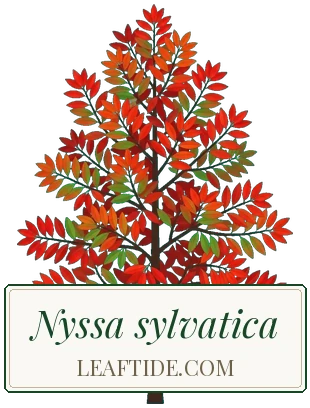
Tupelo is a medium tree grown primarily for its exceptional autumn colour, one of the most reliable scarlet displays of any hardy tree. Plant in moist, acidic soil in a sunny or lightly shaded spot. Choose the position carefully as tupelo resents transplanting once established. Mulch annually and keep well-watered during the first few years. Pruning needs are minimal; remove dead or crossing wood only in late winter.
 In your Leaftide garden


- Height
- 10 m (33 ft)
- Spread
- 6 m (20 ft)
- Light
- Full sun to part shade
- Water
- High
Yearly Lifecycle
Care Essentials
Apply a balanced slow-release fertiliser in early spring as buds break. Mulch generously with leaf mould or compost instead of feeding.
Watch For
- Leaf spot
- Scale insects
- Canker
Companions
Fothergilla, Enkianthus, Cornus, Liquidambar
Care Requirements
Light
Full sun to light shade
Full sun produces the most brilliant autumn colour. Tolerates light shade but the scarlet display will be less vivid.
Watering
Moist soil preferred, regular when young
Prefers consistently moist soil. Water deeply during dry spells, especially in the first 3 years. Suffers in prolonged drought even when mature.
Fertilizing
Mulch with leaf mould in spring
Mulch generously with leaf mould or acidic bark compost in spring rather than using synthetic fertiliser. A light balanced feed in early spring is acceptable for young trees.
Pruning
Minimal, dead wood only in late winter
Remove dead or crossing branches only while fully dormant. Keep pruning to an absolute minimum as tupelo heals slowly from large wounds. Never hard-prune.
Growing Tips
Fruit needs a male and a female tree nearby
Most trees bear mainly male or mainly female flowers. The blue-black berries that birds love form on female trees, and fruit set is better with a pollinating tree nearby, so don't expect a heavy crop from a lone tree.
Wet ground is not a problem
Tupelo copes well with soil that stays damp or floods for a spell, which makes it a good tree for a low spot where many others sulk.
Leave the central leader alone
Young trees form a neat pyramid with a single straight trunk, and the crown broadens and flattens with age. Don't cut the leader, and leave room for a wide, spreading mature tree.
Pests & Diseases
Pest Scale insects
Identification: Small brown or whitish bumps on twigs and the undersides of leaves, with sticky honeydew and black sooty mould below. A heavy infestation weakens growth.
- Scrub light infestations off with a soft brush dipped in soapy water.
- Spray with a plant-based fatty acid or insecticidal soap when the young crawlers are active, repeating at intervals.
Disease Leaf spot
Symptoms: Brown or purplish spots on the leaves in wet weather, sometimes with early leaf drop. It is usually cosmetic and does not threaten a healthy tree.
Treatment: Rake up and bin fallen leaves in autumn. Treatment is rarely needed.
Prevention: Water at the base rather than over the leaves, and keep the tree mulched and growing well.
Disease Lime-induced chlorosis
Symptoms: Leaves turn yellow between the veins while the veins stay green, mainly on new growth. It is common on tupelo in alkaline or chalky soil.
Treatment: Mulch with leaf mould or composted bark and water with a chelated iron (sequestered iron) feed.
Prevention: Plant only in acidic to neutral soil. On limy ground, grow it in a large raised bed of acidic soil or choose another tree.